

O’Shea Electrical, a family-owned Melbourne electrical contractor operating for more than 45 years, is urging Victorian homeowners to check their switchboard and power supply capacity before buying smart home devices or high-demand appliances.
Mandatory security standards for consumer smart devices took effect nationally on 4 March 2026. The federal Cheaper Home Batteries Program discount began stepping down from 1 May 2026.
Residual current device rules that changed in 2023 continue to determine what electricians can specify on new circuits.
The company says the most common source of cost overrun it encounters is device selection preceding capacity assessment.
“Older switchboards, particularly those still running ceramic fuses rather than circuit breakers, don’t meet current safety standards and can be a genuine risk,” the company states in its published guidance for Melbourne homeowners.
“If you’re planning a renovation, adding significant new appliances, or installing an EV charger, an upgrade is often necessary.”
Registration is publicly verifiable
O’Shea Electrical holds Registered Electrical Contractor number REC 36928, which the company notes homeowners can verify directly through Energy Safe Victoria.
Electrical installation work in Victoria cannot be carried out by the homeowner. It must be completed by a licensed electrician operating through a Registered Electrical Contractor, and Energy Safe Victoria requires a Certificate of Electrical Safety, commonly called a COES, for electrical installation work.
“For most electrical work in Victoria, having a licensed tradesperson sign off isn’t optional, it’s a legal requirement,” the company states. “When you book with us, you know the person turning up is qualified and accountable for the result.”
Under guidance from the Electrical Regulatory Authorities Council, Type AC RCDs must not be installed for new circuits or alterations from 1 May 2023. Depending on the circuit and connected equipment, an electrician may specify a Type A, B or F device instead.
Capacity questions the company recommends resolving first
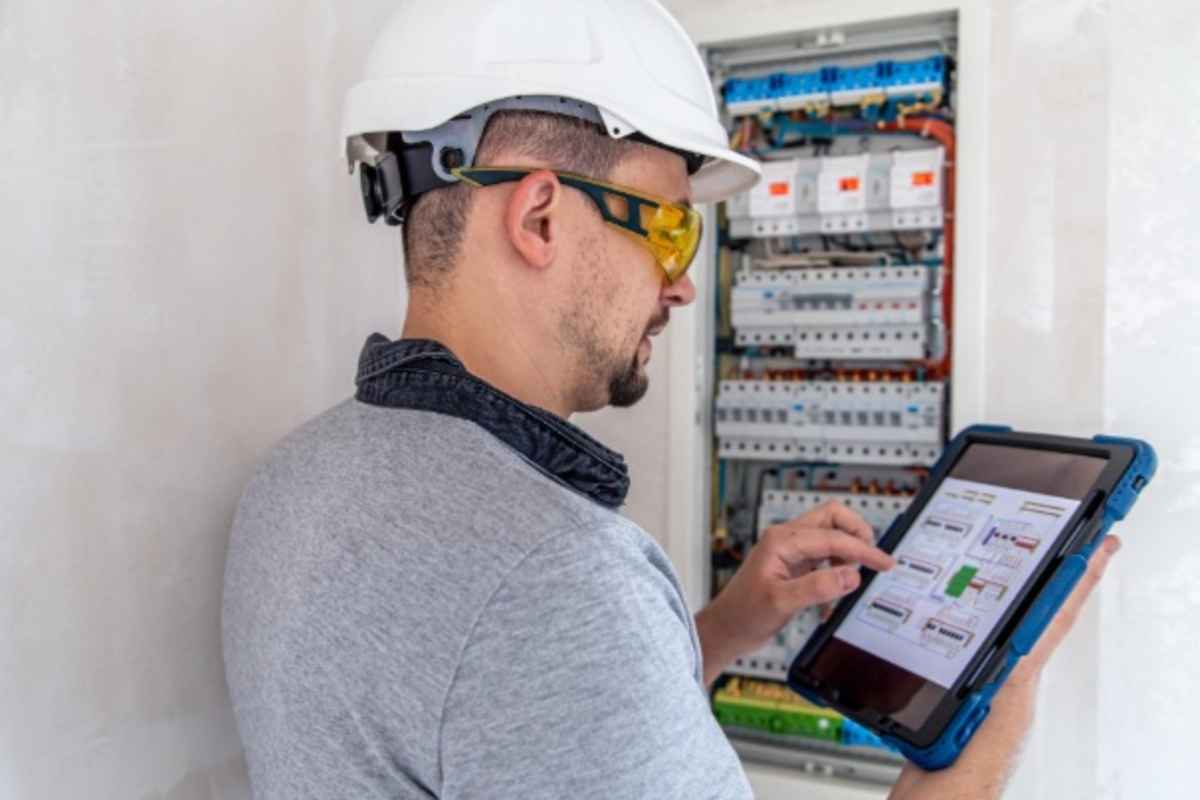
O’Shea Electrical identifies four warning signs that indicate a switchboard review is required before new loads are added: no spare positions for additional circuits, rewireable fuses rather than circuit breakers, no residual current devices on outlet or lighting circuits, and older switchboards that may contain asbestos.
On supply capacity, the Victorian Government’s Power up your home guide notes that most homes can electrify without moving to a three-phase supply, although households running several high-demand appliances may benefit from an upgrade.
The guide states that a 7.2 kW home charger can operate on a 63 amp single-phase connection, while a 22 kW AC charger requires three-phase power.
Once capacity is established, the company recommends prioritising protection before convenience.
That means appropriate RCDs and surge protection for sensitive electronics, dedicated circuits for induction cooktops, heat pumps, air conditioners and EV chargers, and lighting circuits wired with neutrals at switch points so compatible controls can be added later.
Battery discount enters step-down phase
The federal Cheaper Home Batteries Program has provided a discount of approximately 30 per cent on eligible small-scale battery systems installed with solar since 1 July 2025.
From 1 May 2026 the discount began stepping down more frequently, a change intended to hold the effective saving near 30 per cent as battery prices decline.
The shift arrives as Victoria continues expanding distributed generation, with the state having surpassed its 2025 renewable energy target and household interest in storage rising as a way to shift consumption away from peak tariff periods.
The company advises checking how a battery’s charging schedule aligns with the household’s time-of-use tariff, noting that a lower purchase price does not guarantee savings if system size and operating schedule do not match consumption patterns.
Smart device standards now in force
Security requirements for certain consumer smart devices commenced on 4 March 2026 under the Cyber Security (Security Standards for Smart Devices) Rules 2025, made under the Cyber Security Act 2024.
The standards introduce three baseline requirements.
Devices must not ship with universal default passwords, manufacturers must publish a channel for reporting security vulnerabilities, and the product’s security support period must be disclosed with a clear end date.
The framework aligns with ETSI EN 303 645 and applies to manufacturers, importers and suppliers.
For households, the company says the practical implication is at the point of purchase, and devices should be compared on published support end dates rather than general assurances of ongoing updates.
Rental and apartment obligations differ
From 29 March 2023, Victorian rental homes must have switchboard-type circuit breakers and residual current devices on all power outlet and lighting circuits.
Consumer Affairs Victoria states that an electrical safety check by a licensed electrician is required at least every two years.
The CFA notes that homes built after 1 August 1997 must have 240 volt hardwired alarms, and that all alarms must comply with AS 3786.
Apartment owners should confirm owners corporation rules before commissioning work affecting common property, shared switchboards, parking areas or building cabling.
What to provide when requesting a quote
O’Shea Electrical recommends homeowners supply contractors with the appliances and electrical loads expected over the next five years, photographs of the switchboard, meter box and adjacent wall space, the meter type and current electricity plan, the preferred EV charger size in kilowatts, and any rental or owners corporation obligations.
The company suggests providing the same brief to two or three contractors, with comparison focused on scope, exclusions, equipment and compliance work rather than headline price alone.
About O’Shea Electrical
O’Shea Electrical is a family-owned, Australian-owned electrical contractor serving metropolitan Melbourne for more than 45 years.
The company holds Registered Electrical Contractor number REC 36928 and is one of several licensed Melbourne electricians operating across the metropolitan area.
Services include switchboard and power upgrades, EV charger installation, safety inspections and fault detection, surge protection, smoke and fire alarms, lighting and LED upgrades, data cabling, appliance installation, full rewiring and smart home automation.
The company operates seven days a week, provides fixed pricing quoted after an in-person assessment, and backs completed work with a labour guarantee.
It maintains offices in Hawthorn East, Mount Waverley, Wantirna, Bentleigh, Bundoora and Keilor, with head office at 15 Cato Street, Hawthorn East, Victoria 3123.
“You’ll get a fixed price before anyone picks up a tool, with no hidden extras and no add-ons once we’re on site,” the company states.
O’Shea Electrical operates alongside sister businesses O’Shea Plumbing and O’Shea Trades.