Chinese AI models are putting new pressure on an industry that has spent years moving towards increasingly expensive, tightly controlled systems operated by a small group of technology companies.
Moonshot AI, a Beijing-based artificial intelligence company, has released Kimi K3, an open-weight model with 2.8 trillion parameters that developers can download and deploy rather than access solely through a commercial AI service.
The release has added to growing competition from Chinese AI companies, which have increasingly demonstrated that high-performing models can be developed outside the group of US companies that have dominated the market.
The significance of Kimi K3 extends beyond its size. Open-weight models allow developers to obtain the underlying model weights and run them on their own infrastructure, giving businesses considerably more control over deployment and data.
That does not make the technology free to operate. A model of this scale requires substantial computing resources, electricity, cooling and technical expertise, but developers are not required to pay a company simply for access to the model itself.
The development is particularly significant because the commercial AI industry has largely been built around closed systems. Companies including OpenAI and Anthropic operate powerful proprietary models that customers generally access through applications or APIs.
The emergence of capable open-weight alternatives creates a different economic model, where developers can download technology and build their own applications around it.
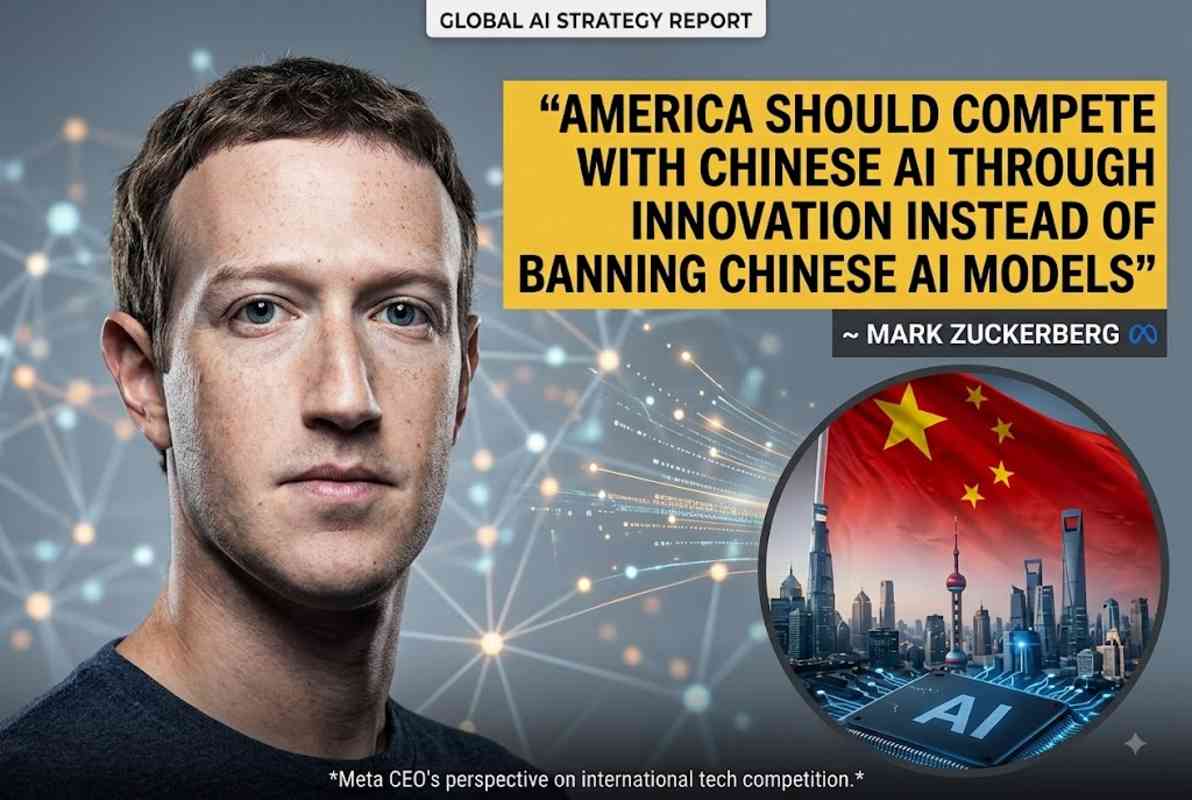
Meta chief executive Mark Zuckerberg has publicly supported that approach, arguing that attempts to restrict Chinese AI models would be ineffective and that open models can provide security benefits because more developers are able to examine and test them.
Meta has a commercial interest in that position. The company has invested heavily in its own open-weight AI models and has positioned open technology as an alternative to the closed systems operated by some of its largest competitors.
The argument nevertheless reflects a growing division within the technology industry over how advanced AI should be distributed and controlled.
Nvidia chief executive Jensen Huang has also acknowledged the quality of Chinese AI models, as Chinese developers increasingly compete with US companies on performance, efficiency and cost.
The development follows the disruption caused by DeepSeek, whose emergence triggered a major reassessment of AI infrastructure requirements and contributed to a sharp sell-off across technology and semiconductor stocks.
The roughly US$3 trillion market value decline often associated with the DeepSeek shock occurred during the earlier market reaction and should not be attributed directly to the later release of Kimi K3.
The financial reaction nevertheless demonstrated how sensitive technology markets have become to developments that could reduce the amount of computing power required to build and operate advanced AI.
Chinese AI companies are now competing on another front by making increasingly capable models available to developers through open-weight releases.
That creates a potential challenge for the traditional AI business model, in which the most powerful systems remain under the control of the companies that developed them.
The difference could become particularly important for smaller businesses, researchers and developers that cannot afford to build their own foundation models.
A developer in Manila, a university in Kathmandu or a small software company in Australia may not have the resources required to train a frontier model, but an open-weight system could allow them to deploy advanced AI and build specialised applications around it.
There are significant limitations.
Running large models locally or within private infrastructure can still be expensive, and organisations must also deal with security, maintenance, updates, hardware requirements and the technical expertise needed to operate the systems.
Open-weight models also create additional challenges because developers can modify the technology after downloading it, potentially removing safeguards or using the system in ways its original developers did not intend.
Chinese AI models face additional scrutiny over data governance, censorship, security and the legal environment in which Chinese technology companies operate.
Those concerns remain relevant, but they are separate from the question of whether the underlying technology is capable.
The growing competition is making it increasingly difficult to assess AI models simply according to where they were developed.
US companies continue to lead many areas of frontier AI, but Chinese developers are producing systems that are increasingly competitive on performance while also pursuing a different approach to distribution.
More than 50 technology companies have backed efforts to prevent restrictions on open-weight AI, with Meta and Microsoft among the companies supporting the broader position. OpenAI and Anthropic have not signed the industry letter.
The split highlights an important commercial divide.
Companies that operate closed AI systems have a direct financial interest in maintaining paid access to their models, while companies supporting open-weight systems can benefit from a wider ecosystem of developers building around downloadable models.
The issue is therefore becoming less about whether AI should be open or closed in absolute terms and more about how much control businesses and developers should have over the technology they use.
For businesses, that choice could become increasingly important as AI moves deeper into areas involving confidential information, internal systems and critical operations.
A company that relies entirely on an external AI provider remains dependent on that provider’s pricing, infrastructure, availability and terms of service.
An organisation operating its own model has greater control, although it also takes responsibility for the infrastructure and risks involved.
The rapid development of Chinese open-weight AI suggests that competition in the sector is moving beyond the race to build the largest and most expensive model.
The next stage may be determined by which companies can produce models that are powerful enough, efficient enough and accessible enough for millions of developers to actually use.
That would represent a significant shift for an industry that has largely been built around enormous investment and centralised control.
The emergence of models such as Kimi K3 does not mean Chinese AI has overtaken the global industry, nor does it remove legitimate concerns about the technology.
It does, however, demonstrate that the future of AI is becoming more competitive and more distributed.
The biggest change may ultimately be less about which company produces the world’s most powerful model and more about how many people can actually get their hands on it.