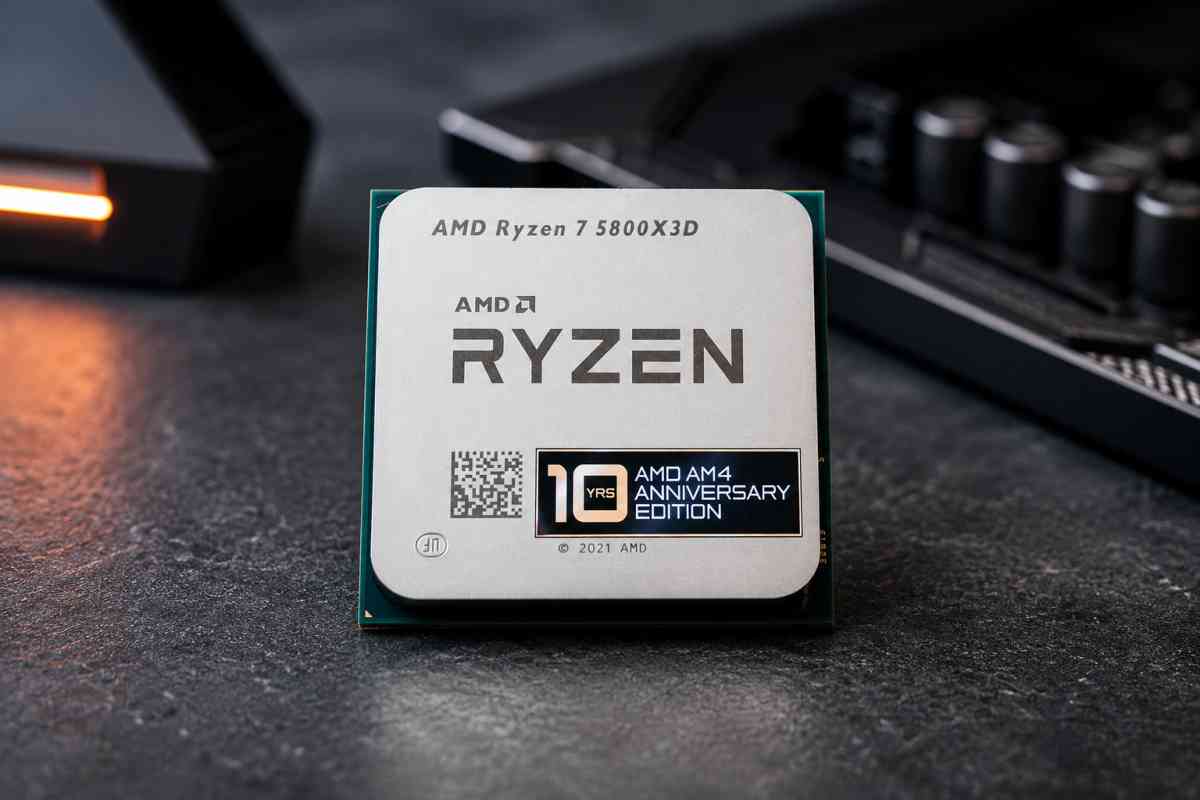


AMD’s decision to revive the Ryzen 7 5800X3D may look like good news for PC owners, but the move exposes how badly the consumer hardware market has deteriorated.
A processor released in 2022 is returning because many buyers can no longer justify moving to AMD’s newer AM5 platform once motherboard and inflated DDR5 costs are included.
The comeback is not being driven by nostalgia. It reflects a market where extending an ageing computer can now make more financial sense than buying current-generation hardware.
For decades, the PC industry operated on a familiar promise. New processors brought higher performance, while falling component prices eventually made each platform affordable.
That promise is breaking down as artificial intelligence data centres consume an increasing share of the advanced memory and manufacturing capacity once available to consumers.
An Old Processor Has Become the Affordable Option
The Ryzen 7 5800X3D was AMD’s first desktop gaming processor built with 3D V-Cache, adding additional cache to improve performance in demanding games.
It remains a capable processor, particularly for people who already own an AM4 motherboard and can upgrade without replacing most of their computer.
But AMD bringing it back years after the launch of AM5 is unusual. Processor makers normally push buyers towards new sockets, memory standards and motherboards.
AMD has said AM5 will remain supported until at least 2029, a commitment intended to reassure buyers that their motherboards will have a longer useful life.
Yet the continued importance of AM4 shows that platform longevity means little when the memory required by a newer system is priced beyond many household budgets.
AMD reportedly had to re-engineer the 5800X3D because the original TSMC manufacturing and bonding process was no longer available in the same form.
That meant completing new engineering, testing and qualification work to return an older processor to production rather than simply restarting an existing assembly line.
The effort makes commercial sense only because a large number of PC owners remain unwilling or unable to pay for the full cost of an AM5 upgrade.
AI Demand Is Reshaping the Memory Market
The main problem is not simply the price of processors. It is the cost and availability of the memory required to build a modern computer.
Samsung, SK Hynix and Micron are increasingly directing investment and production towards high-bandwidth memory used in artificial intelligence accelerators and data centres.
HBM is highly profitable and in enormous demand as Microsoft, Google, Meta, Amazon and other companies spend billions of dollars building AI computing infrastructure.
Producing high-bandwidth memory also consumes considerably more manufacturing capacity than conventional desktop memory, tightening supply elsewhere in the market.
Industry estimates suggest a single bit of HBM can require about three times the wafer capacity needed to produce an equivalent amount of standard DDR5 memory.
That creates a direct trade-off. Every production line prioritising AI memory leaves less capacity available for the RAM used in home computers and workstations.
From a manufacturer’s perspective, the decision is rational. Data-centre customers place huge orders, accept higher prices and provide stronger profit margins.
For households and smaller businesses, however, the result is a consumer memory market increasingly dictated by the purchasing power of technology giants.
DDR4 and DDR5 Prices Have Surged
The supplied market analysis estimates that DDR4 memory prices have risen between 200 and 300 per cent compared with their mid-2025 levels.
DDR5 prices are estimated to have increased by between 300 and 440 per cent over the same period, although retail costs vary by brand, country and specification.
Some buyers are now being asked to pay about US$200 for 32GB of DDR4 memory and more than US$400 for the same capacity of DDR5.
Those prices destroy the assumption that older memory will always provide a cheap fallback when newer technology becomes too expensive.
DDR4 supply is also tightening as manufacturers reduce production and redirect investment towards DDR5, server memory and high-bandwidth products.
The result is a market where both the old and new upgrade paths are becoming more expensive at the same time.
An AM4 owner can avoid buying a new motherboard by installing the revived 5800X3D, but even that option is being weakened by rising DDR4 prices.
AMD is not restoring affordable computing. It is directing customers towards the least expensive aisle in a store where every shelf now costs more.
The Traditional Upgrade Cycle Is Broken
Desktop processor launches once followed an unwritten bargain between hardware companies and consumers.
Buyers accepted new sockets and memory standards because the performance gains were substantial and the surrounding components eventually became affordable.
That bargain no longer holds when memory availability is determined by the demands of hyperscale AI data centres rather than the budgets of PC owners.
A new processor generation may still deliver higher benchmark results, but the complete platform can remain too expensive to justify buying.
Waiting for the next launch is also no guarantee of relief. Memory shortages can persist across several processor generations and affect both new and old systems.
The return of the 5800X3D therefore says more about the wider market than it does about AMD’s product strategy.
It shows that a four-year-old platform can remain attractive not because progress has stopped, but because the cost of accessing that progress has become unreasonable.
Consumers Are Losing the AI Hardware Bidding War
PC users are now competing indirectly with corporations building vast AI systems backed by multibillion-dollar capital budgets.
Consumers do not negotiate long-term memory supply agreements or order enough chips to influence where manufacturers allocate factory capacity.
They simply face higher prices at retailers after the most profitable customers have already secured priority access to production.
The AI boom is often presented as an economic and technological breakthrough, but its costs are increasingly appearing in markets far beyond data centres.
Higher memory prices can affect gaming computers, business workstations, laptops, servers and everyday systems used by households, schools and small organisations.
These consequences deserve scrutiny because the companies driving AI demand are not carrying the full cost of the shortages they help create.
Part of that cost is being transferred to consumers through more expensive upgrades, reduced product choice and the forced extension of ageing hardware.
The Next CPU Launch Will Not Fix This
AMD did not create the global memory imbalance, and bringing the 5800X3D back may genuinely help existing AM4 owners avoid a costly platform replacement.
But its return should not be mistaken for a heartwarming comeback or evidence that consumers have suddenly gained more choice.
It is evidence that the economics of personal computing have drifted away from the people the market was once built to serve.
A healthy upgrade cycle would make newer hardware steadily more accessible. It would not require manufacturers to revive old processors to keep upgrades viable.
For consumers trying to decide when to replace a computer, CPU roadmaps are no longer enough. Memory production and AI infrastructure spending now matter just as much.
Until conventional RAM supply improves, buying a new processor simply because a new generation exists may be difficult to justify.
AMD bringing back the Ryzen 7 5800X3D is not worth celebrating.
It is a warning that the AI hardware race is reshaping the PC market, and ordinary buyers are being left to pay the price.