

The different types of technology used in 2026 include artificial intelligence, information technology, robotics, cloud computing, biotechnology, cybersecurity and quantum technology.
Technology also covers less visible systems used in agriculture, construction, medicine, manufacturing, transport, defence, education, entertainment and environmental protection.
Some technologies exist mainly as software. Others combine machinery, electronics, scientific knowledge, physical infrastructure and skilled human operators.
Understanding these categories helps explain how technology affects employment, business, public services, personal privacy and control over essential infrastructure.
How Fast Is Technology Changing in 2026?
Selected annual growth rates show that AI and data-centre infrastructure are expanding far faster than established digital markets.
AI infrastructure is expanding rapidly, while mature technologies such as internet access are growing more slowly as they approach wider global adoption.
| Indicator | Growth rate | Measurement period |
|---|---|---|
| Data-centre systems spending | 55.8% | 2026 forecast |
| Artificial intelligence spending | 47% | 2026 forecast |
| Software spending | 15.1% | 2026 forecast |
| Connected IoT devices | 14% | 2025 year-on-year |
| Overall IT spending | 13.5% | 2026 forecast |
| Global internet users | 3.3% | 2025 year-on-year |
Different Types of Technology: Definitions and Examples in the Dictionary
The Oxford dictionary defines the word “technology” as: “The application of scientific knowledge for practical purposes, especially in industry”.
The Collins Dictionary describes technology as “methods, systems and devices which are the result of scientific knowledge being used for practical purposes”.
These definitions are useful because technology is not limited to computers, mobile phones or software. A bridge, medical implant, irrigation system or aircraft engine is also technology.
What Exactly Is Technology, and What Is It Good For?
Technology is the practical use of knowledge, tools, skills and processes to solve problems, produce goods, improve services or perform tasks more efficiently.
The term can describe a single device, such as a computer processor, or a complete system involving machinery, software, workers, networks and operating procedures.
Questions about technology have occupied researchers, engineers and philosophers for decades because the meaning changes according to context.
A farmer, surgeon, software developer and aircraft engineer may all use the word differently, although each is applying knowledge to achieve a practical result.
Technology can improve health, productivity, transport, communication and access to information. It can also increase surveillance, dependence, inequality and environmental damage.
The value of a technology therefore depends on more than what it can do. It also depends on who controls it, who benefits and who carries the risk when it fails.
Technology by the Numbers
Technology now underpins almost every part of modern life, from communication and banking to healthcare, commerce, education and public administration.
Internet Technology
Around six billion people, representing about 74% of the global population, were using the internet in 2025, according to the latest ITU estimate.
That was higher than the widely cited February 2025 figure of 5.56 billion users. However, about 2.2 billion people remained offline.
Artificial Intelligence
Some market estimates place the number of people using AI-powered tools and services above 1.2 billion, although there is no independently audited global count.
A more reliable measure is spending. Worldwide expenditure on AI hardware, software and services is forecast to reach $US2.52 trillion in 2026, up 44%
Internet of Things
The number of active connected IoT devices was expected to reach 21.1 billion by the end of 2025, excluding ordinary computers, phones and tablets.
IoT Analytics expects the total to reach about 39 billion by 2030 as more industrial machines, vehicles, sensors and household products are connected.
Cloud Computing
Claims that half of the world’s data is stored in the cloud depend heavily on how cloud storage and data are measured.
Flexera’s 2026 survey found that 51 per cent of enterprise data and 61% of small-business data was in the public cloud.
It also found that 54 per cent of enterprise workloads and 63% of small-business workloads were running in public cloud environments.
Big Data
Widely circulated forecasts placed global data creation and storage near 200 zettabytes by the middle of the decade.
However, estimates vary because some researchers count data that is created, copied and consumed, while others count only information retained in storage.
Cybersecurity
The frequently quoted claim that 43% of organisational leaders expected a cyberattack to materially affect them came from a 2023 World Economic Forum report.
The 2026 report uses different measures. It found 64% of organisations now consider geopolitically motivated cyberattacks in their risk strategies.
Together, these technologies are changing how people communicate, work, shop, learn, travel and access information across an increasingly connected economy.
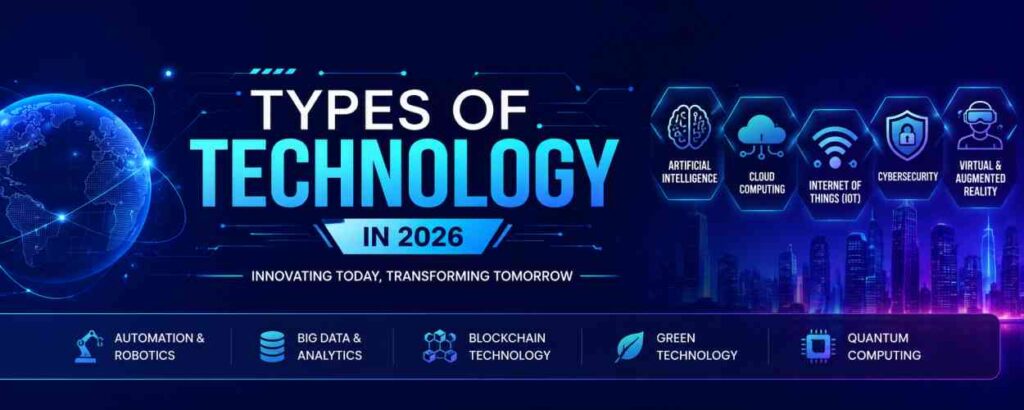
Top 10 Must-Know Technology Statistics for 2026
1. Global IT Spending Is Forecast to Reach $US6.31 Trillion
Worldwide IT expenditure is expected to reach $US6.31 trillion in 2026, an increase of 13.5 per cent compared with 2025.
The earlier $US5.6 trillion figure referred to a 2025 forecast and should not be presented as the current 2026 estimate.
2. IT Services Remain the Largest Spending Category
Global spending on IT services is forecast to exceed $US1.87 trillion in 2026, up from about $US1.72 trillion in 2025.
This category includes application services, infrastructure implementation, managed services and cloud infrastructure services.
3. AI Spending Is Forecast to Rise by 44 Per Cent
Worldwide AI spending is expected to reach $US2.52 trillion during 2026, driven heavily by servers, computing infrastructure and software.
AI infrastructure alone is expected to add about $US401 billion in spending as technology providers expand their computing capacity.
4. Data Centre Spending Is Growing Faster Than Other IT Categories
Spending on data centre systems is forecast to reach almost $US788 billion in 2026, representing growth of 55.8 per cent.
Demand for AI processors, high-bandwidth memory and specialised servers is helping drive the increase.
5. Six Billion People Are Now Online
The ITU estimates that six billion people were using the internet in 2025, equivalent to roughly three-quarters of the global population.
Despite that growth, 2.2 billion people remained offline, mostly in lower-income and developing economies.
6. More Than 21 Billion IoT Devices Are Connected
The number of active IoT devices was expected to reach 21.1 billion by the end of 2025, an annual increase of about 14 per cent.
The figure includes industrial equipment, gateways, smart appliances and sensors, but excludes ordinary smartphones, laptops and consumer tablets.
7. Public Cloud Workloads Continue to Expand
Flexera found that 54 per cent of enterprise workloads were running in the public cloud in 2026.
Among small and medium-sized businesses, the public-cloud share reached 63%, up eight percentage points from the previous year.
8. Cyber Risk Is Increasingly Connected to Geopolitics
Around 64 per cent of organisations consider geopolitically motivated attacks when planning their cyber defences.
Disinformation was considered by 49 per cent, while 42 per cent identified the convergence of IT, operational technology, IoT and robotics.
9. Hundreds of Thousands of IT Positions Open Each Year
The US Bureau of Labor Statistics now projects about 317,700 openings across computer and information technology occupations each year from 2024 to 2034.
That replaces the older estimate of more than 377,000 annual openings covering the earlier 2022-to-2032 forecast period.
10. Artificial Intelligence Dominates Technology Search Interest
A 2024 keyword analysis found that artificial intelligence attracted more than 668,000 average monthly searches.
Searches for generative AI rose by 2,806 per cent between 2022 and 2024. These figures measure search interest, not verified adoption.
Earlier research also found that 64 per cent of surveyed companies expected to increase their IT budgets in 2025.
The same dataset reported that businesses expected to allocate 19 per cent of their budgets to hardware and another 19 per cent to software.
What Are the Main Types of Technology?
There is no single universally accepted list of technology categories because many modern systems cross several fields.
An autonomous vehicle, for example, combines transport technology, robotics, AI, telecommunications, software, sensors and semiconductor technology.
The following list explains 36 major types of technology, their purpose and practical examples of how each category is used in 2026.
1. Information Technology
Information technology, commonly called IT, covers the computers, servers, software and networks used to create, process, store and exchange information.
Businesses use IT for email, websites, customer records, accounting, databases, workplace applications and internal communications.
IT teams also manage user accounts, devices, backups, software licences, technical support and access to company systems.
Examples of information technology include:
- Computers and servers
- Databases
- Business software
- Computer networks
- Data storage systems
- Email platforms
- IT support systems
2. Artificial Intelligence
Artificial intelligence allows computer systems to perform tasks associated with reasoning, language, recognition, prediction and decision-making.
AI systems can analyse images, recognise voices, recommend products, identify fraud, generate text or assist with scientific research.
AI does not think or understand information in the same way as a person. It identifies patterns and produces results based on data, programming and statistical models.
Examples of artificial intelligence include:
- Machine-learning systems
- Computer vision
- Voice recognition
- Recommendation engines
- Fraud detection
- Autonomous navigation
- Predictive analytics
3. Generative AI
Generative AI is a branch of artificial intelligence that creates new text, images, audio, video, software code and other content.
These systems learn statistical relationships from large collections of existing material and use those patterns to produce new outputs.
Generative AI is used in customer service, software development, advertising, design, education and document preparation.
It has also created disputes over copyright, accuracy, employment, deepfakes, misinformation and the use of personal or creative data without consent.
Examples of generative AI include:
- AI writing assistants
- Image generators
- Video-generation systems
- AI coding assistants
- Voice-cloning tools
- Music generators
- Synthetic media platforms
4. Artificial Superintelligence
Artificial superintelligence describes a hypothetical AI system that would outperform humans across almost every intellectual task.
No verified artificial superintelligence exists in 2026. Existing AI systems remain specialised, dependent on training data and vulnerable to serious errors.
The term should not be confused with generative AI, machine learning or artificial general intelligence.
Debate about superintelligence concerns whether such systems could eventually operate beyond meaningful human control.
Possible characteristics could include:
- Independent scientific discovery
- Advanced strategic planning
- Self-directed learning
- Autonomous system design
- Capabilities exceeding human experts
5. Software Technology
Software technology covers the programs and digital instructions used to operate computers, mobile devices, machinery and connected equipment.
It includes operating systems, mobile applications, websites, games, databases and embedded software inside vehicles and medical devices.
Software is increasingly sold through subscriptions rather than permanent licences, leaving customers dependent on continuing payments and external providers.
Examples of software technology include:
- Operating systems
- Mobile applications
- Web applications
- Business software
- Video games
- Embedded software
- Database systems
6. Cloud Computing
Cloud computing provides processing power, storage, databases and software through remotely operated data centres.
It allows organisations to use infrastructure without purchasing and maintaining every server themselves.
Public clouds serve multiple customers, while private clouds are dedicated to one organisation. Hybrid cloud systems combine cloud platforms with local infrastructure.
Cloud services can reduce some operating costs, but they also create dependence on a small number of dominant providers.
Examples of cloud computing include:
- Cloud storage
- Hosted email
- Software as a Service
- Infrastructure as a Service
- Cloud databases
- Remote backup systems
- Hosted virtual machines
7. Edge Computing
Edge computing processes data near the location where it is generated instead of sending everything to a distant data centre.
It is used where rapid responses, reduced bandwidth use or local control are important.
Factories, hospitals, telecommunications networks and autonomous vehicles may process information locally before sending selected data to the cloud.
Examples of edge computing include:
- Factory gateways
- Smart traffic systems
- Local AI cameras
- Vehicle computers
- Retail analytics devices
- Telecommunications equipment
- Medical monitoring systems
8. Data and Big Data Technology
Data technology covers the collection, storage, organisation, analysis and governance of information.
Big data refers to datasets that are too large, fast or complex for traditional tools to process efficiently.
Businesses use data technology to predict demand, understand customers, detect fraud and measure performance.
The same systems can also support intrusive profiling when information is collected without clear limits or reused for unrelated purposes.
Examples of data technology include:
- Data warehouses
- Data lakes
- Analytics platforms
- Business intelligence
- Database systems
- Data visualisation
- Predictive modelling
9. Cybersecurity Technology
Cybersecurity technology protects computers, networks, applications and data from theft, disruption, manipulation and unauthorised access.
It includes tools for preventing attacks, detecting suspicious activity and recovering after systems have been compromised.
Security products cannot compensate for weak management, unpatched software, excessive permissions or inadequate staff training.
Examples of cybersecurity technology include:
- Firewalls
- Encryption
- Antivirus software
- Endpoint protection
- Intrusion detection
- Multifactor authentication
- Backup and recovery systems
10. Privacy-Enhancing Technology
Privacy-enhancing technology allows information to be processed while reducing unnecessary exposure of personal or confidential data.
These systems can protect information while it is stored, transmitted or actively processed.
Privacy technology is increasingly important as AI and cloud systems collect larger volumes of personal, behavioural and commercial information.
Examples include:
- End-to-end encryption
- Data anonymisation
- Differential privacy
- Confidential computing
- Secure multiparty computation
- Tokenisation
- Zero-knowledge proofs
11. Operational Technology
Operational technology, or OT, controls or monitors physical machines, equipment and industrial processes.
Unlike conventional IT, which primarily handles information, OT can directly affect factories, electricity networks, transport systems and water infrastructure.
A compromised OT system can therefore cause physical disruption rather than only data loss.
Examples of operational technology include:
- Industrial control systems
- Programmable logic controllers
- Supervisory control systems
- Building-management systems
- Power-grid controls
- Factory equipment
- Railway signalling systems
12. Automation Technology
Automation technology enables processes to operate with reduced direct human intervention.
Factories use automation to assemble products, while offices use it to process invoices, customer requests and administrative tasks.
Automation can reduce repetitive work, but poorly designed systems may accelerate errors or remove human review from important decisions.
Examples of automation technology include:
- Robotic process automation
- Automated production lines
- Warehouse sorting systems
- Payroll automation
- Automated testing
- Smart irrigation
- Self-service checkouts
13. Robotics Technology
Robotics combines mechanical engineering, electronics, sensors and software to create machines that perform physical tasks.
Industrial robots weld, assemble and package goods. Service robots operate in hospitals, warehouses, farms and hazardous environments.
AI is making robots more adaptable by helping them recognise objects and respond to changing conditions.
Examples of robotics include:
- Industrial robot arms
- Warehouse robots
- Surgical robots
- Agricultural robots
- Bomb-disposal robots
- Inspection robots
- Humanoid robots
14. Communication Technology
Communication technology enables people, organisations and machines to exchange information across short or long distances.
It includes telephone networks, internet services, messaging platforms, broadcasting, fibre networks and satellite communications.
Modern economies depend heavily on these systems, meaning a major outage can interrupt banking, transport, emergency services and government operations.
Examples of communication technology include:
- Mobile networks
- Fibre-optic networks
- Video conferencing
- Radio
- Television broadcasting
- Satellite communications
15. Wireless and Mobile Technology
Wireless technology transmits information without a physical cable using radio, microwave, satellite or related signals.
Mobile technology allows users and machines to communicate while moving between locations.
Wireless systems provide convenience and broad coverage, although they also increase the number of devices and access points requiring protection.
Examples include:
- Wi-Fi
- Bluetooth
- 4G and 5G networks
- Satellite internet
- Near-field communication
- Wireless sensors
- Mobile hotspots
16. Internet of Things Technology
The Internet of Things connects physical objects to networks so they can collect information, exchange data or receive instructions.
IoT technology is used in homes, factories, hospitals, farms, vehicles and public infrastructure.
Connected products can improve monitoring and efficiency, but devices abandoned without security updates may remain vulnerable for years.
Examples of IoT technology include:
- Smart electricity meters
- Connected appliances
- Industrial sensors
- Security cameras
- Wearable monitors
- Vehicle trackers
- Environmental sensors
17. Semiconductor Technology
Semiconductor technology produces the processors, memory chips, sensors and electronic components used by modern devices.
Semiconductors are essential to computers, vehicles, medical equipment, telecommunications networks, defence systems and data centres.
Chip production has become a geopolitical issue because advanced manufacturing is concentrated among a limited number of companies and countries.
Examples include:
- Central processing units
- Graphics processors
- AI accelerators
- Memory chips
- Mobile processors
- Power semiconductors
- Image sensors
18. Quantum Technology
Quantum technology uses principles of quantum physics to develop new forms of computing, sensing, measurement and communication.
Quantum computers may eventually solve certain problems that are difficult for conventional machines, although current systems remain limited.
The immediate concern is encryption. Governments and businesses are beginning to adopt post-quantum security before future machines can threaten existing protections.
Examples of quantum technology include:
- Quantum computers
- Quantum sensors
- Quantum communication
- Quantum cryptography
- Quantum imaging
- Quantum simulation
- Atomic clocks
19. Blockchain Technology
Blockchain technology records transactions across a distributed network rather than relying on one central database administrator.
It is best known for cryptocurrencies, but it can also support asset tracking, settlement systems and digital records.
A blockchain can make records difficult to alter, but it cannot prove that the information originally entered was accurate.
The main blockchain types include:
- Public blockchains
- Private blockchains
- Consortium blockchains
- Hybrid blockchains
- Permissioned ledgers
20. Assistive Technology
Assistive technology helps people with disabilities or age-related limitations perform tasks more independently.
It can support mobility, communication, hearing, vision, learning and access to computers or household equipment.
Assistive technology ranges from simple mechanical devices to advanced electronic systems controlled through voice, eye movement or neural signals.
Examples include:
- Wheelchairs
- Hearing aids
- Screen readers
- Prosthetic limbs
- Communication devices
- Stair lifts
- Voice-control systems
21. Agricultural Technology
Agricultural technology, or AgTech, applies machinery, sensors, software and scientific knowledge to farming.
It can help farmers monitor crops, manage livestock, conserve water and apply fertiliser or pesticides more precisely.
Proprietary equipment may also leave farmers dependent on manufacturers for repairs, software access and data generated on their own properties.
Examples of agricultural technology include:
- GPS-guided machinery
- Agricultural drones
- Soil sensors
- Automated irrigation
- Livestock trackers
- Robotic harvesters
- Satellite crop monitoring
22. Food Technology
Food technology applies science and engineering to the production, processing, storage, packaging and distribution of food.
It helps producers improve food safety, extend shelf life, reduce waste and create alternative ingredients.
The category ranges from fermentation and refrigeration to laboratory-grown products and automated processing plants.
Examples of food technology include:
- Food-preservation systems
- Pasteurisation
- Fermentation
- Cold-storage technology
- Alternative proteins
- Automated food processing
- Smart packaging
23. Medical Technology
Medical technology includes the devices, systems and procedures used to prevent, diagnose, monitor and treat illness.
It covers basic equipment such as thermometers as well as advanced imaging machines, surgical robots and implanted devices.
Medical technology must be tested carefully because inaccurate or insecure systems can directly harm patients.
Examples of medical technology include:
- MRI scanners
- Pacemakers
- Surgical robots
- Prosthetic devices
- Diagnostic software
- Patient monitors
- Radiation therapy equipment
24. Biotechnology
Biotechnology uses living organisms, cells or biological processes to create products and solve practical problems.
Humans have used biotechnology through fermentation for thousands of years. Modern biotechnology can directly modify cells, microorganisms or genetic material.
It is used in medicine, agriculture, food production, chemicals, environmental treatment and biological manufacturing.
Examples of biotechnology include:
- Genetic engineering
- Vaccine production
- Fermentation
- Gene therapy
- Synthetic biology
- Biofuels
- Laboratory-grown tissue
25. Neurotechnology
Neurotechnology interacts with the brain, spinal cord or nervous system to measure, influence or restore neurological functions.
It includes brain imaging, stimulation devices, neural implants and brain-computer interfaces.
Neural information may reveal sensitive details about health, attention or emotional responses, creating privacy risks not adequately covered by many existing laws.
Examples include:
- Brain-computer interfaces
- Neural implants
- Deep-brain stimulation
- Electroencephalography
- Neuroprosthetics
- Brain-imaging equipment
- Neural rehabilitation systems
26. Educational Technology
Educational technology, or EdTech, supports teaching, learning, assessment and school administration.
It includes online courses, learning-management systems, digital textbooks, classroom devices and accessibility tools.
A 2024 technology-statistics review reported that 33 per cent of US college students considered digital learning technology very important to their education.
Schools must still consider whether educational platforms collect unnecessary information or expose students to commercial profiling.
Examples of EdTech include:
- Online learning platforms
- Digital textbooks
- Virtual classrooms
- AI tutoring systems
- Classroom displays
- Learning-management systems
- Educational games
27. Construction Technology
Construction technology includes the machinery, software and engineering methods used to plan, build and maintain structures.
Digital systems can identify design conflicts before work begins, while drones and sensors can monitor progress and safety.
Prefabrication and automated equipment may reduce waste, although they also require specialised skills and reliable supply chains.
Examples include:
- Building-information modelling
- Surveying drones
- Construction robots
- Prefabricated structures
- Smart safety equipment
- Project-management software
- Site-monitoring sensors
28. Architectural Technology
Architectural technology applies technical knowledge to the design, performance and construction of buildings.
It connects architectural design with engineering, materials, environmental performance and construction methods.
Architectural technologists may work on energy efficiency, accessibility, fire safety, structural systems and building regulations.
Examples include:
- Computer-aided design
- Three-dimensional modelling
- Digital building simulations
- Energy modelling
- Virtual building walkthroughs
- Smart-building design
- Sustainable materials
29. Industrial and Manufacturing Technology
Industrial technology includes the machinery and production systems used to manufacture goods at scale.
Modern factories combine robots, sensors, computer-controlled equipment, digital twins and automated inspection.
Connected manufacturing can improve productivity, but a cyberattack may interrupt physical production or damage expensive equipment.
Examples include:
- CNC machinery
- Automated production lines
- Conveyor systems
- Industrial robots
- Machine-vision inspection
- Digital twins
- Predictive maintenance
30. 3D Printing Technology
Three-dimensional printing, also called additive manufacturing, creates objects by adding material layer by layer from a digital design.
It can produce prototypes, tools, medical implants, replacement components and complex parts that are difficult to manufacture conventionally.
Its value is greatest where customisation, low production volumes or unusual shapes justify the cost.
Examples of 3D printing include:
- Plastic prototyping
- Metal component printing
- Dental implants
- Custom prosthetics
- Printed building components
- Aerospace parts
- Bioprinted tissue structures
31. Vehicle and Transport Technology
Vehicle technology covers the mechanical, electronic and digital systems used to move people and goods.
Modern vehicles use computers to manage engines, batteries, braking, navigation, safety systems and driver assistance.
Connected vehicles also collect detailed information about location, driving behaviour, passengers and surrounding roads.
Examples include:
- Electric vehicles
- Battery-management systems
- Collision-avoidance technology
- Autonomous driving
- Railway technology
- Fleet-management systems
- Traffic-control systems
32. Aerospace and Space Technology
Aerospace technology covers aircraft, spacecraft and the equipment used to design, operate and maintain them.
Space technology includes satellites, launch systems, navigation services, space communications and Earth-observation equipment.
These systems support aviation, weather forecasting, banking, emergency services, defence and global communications.
Examples include:
- Commercial aircraft
- Uncrewed aerial vehicles
- Satellites
- Launch vehicles
- Navigation systems
- Space telescopes
- Ground-control systems
33. Marine Technology
Marine technology supports the safe use, study, protection and commercial operation of oceans, rivers and coastal environments.
It includes ship systems, underwater vehicles, navigation equipment, marine sensors and offshore energy infrastructure.
Marine technology is used by shipping companies, researchers, defence forces, fisheries and environmental agencies.
Examples include:
- Sonar
- Autonomous underwater vehicles
- Ship-navigation systems
- Ocean-monitoring buoys
- Offshore wind platforms
- Underwater communications
- Marine rescue technology
34. Environmental and Energy Technology
Environmental technology is used to reduce pollution, protect natural resources and monitor environmental change.
Energy technology covers the production, storage, transmission and management of electricity, heat and fuel.
Renewable generation requires supporting infrastructure, including transmission networks, storage systems and equipment capable of balancing supply and demand.
Examples include:
- Solar panels
- Wind turbines
- Battery storage
- Water-treatment systems
- Air-quality sensors
- Electricity grids
- Emissions-monitoring equipment
35. Entertainment, Sports and Hospitality Technology
Entertainment technology supports games, music, television, cinema, live events and other recreational experiences.
Sports technology measures performance, supports officiating and helps athletes or medical teams analyse movement and physical condition.
Hospitality technology manages accommodation, reservations, payments, customer communication and building operations.
Examples include:
- Video-game systems
- Streaming platforms
- Virtual and augmented reality
- Stadium technology
- Athlete-tracking devices
- Hotel-booking systems
- Digital ticketing
36. Business, Financial, Forensic and Defence Technology
Business technology supports company operations, including accounting, sales, communication, logistics and customer management.
Financial technology applies digital systems to payments, banking, investment, insurance and lending.
Forensic technology helps investigators analyse evidence, while defence technology supports military communications, surveillance, vehicles and weapons systems.
These fields require particularly strong oversight because automated decisions, financial profiling, surveillance and military systems can carry serious consequences.
Examples include:
- Enterprise resource planning
- Customer-management software
- Digital payments
- Fraud-detection systems
- Fingerprint analysis
- DNA profiling
- Military radar and communications
How Different Technologies Work Together
Most modern products cannot be placed within only one category.
A smart medical monitor may combine medical technology, IoT sensors, cloud computing, cybersecurity, mobile communications and artificial intelligence.
An electric vehicle uses transport technology, semiconductors, software, batteries, mobile networks, sensors, robotics and automated safety systems.
This convergence can improve products and services, but it can also make accountability difficult when systems are built and operated by several companies.
Which Types of Technology Are Most Important in 2026?
Artificial intelligence attracts the most public attention, but it depends on other technologies to function.
AI systems require semiconductors, data centres, electricity, cloud infrastructure, telecommunications networks, software and large volumes of data.
Cybersecurity is equally important because more essential services now depend on connected digital systems.
Medical, energy, agricultural and environmental technologies may have a more direct effect on health, food security and living conditions than consumer software.
The importance of a technology therefore depends on the problem being considered, rather than how much publicity or investment it attracts.
Advantages of Modern Technology
Technology can reduce repetitive work, improve medical treatment, expand access to education and support faster communication.
It can help scientists analyse complex information, enable people with disabilities to live more independently and improve safety in dangerous workplaces.
Modern systems can also reduce waste, monitor environmental damage and help organisations respond more quickly to emergencies.
Disadvantages and Risks of Technology
Technology can eliminate jobs, increase surveillance, expose personal information and concentrate power among large companies or governments.
Connected systems are vulnerable to outages and cyberattacks, while subscription services can leave customers paying indefinitely for products they once owned.
AI and automated decision systems may reproduce errors or discrimination while making it harder for affected people to identify who is responsible.
Technology can also consume large quantities of electricity, water, minerals and other resources that are often hidden from users.
Takeaway – Tech Type Conclusion
Technology in 2026 is no longer confined to computers and smartphones. AI, robotics, biotechnology, cloud systems, medical devices, agricultural machinery and industrial automation increasingly operate as connected systems.
The scale of that shift is visible in global spending. Worldwide IT expenditure is forecast to reach $US6.31 trillion in 2026, up 13.5 per cent, while AI spending is expected to hit $US2.59 trillion after rising 47 per cent in one year.
Digital transformation is also moving deeper into daily operations. In 2026, 54 per cent of enterprise workloads and 63 per cent of small-business workloads were running in public-cloud environments, while 73 per cent of organisations operated hybrid-cloud systems.
Connectivity remains the foundation beneath these technologies. The latest ITU figures show six billion people, or 74 per cent of the global population, are online, although 2.2 billion people remain disconnected.
The benefits are substantial, but they are not automatic. Technology must ultimately be judged by whether it improves lives, distributes benefits fairly, protects personal information and holds governments and companies accountable when systems fail.