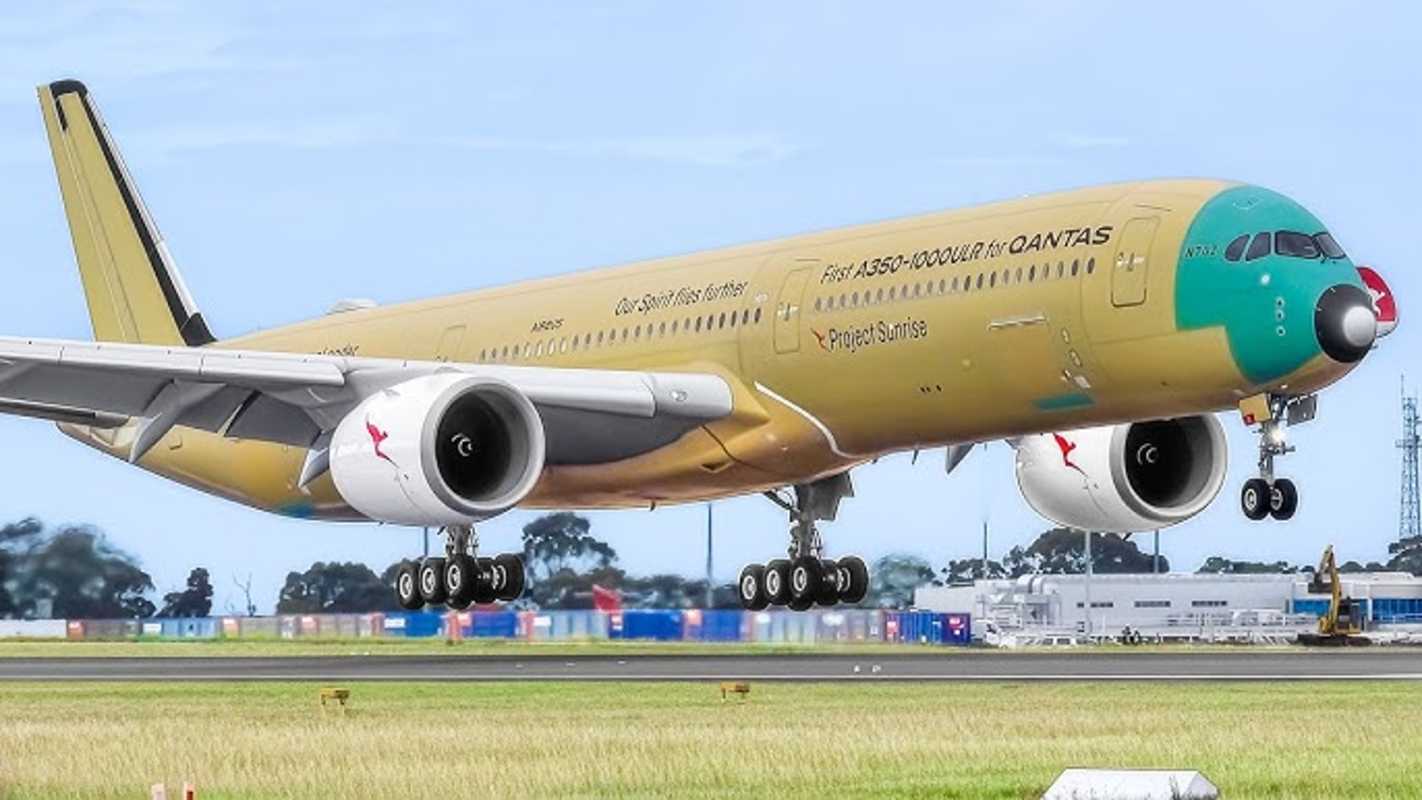


Qantas’s plan to launch the world’s longest commercial passenger flights has been promoted as the next step in international travel, promising Australians direct connections to cities including London and New York without the need for a stopover.
The airline’s ambitious Project Sunrise program will use specially configured Airbus A350-1000ULR aircraft to operate flights lasting up to 22 hours, removing traditional stopovers and creating a new category of ultra-long-haul travel.
Qantas says the aircraft has been designed around passenger comfort, with extensive research, cabin innovations and wellbeing features aimed at reducing fatigue and improving the experience of spending almost an entire day in the air.
But not everyone is convinced the convenience of a direct flight will outweigh the physical challenges of such a long journey.
Kerrie McCallum, editor-in-chief of Escape.com.au, has voiced concerns about whether the experience will be comfortable enough for everyday travellers, particularly those flying in economy where space remains limited compared with premium cabins.
McCallum says the idea of remaining airborne for 22 hours makes her uneasy, despite having taken part in many demanding travel experiences including dune-bashing, polar plunges, deep-sea diving and sailing the Nile.
Her concerns come as Qantas prepares to introduce Project Sunrise after years of planning, aircraft development delays and supply chain challenges.
The aircraft has been developed following more than 150 hours of passenger comfort testing, with researchers examining how travellers respond to long periods in the air, including sleep patterns, movement, lighting, food and hydration.
Qantas also redesigned the cabin environment to help passengers cope with extended travel, with a lower-density layout that provides more space between seats compared with many existing long-haul aircraft.
The cabin will include advanced lighting technology designed to support passengers’ body clocks by adjusting light levels throughout the flight while the blue-enriched lighting system is intended to help travellers adapt to different time zones and reduce the impact of jet lag.
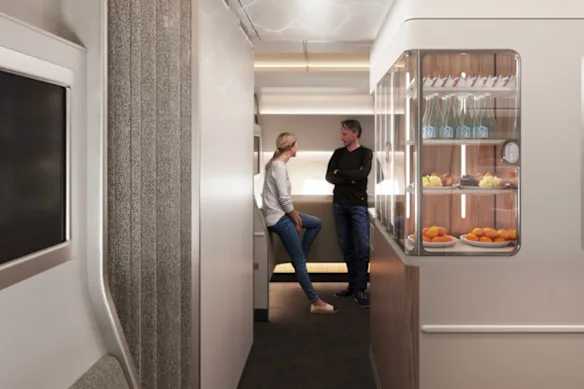
Passengers will also have access to dedicated wellbeing areas where they can leave their seats, stretch and move around.
The spaces will include screens showing guided exercises aimed at improving circulation and reducing discomfort caused by sitting for long periods.
However, McCallum believes the biggest challenge remains unchanged: getting meaningful rest during a 22-hour journey.
She said features such as mood lighting, exercise areas and onboard entertainment may not overcome the difficulty of sleeping upright, particularly for economy passengers who are unlikely to have access to lie-flat seating.
“Most of us will be enduring it in economy,” she wrote, describing concerns about jet lag, boredom and the physical strain of being confined to an aircraft for such an extended period.
McCallum suggested airlines should place greater emphasis on practical comfort improvements, including cleaner bathrooms, better sleeping options and more ways for economy passengers to rest horizontally.
She also highlighted alternatives being explored by other airlines, including Air New Zealand’s Skynest bunk concept and Skycouch seating, which focus on helping passengers sleep more comfortably during long-haul flights.
Qantas says Project Sunrise has been shaped by passenger research and is designed to make direct long-distance travel more manageable. The aircraft will feature improved cabin air systems, faster Wi-Fi, upgraded entertainment and dedicated features intended to support passenger wellbeing.
Premium travellers will receive additional benefits, including specially designed dining experiences, while economy passengers will rely more heavily on the broader cabin improvements and wellbeing features.
The airline believes demand for direct flights between Australia and major global cities will be strong, particularly among travellers who value saving several hours and avoiding airport transfers.
McCallum accepts that many passengers may welcome the convenience, but she believes a stopover can provide benefits that a non-stop flight cannot, including the chance to leave the aircraft, shower, move around and recover before continuing the journey.
For some travellers, the appeal of stepping off a plane in London or New York after a single flight will outweigh the discomfort of spending 22 hours onboard.
For others, including McCallum, the question remains whether technology can truly replace the basic human need for space, movement and proper sleep during one of the longest passenger journeys ever scheduled.