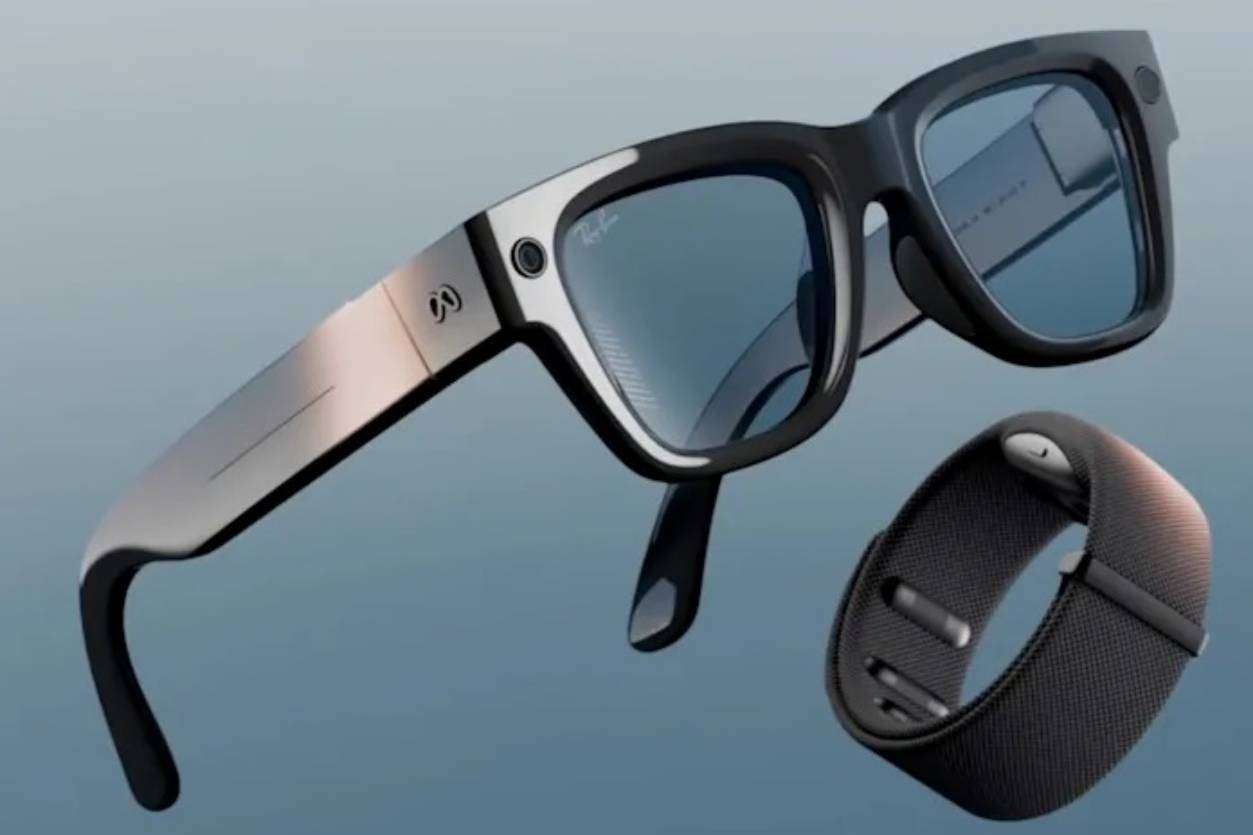


The star of the show was the Meta Ray-Ban Display, announced by CEO Mark Zuckerberg as a product “that people can buy in a couple of weeks, starting September 30,” priced at $799.
Unlike previous iterations, these glasses feature a built-in display and come bundled with an innovative wristband controller, representing Meta’s most ambitious consumer-ready augmented reality product to date.
The new lineup also includes the Ray-Ban Meta (gen 2) and the Oakley Vanguard specs designed specifically for athletes, demonstrating Meta’s strategy to diversify its smart glasses offerings across different market segments.
Ambitious Production Goals
Perhaps most striking is Meta’s production ambition. The company is seeking to produce 10 million pairs of Meta glasses each year starting in 2026, according to EssilorLuxottica’s Chief Wearables Officer Rocco Basilico. This aggressive target suggests Meta’s confidence that smart glasses are ready for mainstream adoption.
The Meta Ray-Ban Display glasses are positioned as key to reaching this production milestone, with Basilico noting that “You can wear the glasses and feel” the difference in user experience compared to previous generations.
Technical Innovation and Challenges
The new glasses incorporate advanced AI capabilities and feature the ability to work “in tandem with a wireless computing ‘puck,’ projecting 3D visuals onto the physical world that people can interact with using a wristband”.
However, the technology isn’t without its challenges. During Meta Connect demonstrations, “at different points during the event, the live” demos experienced technical difficulties, highlighting the complex engineering challenges still facing the emerging smart glasses category.
Market Context and Competition
The announcement comes at a time when the wearable technology market is experiencing renewed interest from major tech companies. The smart glasses space, once dominated by Google’s failed Glass experiment, is seeing fresh investment from companies betting on AI integration as the key differentiator.
Meta’s aggressive timeline and production targets signal the company’s belief that 2025-2026 will be the inflection point for mainstream smart glasses adoption.
With the company’s significant investments in AI infrastructure and partnerships with established eyewear manufacturers like Ray-Ban and Oakley, Meta appears positioned to lead this next wave of wearable computing.
The success of these devices could reshape how consumers interact with digital information and artificial intelligence in their daily lives, making the transition from smartphones to ambient computing a reality.
As the September 30 launch date approaches, the tech industry will be watching closely to see if Meta’s ambitious vision for AI-powered eyewear resonates with consumers.