

Your blog may already be indexed by search engines — but indexing and ranking are two very different things. The real challenge is reaching the top positions on Google’s first page, because the vast majority of users never scroll past it.
Poor rankings mean reduced organic traffic, fewer leads, and ultimately, fewer conversions.
To succeed as an SEO writer, you need to understand how search engines work and leverage their core visibility drivers: clean code, technical SEO, user experience, link building, and content quality.
An SEO article is simply web content optimised to satisfy both algorithmic requirements and real user expectations. This guide walks you through every step of writing high-performing articles that attract qualified traffic and achieve your blogging goals.
Why Write SEO Articles for Google?
Blogs continue to grow in significance, now representing nearly a third of the web. With over 6 billion internet users worldwide and Google capturing approximately 90% of global searches, organic search remains one of the most powerful acquisition channels available.
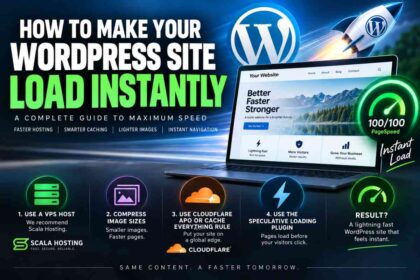
User experience is equally critical. A site loading in one second achieves a conversion rate of nearly 40%, compared to 29% for a three-second load time.
A 0.1-second improvement in load speed generates an average of 8% more conversions on retail sites. And 53% of mobile visits are abandoned if a page takes more than three seconds to load.
Blogging as an SEO lever
Blogging remains a central tool for building a sustainable content strategy. Around 600 million blogs publish nearly 7.5 million articles daily worldwide.
Nearly 50% of marketers who maintain a company blog report higher ROI compared to the previous year. Long-form content exceeding 3,000 words generates on average 77% more backlinks than shorter pieces.
80% of bloggers say their blog produces measurable business results.
Define Clear Objectives Before You Write
Every SEO article should serve a purpose. Before opening a blank document, define exactly why you are writing and what success looks like.
Identify your audience and search intent
Understanding who your readers are — their needs, expectations, and the problems they want to solve — is the foundation of effective content.
The three main search intents are:
- Informational — seeking an answer or learning something
- Navigational — finding a specific page or website
- Transactional — buying a product or service
Set measurable goals
Rather than writing vaguely to “improve SEO,” aim for specific outcomes: a 20% increase in organic traffic over three months, an improvement in conversion rate, or a target number of backlinks.
Use analytics tools such as Google Analytics or SEMrush to track these key performance indicators regularly.
Align with your broader strategy
No article should exist in isolation. Each piece you publish should strengthen your overall topical authority through strategic keyword targeting, optimised internal linking, and complementary content formats.
Strategic Keyword Research
Keyword research remains the cornerstone of any effective SEO strategy. Google’s algorithms are more sophisticated than ever in understanding context and intent.
Yet choosing the right keywords is still what determines whether your content gets found.
- By 2024, 58.5% of Google searches in the US ended without a click to any website, driven by AI Overviews — making transactional and navigational keywords increasingly important (SparkToro, 2024)
- 15% of daily Google queries have never been processed before — confirming the need for continuous monitoring of emerging search terms (Search Engine Journal, 2025)
- Long-tail keywords make up the dominant share of searches — the majority of Google queries consist of three or more words (SEMrush, 2025)
Search volume
Search volume measures how often a keyword is entered into search engines over a given period. High volume signals broad interest but typically means stronger competition.
Lower-volume terms may reflect niche or emerging topics worth targeting early.
Keyword difficulty
Keyword difficulty (KD%) measures the SEO effort required to rank organically in Google’s top 10, expressed as a percentage from 0 to 100.
Generic short-tail terms are typically highly competitive. Long-tail keywords offer better opportunities for newer or more specialised sites.
Recommended tools
Google Keyword Planner, SEMrush, Ahrefs, and AnswerThePublic all help you discover relevant keywords and analyse competition.
Together they allow you to assess search volumes and build a strategically sound content plan.
Write an Optimised Title Tag
The title tag appears as the clickable headline in search results. It is often the very first point of contact between your content and a potential visitor — and it directly influences click-through rates.
- Keep it between 55 and 60 characters to avoid truncation (maximum 70 including spaces)
- Place your primary keyword near the beginning for maximum SEO impact
- Add differentiating elements such as numbers or years — titles with “Guide” generate on average three times more organic traffic
- Avoid over-optimisation — excessive keyword repetition looks unnatural
- Optimise for mobile, where the majority of searches now take place
- Place your brand name at the end for clear identification
- Keep the title tag distinct from your H1 to avoid duplication
Write a Compelling Meta Description
The meta description appears below the title tag in search results. It is not a direct ranking factor, but it plays a significant role in convincing users to click through to your page.
- Aim for 150 to 160 characters, maximum 200 including spaces
- Integrate your primary keywords naturally, positioned towards the beginning
- Use an engaging tone that highlights the benefit to the reader
- Include action-oriented language: “Discover”, “Learn”, “Find out”
- Write a unique description for each page that accurately reflects its content
Structure Your SEO Article Effectively
Long-form content performs better
Content exceeding 3,000 words receives on average 77% more backlinks than shorter content. Google prioritises content that comprehensively answers user queries.
That said, length alone is never sufficient — quality, depth, and thematic relevance remain the determining factors.
A focused, well-written 1,500-word article will consistently outperform a bloated, unfocused 7,000-word piece.
HTML heading hierarchy
Heading tags organise your content and signal its structure to search engines. Follow this hierarchy:
- H1 — The main page title. Include your primary keyword. One per page only.
- H2 — Main sections. Can include secondary keywords and synonyms.
- H3 — Subdivisions of H2 sections for deeper exploration of specific points.
- H4–H6 — Rarely necessary, but useful for highly detailed technical content.
Write an engaging introduction that presents your topic and incorporates your primary keyword early.
End with a strong conclusion that summarises key points and includes a clear call to action.
Optimise Your Images for SEO
Images boost user engagement, improve comprehension, and encourage social sharing. Their SEO impact, however, depends entirely on how well they are optimised.
- Use images in moderation — too many slow down loading and hurt Core Web Vitals
- Use royalty-free images from reputable libraries such as Freepik or Shutterstock
- Choose WebP format — it combines quality with small file size
- Compress all images using tools like TinyPNG or Squoosh
- Remove unnecessary metadata such as EXIF data to speed up loading
- Rename files using relevant keywords (e.g. seo-article-structure.png)
- Add ALT attributes of up to 100 characters — these help search engines and improve accessibility
- Ensure surrounding text is relevant and consistent with each image
Optimise Your URL Structure
A URL plays a meaningful role in both SEO and user experience. Search engines favour short, clear URLs that are easy to understand and index.
- Keep URLs to 60 characters or fewer and include your primary keyword
- Separate words with hyphens for readability
- Avoid special characters, accented letters, or spaces
- Avoid changing URLs unnecessarily — always implement a 301 redirect if unavoidable
Build a Strong Linking Structure
Internal links
Internal links structure your site’s architecture and guide users from one page to another. They signal coherence to search engines and help distribute page authority.
Page and domain authority are among the ranking factors most strongly correlated with top Google positions, according to SEMrush’s Ranking Factors study (2024).
External links
External links point users to trusted, relevant resources outside your site. Linking to high-authority sources enhances content quality — a signal Google weighs when evaluating page relevance.
Avoid linking to low-quality or dubious pages.
- Use natural, descriptive anchor text — “Guide to structuring internal links” outperforms “click here”
- Apply rel=”nofollow” or rel=”sponsored” for paid or non-endorsed external links
- Use links sparingly — too many dilute their impact and confuse the user experience
Maximise Visibility with Rich & Featured Snippets
Rich snippets
Rich snippets display enhanced information directly in search results — ratings, prices, publication dates, and more. Implementing structured data conforming to Schema.org format enables these enhanced results.
Rotten Tomatoes saw a 25% increase in CTR after implementing structured data across 100,000 pages (Google Search Central, 2025).
Use JSON-LD format (recommended by Google), inserted into the head section of your HTML. Key schema types to consider:
- Articles — author, publication date, update date, title, article type
- Recipes — preparation times, ingredients, images
- Events — dates, locations, and times
- Products — prices, customer reviews, stock availability
Featured snippets (position zero)
Featured snippets appear at the top of search results, providing immediate answers to user questions. According to a 2020 SEMrush and Brado study of over 200 million SERPs, 99.2% of featured snippets originate from the top organic position.
On mobile, these snippets can occupy up to 50% of the screen.
- Identify questions your audience is actively searching (“How…”, “Why…”, “What is…”)
- Provide a clear, concise answer in 40 to 60 words, ideally near the start of a section
- Use bulleted lists or tables — these formats are more frequently selected for snippets
Write Readable, Semantically Rich Content
Conduct thorough research
A strong SEO article begins with solid research. Draw from specialised blogs, academic studies, industry reports, and competitor analysis.
Adapt your tone to your audience — straightforward for beginners, more technical for professionals. Enrich your writing with practical examples, case studies, and relevant data.
Always produce original content: Google penalises duplicate content, whether internal or external. Tools such as Copyscape, Siteliner, or Plagscan can help you verify originality.
Build semantic richness
Modern SEO goes beyond individual keywords. For a text of approximately 1,200 words, aim to include at least 60 semantically related terms — roughly 5% of the content.
A user searching for “improve SEO” might also search for “boost Google rankings” or “increase organic visibility.” Naturally incorporating such variations makes your content more comprehensive.
Tools such as SEOQuantum, YourTextGuru, and SEMrush Keyword Magic Tool can help identify relevant secondary terms.
Maximise readability
- Use H3 and H4 subheadings to organise ideas and aid navigation
- Limit each paragraph to a single idea, with sentences of 20 to 25 words
- Incorporate visuals — infographics, comparison charts, and diagrams — to enhance comprehension
- Write content designed to remain relevant over time — avoid references that will quickly become outdated
- Test readability using tools such as the Flesch score, Hemingway App, Readable.io, or Grammarly
Track Performance and Iterate
Publishing your article is not the end of the process. Analytics tracking allows you to understand how your content performs and whether it meets user expectations.
- Google Analytics 4 — provides an overview of user behaviour, including traffic sources, device types, time on page, and bounce rate
- SEMrush — tracks keyword rankings and identifies opportunities for improvement
- Hotjar — visualises visitor interactions through heatmaps and highlights the most engaging sections of your content
Regularly reviewing this data allows you to identify what is working, what needs improvement, and how to refine your strategy based on actual user behaviour.
Prioritise Quality and Consistency
How long should an SEO article be? As long as it needs to be — no more. Your goal is to provide a clear, comprehensive answer to your reader’s question and help them solve a real problem.
Search engines no longer reward length for its own sake. They prioritise content that quickly addresses search intent, demonstrates genuine expertise, and holds the visitor’s attention from start to finish.
A well-structured, targeted 900-word article can outperform a scattered and padded 4,000-word piece. Focus on quality, keep your content updated, and ensure every article contributes meaningfully to your overall editorial strategy. That is how sustainable organic growth is built.