


The Biometric Revolution: Data-Driven Analysis of Authentication Technologies Transforming Global Security – Breaking Report 2025: Market Surges to $50 Billion as Recognition Technologies Reshape Identity Verification Across Industries
New data reveals a massive transformation in how humans verify their identity.
Melbourne, Victoria — The global biometric technology sector has exploded into a multi-billion dollar industry, with market valuations reaching unprecedented levels as organisations worldwide abandon traditional passwords in favor of biological authentication methods.
List Of Different Biometric Technologies, Grouped By Category:
Physiological Biometrics
These rely on physical characteristics of the body.
- Fingerprint recognition
- Face recognition
- Iris recognition
- Retina scanning
- Hand geometry
- Palm vein (vascular pattern) recognition
- DNA analysis
- Ear shape recognition
Behavioral Biometrics
These analyse patterns in human behavior.
- Voice recognition
- Gait analysis (the way a person walks)
- Signature dynamics (how you sign your name)
- Keystroke dynamics (typing patterns)
- Mouse movement patterns
Emerging / Advanced Biometrics
Newer or more experimental methods.
- Heart rhythm recognition (ECG/EKG-based)
- Brainwave pattern recognition (EEG-based)
- Body odor identification
- Vein pulse recognition
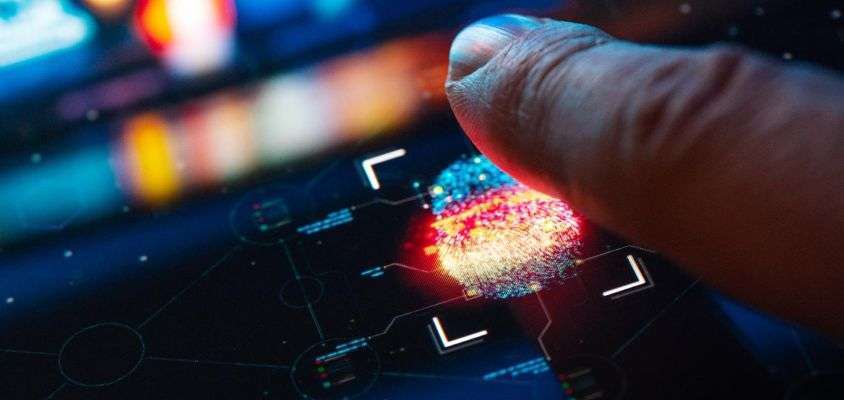
Market Explosion: The Numbers That Tell the Story
The global biometric technology market reached $50.08 billion in 2024 and is projected to surge to $307.24 billion by 2034, growing at a compound annual growth rate of 19.89%.
The explosive growth represents one of the fastest-expanding technology sectors globally, outpacing many established industries.
North America dominated the market with a 32% share in 2024, while Asia-Pacific is poised for rapid expansion with a projected CAGR of 22.43% through 2034. The regional dynamics reveal where innovation and adoption are accelerating fastest.
Global Biometric Technology Market
Explosive Growth Trajectory 2024-2037
Key Market Insights
- Fastest-Growing Tech Sector: The 19.89% CAGR represents one of the most explosive growth rates in technology, outpacing many established industries.
- Security Revolution: Market expansion reflects an irreversible shift away from password-based security systems toward biometric authentication.
- North America Leads: Dominated the market with 32% share in 2024, establishing the region as the innovation hub.
- Asia-Pacific Acceleration: Projected CAGR of 22.43% through 2034 indicates the fastest regional expansion globally.
- Dual Projections: Conservative estimate shows $307.24B by 2034, while extended forecast suggests potential for $534.41B by 2037.
Fingerprint Recognition: The Dominant Force
Fingerprint technology remains the undisputed leader in biometric authentication, commanding the largest market share across industries.
Accuracy Statistics
The best fingerprint matching systems are accurate 98.6% of the time on single-finger tests, 99.6% on two-finger tests, and 99.9% for tests involving four or more fingers.
The accuracy rates, established by the National Institute of Standards and Technology, demonstrate why fingerprints remain the gold standard.
A single fingerprint scan delivers over 98% accuracy, while using four fingers increases accuracy to 99.99%. The mathematical progression shows diminishing returns but near-perfect identification with multiple data points.
Market Dominance
Fingerprint technology captured 37% of the biometrics market share in 2024, and according to 2023 data, 70% of the American population uses fingerprint scanning.
The automated fingerprint identification systems (AFIS) market, valued at $5.32 billion in 2022, is expected to grow to $15.42 billion by 2028. This specialized segment alone represents billions in investment and deployment.
Consumer Preference
Consumers ranked fingerprint recognition as the most secure authentication method at 44%, with retina scanning second at 30%. This perception drives adoption rates across consumer applications.
Facial Recognition: Rapid Growth Amid Controversy
Facial recognition technology represents both immense promise and significant challenges, with accuracy improvements clashing against demographic bias concerns.
Market Expansion
Valued at approximately $5 billion in 2022, the facial recognition market revenue is expected to expand to $19.3 billion by 2032. This nearly four-fold increase reflects accelerating deployment across security, retail, and consumer electronics.
More than 176 million Americans use facial recognition technology, with 131 million using it daily. This massive user base demonstrates how quickly facial recognition has become embedded in daily life.
Usage Patterns
The most prevalent use of facial recognition is for unlocking phones, laptops, and personal computers at 68%. Device access represents the primary consumer touchpoint for this technology.
Americans are most receptive to facial recognition for enhanced safety at airports (55%), banks (54%), and medical offices (53%), and approximately 72% of consumers worldwide choose face recognition over passwords for online security. These statistics reveal where trust levels remain highest.
Critical Accuracy Disparities
Facial recognition’s most significant challenge lies in documented demographic biases that raise serious ethical concerns.
The error rate for light-skinned men is 0.8%, compared to 34.7% for darker-skinned women, according to a 2018 study by MIT Media Lab. This forty-fold difference in accuracy represents a fundamental equity problem.
However, newer data shows improvement. According to evaluation data from January 2024, each of the top 100 algorithms are over 99.5% accurate across Black male, white male, Black female and white female demographics, with accuracy varying only between 99.7% and 99.85%.
Generally, error rates are lower for males compared to females, with lower error rates obtained for dark-skinned subjects compared to light-skinned subjects in some newer systems. The landscape continues evolving rapidly.
Airport and Travel Integration
In 2023, 46% of passengers used biometrics at airports, up from 34% in 2022, and 75% of travelers prefer biometrics to conventional passports and boarding passes. Aviation represents a massive growth sector for facial recognition deployment.
Iris Recognition: The Premium Accuracy Solution
Iris recognition technology delivers the highest accuracy rates but faces adoption challenges due to specialized hardware requirements.
Exceptional Accuracy
This system was designed to enroll, catalogue and rapidly compare iris images with an accuracy rate of up to 99%. Law enforcement agencies have built repositories with over three million iris images.
NEC’s iris recognition technology ranked first globally with an accuracy rate of 99.59% for one-to-many identification among half a million people.
The benchmark, conducted by the National Institute of Standards and Technology in 2021, establishes iris recognition as the most accurate biometric modality.
An iris template uses over 240 degrees of unique characteristics — about five times as many as fingerprinting — with an estimated one in 10^78 chance of encountering two identical irises. The mathematical uniqueness far exceeds other biometric methods.
Market Growth
The market for iris recognition is projected to exceed $8 billion by 2027, with the global iris recognition market size projected to reach $8.4 billion by 2027, growing at a CAGR of 17.7%. While smaller than fingerprint or facial recognition markets, growth rates remain robust.
Deployment Challenges
Iris biometrics success rate dropped to 75% after cataract surgery, as post-cataract surgery leads to changes in the iris, loss of pigmentation, and localized iris atrophy. Medical conditions present real-world limitations for certain populations.
Voice Biometrics: The Emerging Contender
Voice recognition represents the fastest-growing biometric segment, driven by smartphone assistants and banking applications.
Explosive Market Growth
The global voice biometrics market was valued at $2.30 billion in 2024 and is projected to grow to $15.69 billion by 2032, exhibiting a CAGR of 27.5%.
Voice recognition is expected to grow from $10 billion to $27 billion by 2027, representing a 63% increase. This makes voice the fastest-growing biometric technology by percentage.
Accuracy Levels
Accuracy rates for voice biometrics top 95% on average and frequently reach up to 99%. Modern systems achieve enterprise-grade reliability.
Optimal, text-dependent voice biometric engines can achieve a false acceptance rate below 1%, with a corresponding false rejection rate of less than 3%. These error rates meet stringent security requirements for financial applications.
Voice recognition accuracy has increased by 75% since 2013, according to research from the National Institute of Standards and Technology. Continuous improvement demonstrates active innovation in this space.
Unique Advantages
Voice recognition can be used with accessories that sometimes get in the way of other methods, like hats, gloves, masks or sunglasses, and is contactless. This flexibility proved particularly valuable during pandemic conditions.
Industry Adoption: Who’s Using Biometrics?
Government and Law Enforcement
In 2024, the Ministry of Interior in Kuwait implemented biometric fingerprints, and in June 2024, India’s Goods and Services Tax Council rolled out a pan-India Aadhaar-based biometric system. Government adoption drives massive user enrollment.
As recorded in 2022, the US Department of Homeland Security’s IDENT biometric system has around 260 million people in the database. This represents one of the world’s largest biometric repositories.
Banking and Financial Services
Biometric authentication is expected to secure $2.5 trillion in mobile payments by 2024, with over 60% of these payments made remotely. Financial technology represents a critical growth driver.
About 72% of consumers worldwide choose face recognition over passwords for online security. This preference shift fundamentally changes authentication architecture.
Healthcare Sector
Healthcare administrators integrate bedside tablets with iris login to cut misidentification incidents. Patient safety applications justify premium biometric investments.
Consumer Electronics
As of 2022, biometrics are enabled on 81% of smartphones, and in 2024, 377 U.S. companies are using biometric security software with 9 billion biometric apps expected to be downloaded worldwide.
Privacy Concerns and Trust Issues
Despite widespread adoption, significant privacy concerns temper enthusiasm for biometric technologies.
Declining Trust
In January 2024, consumer confidence in biometrics dropped compared to the past two years, with trust in tech companies handling biometric data decreasing to just 5% highly trusting them, 52% somewhat trusting them, and 42% not trusting them at all. This trust erosion poses adoption challenges.
In 2023, 85% of consumers expressed concerns about using biometric technology due to the rise of generative AI and its potential influence on biometrics. AI-generated deepfakes amplify security anxiety.
Primary Concerns
In 2022, the primary concerns with biometric technologies were linked databases causing mass surveillance (73%) and misidentification (59%). These fears drive regulatory scrutiny.
Over half (54%) of industry experts cite privacy and data protection concerns as the primary restraint on the biometrics market. Professional skepticism reflects real implementation challenges.
Technological Innovations Driving the Market
AI Integration
More governments and companies have actively invested in biometric technology, with AI and machine learning improving recognition capabilities. Artificial intelligence represents the primary accuracy improvement vector.
Industry professionals anticipate AI to lead in the most significant biometric developments over the next five years at 26%. Machine learning continues revolutionizing recognition algorithms.
Contactless Solutions
The contactless biometric technologies market, valued at an estimated $12.07 billion in 2024, is expected to grow to $37.1 billion by 2030. Pandemic-driven demand for touchless technology persists.
Multimodal Systems
Multimodal biometric authentication, which combines face and iris recognition, reduces false positive rates to less than 1 in 10 billion. Combining multiple biometric factors achieves unprecedented security levels.
Regional Market Dynamics
North America Leadership
North America dominated with 31-32% of the global market in 2024, fueled by innovations, high-quality technological infrastructure, and a focus on security risks and government investments. Established infrastructure and regulatory frameworks support adoption.
Asia-Pacific Acceleration
Asia Pacific dominates with over 35.6% market share in 2024, with North America at 32%, Europe at 28%, followed by the Asia-Pacific region at 24%. National ID programs in India, China, and Southeast Asia drive explosive growth.
India’s Aadhaar enrollment of over 1.2 billion citizens and Chinese handset vendors bundling iris unlock in flagship models for Alipay and WeChat Pay transfers demonstrate how digital payment integration accelerates adoption.
Future Outlook: What the Data Predicts
Market Projections
The biometric system market is projected to grow from $53.22 billion in 2025 to $95.14 billion by 2030, at a CAGR of 12.3%. Every major research firm projects double-digit growth through the decade.
Technology Shifts
Most experts foresee facial recognition (45%) to have the highest growth in usage, followed by multimodal systems (16%). Single-factor authentication gives way to multi-layered verification.
Application Expansion
About 72% of hotels plan to use facial recognition by 2025 for better security and user interaction, and the aviation industry can improve passenger processing by 40% using biometrics. Hospitality and transportation sectors represent massive untapped markets.
The Verdict: A Technology at a Crossroads
The biometric technology revolution represents one of the most significant security transformations in modern history.
With accuracy rates exceeding 99% for leading systems, mathematical uniqueness that defies coincidence, and deployment across billions of devices worldwide, biometric authentication has moved from science fiction to daily reality.
Yet this success story carries profound implications. The documented demographic biases in facial recognition, the privacy concerns voiced by majorities of consumers, and the potential for mass surveillance create genuine tensions between security benefits and civil liberties.
Nearly 54% of industry professionals believe that by 2030, people will routinely consider future data custodians when sharing biometric data with organisations.
The data is clear: biometric authentication isn’t just growing—it’s exploding.
But whether this technology ultimately serves as a tool for security and convenience or becomes a mechanism for unprecedented surveillance depends on the regulatory frameworks, ethical guidelines, and technological safeguards implemented in the next critical years.
With half a trillion dollars in market value projected by the mid-2030s, the stakes have never been higher. The biometric revolution is here. The question is no longer whether we’ll use these technologies, but how we’ll govern them.