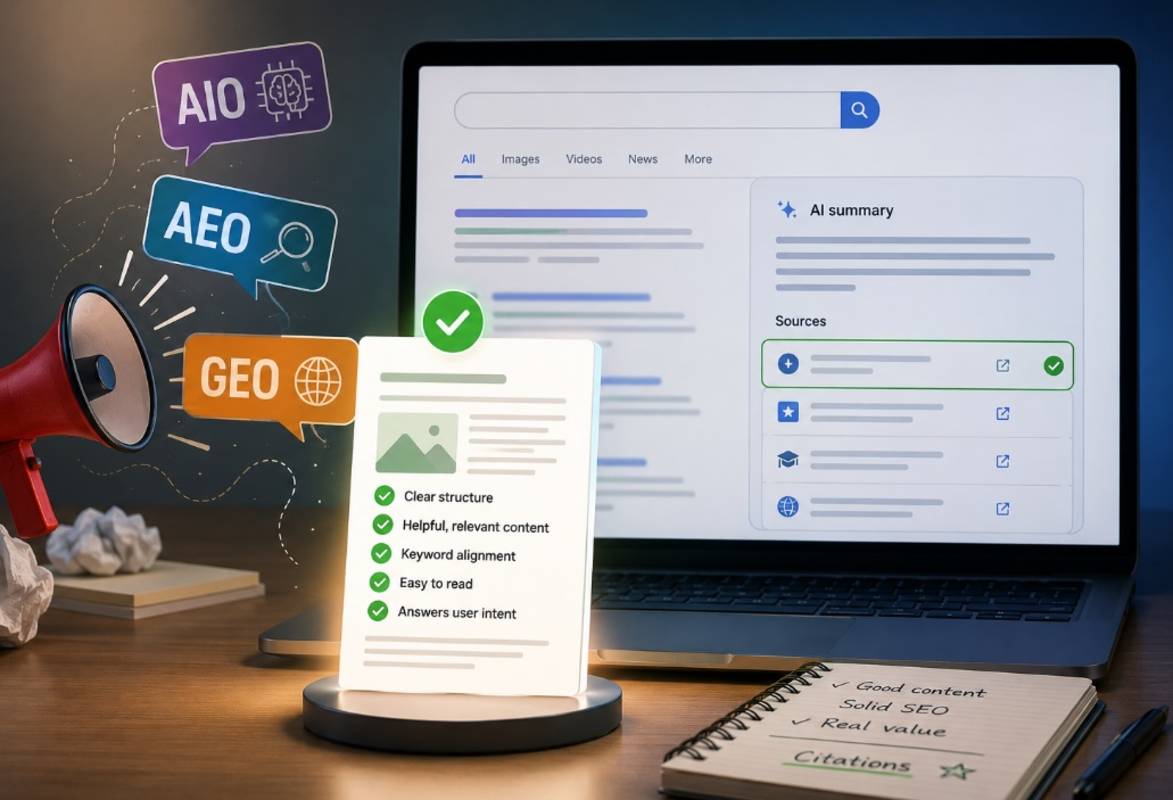


For the past year, marketers have flooded LinkedIn with new acronyms promising the “future” of search visibility:
- AIO (AI Optimisation)
- AEO (Answer Engine Optimisation)
- GEO (Generative Engine Optimisation)
The pitch is always the same: traditional SEO is dead, and brands now need entirely new strategies to appear in AI search results like Google AI Overviews or ChatGPT Search.
But after analysing dozens of AI-generated search results, a much simpler pattern keeps emerging:
The content getting cited is usually just basic, well-written, SEO-optimised content.
Not revolutionary frameworks.
Not “AI-native” publishing strategies.
Not overcomplicated optimisation theories.
Just good SEO.
Here’s What AI Search Engines Actually Cite
Across Google AI Overviews and other AI-powered search tools, the most commonly referenced pages tend to be:
- Listicle articles
- Beginner guides
- “Best tools” posts
- Simple how-to content
- FAQ-style pages
- Comparison articles
Most importantly, these pages usually share the same characteristics:
- Clear headings
- Strong keyword alignment
- Direct answers
- Logical structure
- Easy readability
- Topical relevance
In other words: classic SEO fundamentals.
Why Simple Content Wins
AI systems are designed to retrieve and summarise information efficiently.
That means they naturally prefer content that is:
- Easy to parse
- Structured clearly
- Semantically relevant
- Concise and direct
A basic article titled:
“10 Best CRM Platforms for Small Businesses”
Often has a better chance of being cited than an overly complex “thought leadership” piece filled with jargon and vague opinions.
Why?
Because the AI can quickly understand:
- what the article is about
- who it’s for
- what information it contains
- how the content is structured
This is exactly what traditional SEO has always rewarded.
AI Search Is Still Built on SEO Foundations
Despite all the hype, AI search engines still rely heavily on:
- search indexing
- topical authority
- crawlable structure
- semantic relevance
- content clarity
The interface may have changed, but the discovery layer underneath still resembles search.
That means if your content already performs well in organic search, there’s a strong chance it can also perform well in AI-generated answers.
The Biggest Misconception Right Now
The industry is trying to rebrand SEO into new categories because “AI optimisation” sounds innovative.
But many of the so-called AEO or GEO strategies are simply recycled SEO practices:
- Answering user intent
- Structuring content properly
- Using descriptive headings
- Writing clearly
- Building topical authority
None of this is new.
The difference is that AI systems now consume the content directly instead of only ranking links.
What Actually Matters for AI Citations
If your goal is to appear in AI search results, focus on:
- Writing content around real search intent
- Using clear H1s, H2s and structured formatting
- Creating genuinely useful information
- Publishing topical content consistently
- Keeping language simple and direct
- Making pages easy for both users and machines to understand
That’s it.
The Real Opportunity
The good news is that businesses do not need to reinvent their entire content strategy for AI search.
The websites already winning citations are often the ones doing the basics extremely well.
While others chase new acronyms and “AI growth hacks,” the smartest strategy may simply be:
- create useful content
- optimise it properly
- stay consistent
Because right now, AI search results are rewarding clarity more than complexity.