A viral TikTok trend encouraging users to create fake “intruder” images using artificial intelligence is raising serious legal concerns across Australia.
The trend, known as the AI intruder prank, involves people taking a photo of their home and using AI tools to insert a fake stranger, often depicted as a “homeless man” or “intruder,” standing at the door or inside the house.
The edited image is then sent to family members or friends to make them believe someone is breaking in.
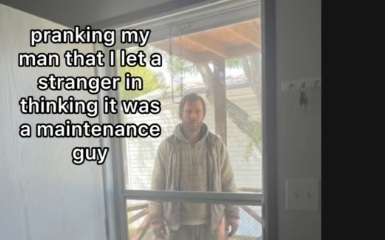
What might seem like a harmless online joke is causing panic and even emergency responses overseas. Police in the United States have already reported fake 911 calls after parents received AI-generated “intruder” photos.
Videos under hashtags like #AIintruderprank and #HomelessManPrank have collectively attracted more than 1.2 million views.
The trend is now appearing on Australian feeds, prompting warnings from Sydney Criminal Lawyer Ahmad Faraj of Faraj Defence Lawyers, who advises that such behaviour can have serious legal consequences.

Why This Prank Could Breach Australian Law
Under Australian law, several existing criminal offences may apply depending on how the prank is shared and the reaction it causes.
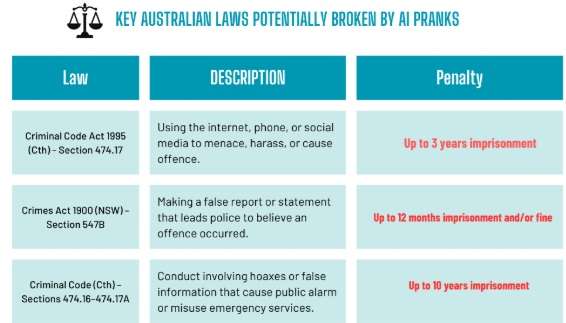
1. Criminal Code Act 1995 (Cth) – Section 474.17: Use of a Carriage Service to Menace, Harass, or Cause Offence
This law makes it an offence to use the internet, a phone, or any other carriage service in a way that a reasonable person would find menacing or offensive. The maximum penalty is 3 years in prison.
Scenario:
A teenager uses an AI tool to edit a photo showing a “man” standing inside their home and sends it to their mother through WhatsApp. Terrified, she locks herself in a room and calls the police. Although the image is fake, the fear it caused is real, and that is what the law focuses on.
“Even if the image is not real, the fear it causes can be. The moment a person feels unsafe, that message can be treated as a menacing or harassing communication under federal law.” said Faraj
2. Crimes Act 1900 (NSW) – Section 547B: Public Mischief or False Report
This offence applies when a person makes a false representation that causes another to believe a crime has been committed. The maximum penalty is 12 months in prison and a fine of up to $1,100.
Scenario:
A friend shares a fake AI image of an “intruder” in a community group chat and urges someone to “call 000.” Police respond, only to discover it was a prank. In this case, the sender and anyone knowingly spreading the false information could be investigated for public mischief.
“Police do not take hoax reports lightly. They divert real resources from genuine emergencies, and that can lead to prosecution,”.
3. Criminal Code (Cth) – Sections 474.16–474.17A: Hoax Offences
These sections cover conduct that creates false beliefs about threats, dangers, or emergencies, even if no harm was intended. The maximum penalty can be up to 10 years in prison for serious cases.
Scenario:
Someone posts an AI-edited image of a “masked intruder” on TikTok with the caption “He’s been outside for an hour.” The post spreads rapidly, with others in the community believing there is a real threat nearby.
Multiple people call police. In this instance, the prank may be treated as a hoax offence under Commonwealth law because it caused public alarm and wasted emergency resources.
“The digital world doesn’t remove accountability. If your post causes fear or prompts a police response, you can still be held criminally responsible.” Faraj said.
How It Affects Teens and Families
Many young people do not realise how easily online content can cross legal boundaries. The law does not care about intention; it focuses on impact.
Even if a teenager is not formally charged, a police caution or youth diversion can appear on future background checks and affect job, visa, or university applications. Parents may also face questions about supervision if a child’s actions lead to a police investigation.
According to the eSafety Commissioner, 95% of Australian caregivers say keeping their children safe online is one of the hardest parts of parenting.
This highlights the growing challenge families face as technology advances faster than awareness of its legal and social implications.
AI has blurred the line between creativity and deception, but the legal consequences remain clear.
““We’re seeing young people use AI tools for entertainment without understanding the legal risk. If your content causes fear or wastes police time, that’s a criminal act, not a prank.”
Advice for Parents and Teens
- Think before sharing. If an image could make someone fear for their safety, do not send or post it.
- Educate about online responsibility. Teens should understand that “carriage service” laws apply to text, DMs, and social media.
- Verify before reacting. If you receive a concerning image, confirm before calling emergency services.
- Get legal advice early. If police contact you or your child about an online prank, seek legal advice immediately.
The AI intruder prank might start as a digital trend, but it can end in court. What begins as entertainment can quickly become evidence
“As technology advances faster than public understanding, we at Faraj Defence Lawyers urge Australians, especially parents and teens, to stay aware of how easily AI-generated content can cross legal boundaries,”
“What matters isn’t your idea, it’s the impact. The law measures outcomes, not intentions,” said Faraj