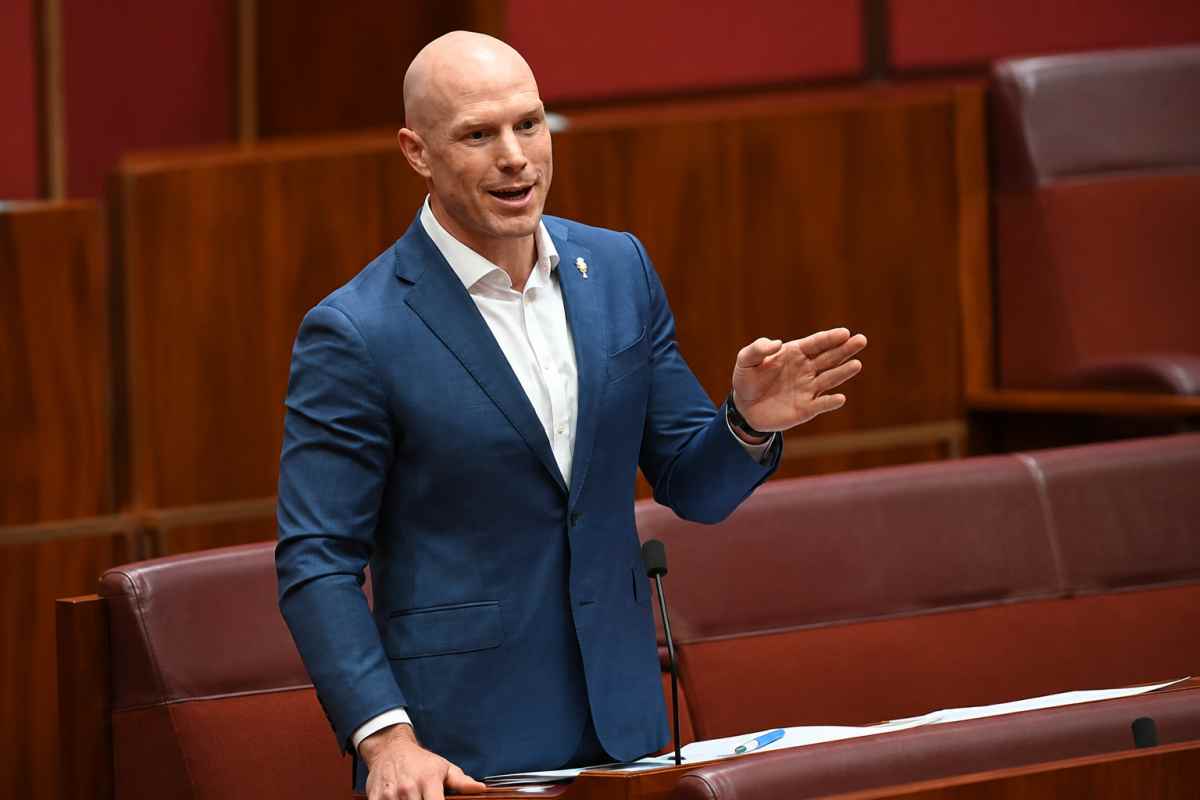
Australia risks repeating the mistakes of the gas export boom unless multinational technology companies are made to deliver a fair return for the land, energy and water used to power artificial intelligence, independent ACT senator David Pocock has warned.
The warning comes as public pressure builds over the taxation of Australia’s natural resources, with tens of thousands of people contacting MPs in support of a proposed 25% tax on gas exports.
More than 2,200 Australians have also contributed money to fund billboards backing the campaign.
Supporters argue Australia has allowed multinational gas companies to make large profits from exporting a finite national resource while paying comparatively little tax through the Petroleum Resource Rent Tax
They say the revenue could be used to reduce debt, fund aged care, build affordable housing, protect the environment or establish a sovereign wealth fund.
The debate is now expanding beyond gas, with growing scrutiny on the rapid rise of AI datacentres across Australia.
Microsoft has announced a $25 billion investment in Australian AI and cloud infrastructure, while Amazon Web Services has committed $20 billion to expand its local datacentre footprint.
Prime Minister Anthony Albanese has welcomed the announcements, presenting them as major investments in Australia’s digital economy.
But critics say the public has not yet been given a clear answer on how Australians will benefit from the boom.
Pocock said Australia had already seen foreign-owned companies extract significant value from national resources while minimising their tax obligations.
“We cannot afford to make the same mistake as we did with gas,” he said. “If tech companies are going to use our land, energy and water for AI, they must pay their fair share of tax.”
The expansion of datacentres is expected to place increasing pressure on Australia’s electricity grid and water supplies. By 2030, datacentres are forecast to consume as much electricity as all Victorian households combined, while water use is expected to more than triple.
The Climate Council has warned that, without significant new renewable generation and storage, rising datacentre demand could push wholesale electricity prices more than 20% higher by 2035.
Community concerns have also emerged around noise, air quality, backup diesel generators and the use of gas to power large facilities.
In March, the Albanese government released national expectations for datacentre and AI infrastructure developers.
The expectations call on operators to support new renewable energy supply, pay their share of grid connection costs, use water sustainably, invest in Australian skills and contribute to local innovation.
Pocock said the approach did not go far enough, arguing that voluntary expectations were too weak for an industry with such significant environmental, social and economic impacts.
There are also questions about employment. While datacentres create jobs during construction, their long-term direct workforce needs are relatively small.
Pocock says this was a concern given ministers have pointed to datacentre investment when questioned about AI-related job losses.
Jobs and Skills Australia commissioner Barney Glover has warned AI will reshape the labour market, while other estimates suggest hundreds of thousands of Australian jobs could be affected as AI adoption accelerates.
Supporters of AI argue the technology will create new industries, improve productivity and help Australia compete in the global digital economy.
But Pocock said governments should not rush to embrace the infrastructure behind AI without stronger safeguards and a clearer return for the public.
“Australia should welcome investment that creates value and helps build our future economy,” he said. “But we should also learn from our past.”
The central question, he said, was whether Australia would capture the benefits of the AI boom or allow profits to flow offshore while communities carry the costs.
“That’s the lesson we failed to learn with gas,” Pocock said. “We shouldn’t wait another generation to learn it again.”