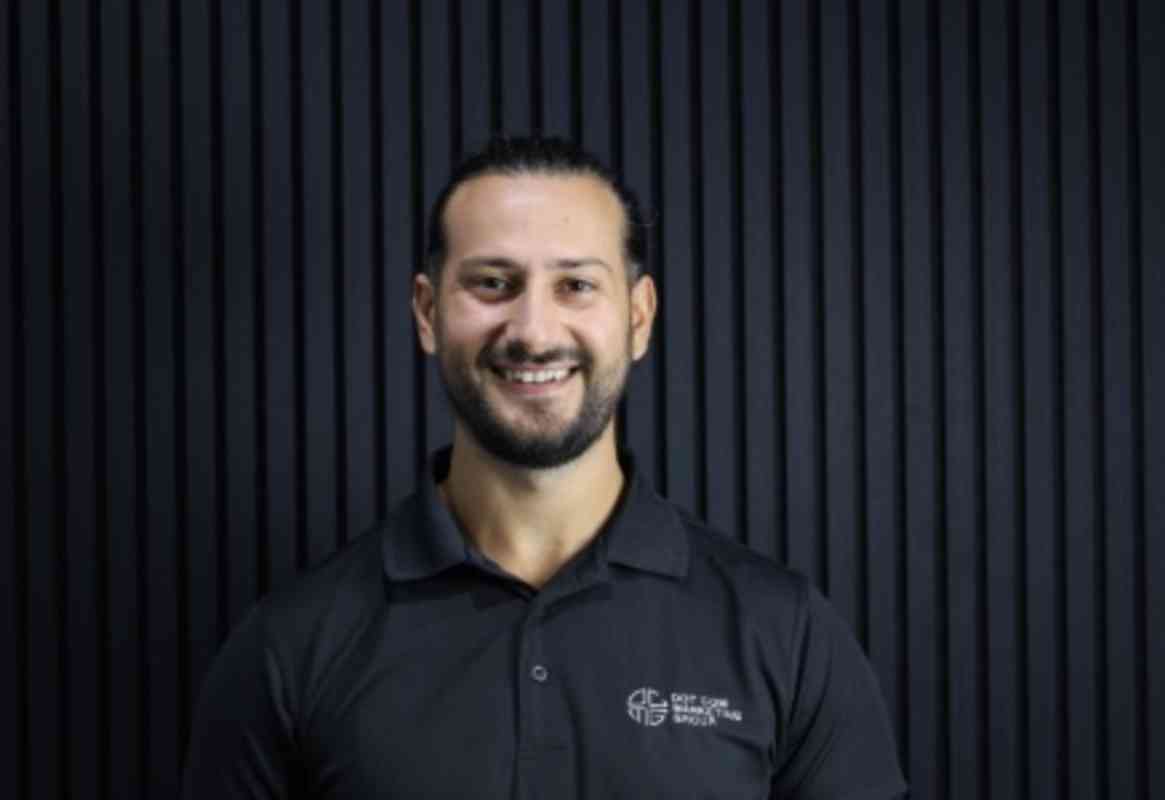
Businesses may be racing into the AI age, but DCMG believes the answer to one of its biggest problems looks a lot more like the 1950s.
Cofounder Nicholas Stavroulakis says workplaces are being flooded with AI-generated emails, automated LinkedIn pitches and endless screen-based meetings, leaving people communicating constantly but connecting less.
His warning to business leaders is simple: if companies want stronger relationships, they may need to revive something technology still cannot reproduce properly, sitting across the table from another person and having a genuine conversation.
Companies have spent billions automating marketing, sales and communication, yet Australian executive engagement company DCMG, short for Dot Com Marketing Group, says that push is producing an uncomfortable side effect.
Businesses now have more tools, more messages and more ways to reach people than ever before, but meaningful professional relationships are becoming harder to build as automated communication replaces more of the human interaction that once drove trust, familiarity and long-term business relationships.
DCMG cofounders Stavroulakis and Michael Galatoula believe the next evolution in business development involves going backwards, with companies rediscovering one of the oldest ways of doing business: putting the right people in a room, sitting around a table and actually talking.
DCMG is already taking this approach internationally through intimate, invitation only executive roundtables connecting businesses with carefully selected senior decision makers.
“We have AI writing the email, automation sending it, software deciding who receives it and another piece of technology following them up, then businesses wonder why nobody responds,” Stavroulakis said.
“We have become incredibly good at communicating at scale and increasingly bad at actually connecting with people.
“The future of business development may look surprisingly like 1950. You get the right people around a table, look them in the eye, listen to what they have to say and build a relationship.”
Your customers can probably tell you didn’t write that email
Generative AI has transformed the speed at which businesses can produce emails, proposals, social media content and sales communications, but Stavroulakis believes efficiency is creating its own problem.
“When everyone can generate 100 personalised emails in minutes, receiving a personalised email doesn’t necessarily make somebody feel particularly special,” he said.
“People know that beautifully written message arriving in their inbox may have taken somebody 20 seconds to produce.
“We are generating more communication than ever, but more communication doesn’t automatically create more trust.”
According to Galatoula senior executives are particularly difficult to reach through conventional digital sales techniques because they are already overwhelmed with approaches.
“A CEO, CIO, CTO or senior executive doesn’t need another generic LinkedIn message saying somebody would love to connect and explore synergies,” Galatoula said.
“They need a reason to give you their time, and once you have their time, you need to create a genuine relationship.”
Why the badge scan is losing its place in modern business
DCMG was established after Stavroulakis and Galatoula became frustrated with conventional business events and lead generation models that could produce huge volumes of contacts without necessarily creating meaningful commercial relationships.
Rather than focusing on massive conferences, exhibition traffic or thousands of leads entering the top of a sales funnel, DCMG creates smaller closed door engagements involving carefully selected decision makers.
Around 80% of DCMG’s revenue comes from repeat or referred customers. In one recent case, a client closed a deal within two months of an executive engagement, reportedly delivering a 25 times return on investment.
“Businesses have become obsessed with numbers because numbers look impressive on dashboards However if none of those people genuinely wants to speak with you, what have you actually achieved,” Galatoula said.
“We would rather put a business around a table with ten relevant decision makers than give them a spreadsheet containing 1,000 people who don’t care.”
Why business is going back to 1950
Stavroulakis stressed DCMG is not anti technology or anti AI, particularly given much of its work involves technology companies operating across AI, software development, cloud security and enterprise solutions. Instead, he believes businesses need to understand what technology cannot replace.
“AI can identify a prospect, research a company, analyse a market and help you prepare for a meeting, but ultimately somebody still has to trust you enough to do business with you,” Stavroulakis said.
“Before CRM systems, automated funnels, LinkedIn and video meetings, business was built on introductions, reputation, conversation and relationships..”
“Technology has made almost everything faster, but it hasn’t necessarily made relationships stronger.”
Galatoula believes the explosion in automated communication could actually make genuine human interaction more commercially valuable.
“If your competitor sends 500 AI generated messages and you spend two hours having a meaningful conversation with the right ten people, which interaction is going to be remembered?” he said.
“Human attention is becoming scarce and scarcity creates value. The companies that understand this will stop asking how many people they can reach and start asking who they actually need to build a relationship with.”
“The future of business development might not be another piece of software. It might simply be a table, a conversation and the right people sitting around it.” Galatoula said.