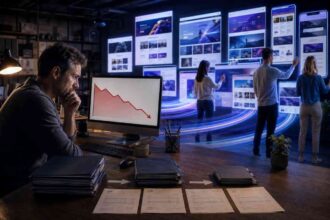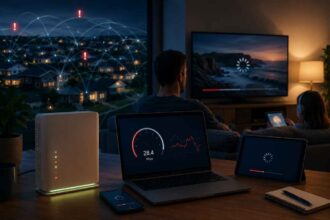


Australian businesses are being warned they could be paying tens of thousands of dollars a year in unnecessary electricity costs because of a little-known charge buried deep within their power bills that most owners have never heard of.
New research released by Agile Energy as part of its inaugural Australia’s Energy Pain Index has revealed that demand charges, not electricity consumption, are now one of the biggest drivers of commercial power bills, with identical businesses paying almost $30,000 a year more simply because of where they are connected to the electricity network.
The inaugural Australia’s Energy Pain Index is the first report of its kind, providing an unprecedented snapshot of the energy cost pressures facing Australian businesses.
Published quarterly by Agile Energy, the Index measures the scale of commercial energy challenges across the country, delivering a level of transparency never before available to the market while exposing the significant cost disparities and inequities businesses face based on their location, network and energy profile.
According to Agile Energy founder and CEO Jack Kapoor, Australia’s leading expert on commercial solar and battery solutions and energy as a service, the findings expose one of the least understood costs facing Australian businesses.
“Most business owners think their electricity bill is determined by how much power they use,” Kapoor said.
“In reality, one of the biggest costs can come from a single 30-minute period during the month.
“That one half-hour can determine thousands, or even tens of thousands of dollars in additional charges.”
The bill you don’t see coming
Unlike traditional electricity charges, which are based on total energy consumption, demand charges are calculated using the highest level of electricity a business draws during a single 30-minute period across the billing cycle.
“It isn’t about how much electricity you use over the month, it is about the single biggest moment you use it.
“If your air conditioning, refrigeration, machinery and equipment all happen to switch on together during one hot afternoon, that brief spike can increase your bill for the entire month.”
One half-hour can cost an extra $16,000 a year
Agile Energy modelled a typical commercial business using 50,000 kWh of electricity per month.
Keeping total electricity consumption exactly the same, increasing peak demand from 120kW to 220kW during just one half-hour lifted the monthly bill by $1,350.
“If that peak becomes part of normal operations, the business isn’t paying an extra $1,350 once,” Kapoor said.
“It’s paying an extra $16,200 every year without consuming a single additional kilowatt-hour of electricity. That surprises almost every business owner we speak to because we are looking at the same business, same equipment and same electricity however the difference is nearly $30,000.”
Perhaps the most surprising finding from Australia’s Energy Pain Index is how dramatically location alone can affect electricity costs.
Using an identical commercial business with exactly the same operating profile, Agile Energy found the annual power bill could vary by almost $30,000 purely because of which electricity distribution network serviced the property.
“Nothing about the business changes. Not the staff, not the equipment and not the operating hours. The only difference is the network they’re connected to.
“Many business owners don’t even know which distribution network they’re on, yet it could be costing them tens of thousands of dollars every year.”
Victoria emerges as Australia’s energy pain capital
The research found Victorian businesses experience the highest demand charges in Australia, with some network tariffs exceeding the cheapest New South Wales demand charges by more than 60 times.
“Businesses located only a few kilometres apart can be paying completely different demand charges because they’re connected to different network infrastructure,” Kapoor said.
“That’s an extraordinary situation, and very few businesses realise it’s happening.”
Why cutting electricity use often isn’t enough
Kapoor said many businesses spend years replacing lighting, upgrading air conditioning and investing in more efficient equipment, only to see little change in their electricity bills.
“Traditional energy-efficiency measures reduce how much electricity you consume. They don’t necessarily reduce the highest demand peak that determines these charges,” Kapoor said.
“That’s why many businesses are disappointed after investing heavily in efficiency upgrades.”
Batteries are becoming one of the smartest financial investments
Kapoor said the most effective way to reduce demand charges is to reduce peak demand itself.
“Battery storage allows businesses to use stored electricity during those peak periods instead of drawing large amounts of power from the grid all at once,” he said.
“When combined with commercial solar, businesses aren’t simply buying cheaper electricity. They’re actively reshaping how their electricity bill is calculated and that’s a completely different conversation from simply installing solar panels.”
Time for Australian businesses to understand their bills
Kapoor believes Australia’s Energy Pain Index will become an important quarterly benchmark highlighting where businesses are experiencing the greatest electricity cost pressures.
“The first step to reducing energy costs is understanding what you’re actually paying for,” Kapoor said.
“Most businesses obsess over cents per kilowatt-hour because that’s what retailers advertise.
“In many cases, the biggest opportunity isn’t reducing electricity consumption, it’s eliminating the hidden demand charges they never knew existed.
“As energy prices continue rising, understanding how your bill is constructed may become one of the most valuable financial decisions a business can make.”
About Australia’s Energy Pain Index
Australia’s Energy Pain Index is Agile Energy’s new quarterly analysis of commercial electricity cost pressures across Australia.
It examines electricity pricing trends, network demand charges, industry impacts and emerging cost drivers to help businesses better understand where energy costs are rising and what practical strategies are available to reduce them.
About Agile Energy
Agile Energy is one of Australia’s fastest-growing clean-energy companies, delivering large-scale solar, battery and electrification solutions for the commercial, industrial, healthcare and property sectors.
The company designs, finances, builds and operates integrated clean-energy systems that help businesses reduce costs, decarbonise operations and participate in virtual power networks.
With deep engineering expertise, financial discipline and a long-term ownership mindset, Agile Energy is redefining how organisations generate, store and trade electricity creating measurable financial and environmental performance across Australia’s transition to a smarter, more resilient energy future.