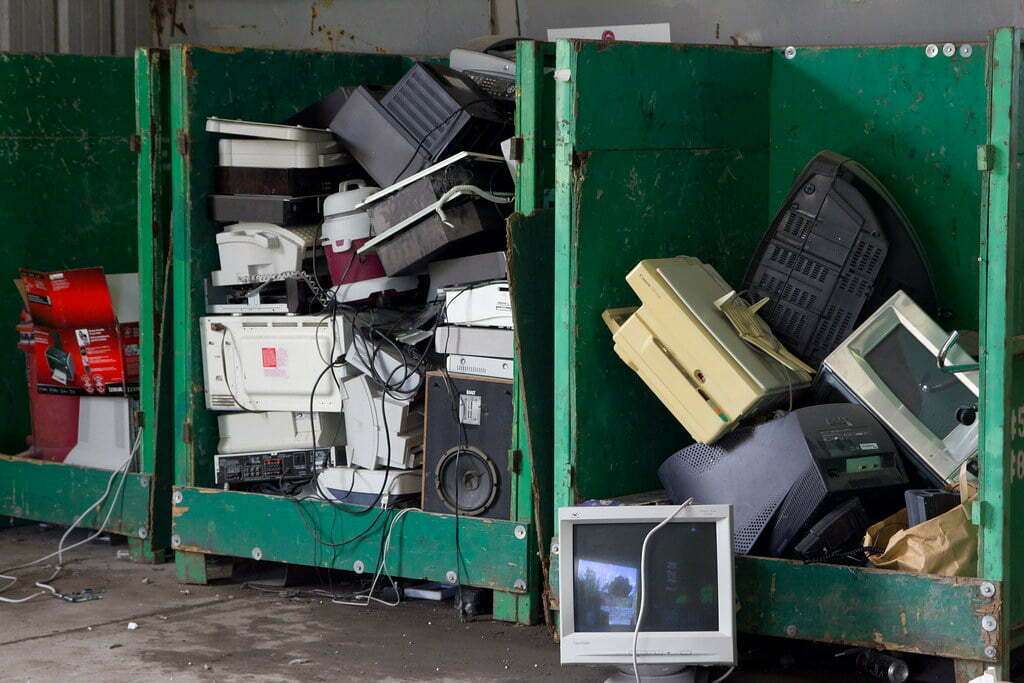
Before we proceed into the electronic waste recycling methods lets first try and understand what e-waste is and why it is so hazardous so that we can understand the gravity of managing it in the best possible ways Electrical and electronic equipment of any kind that has been abandoned is referred to as e-waste. It encompasses almost anything that is powered by electricity (e.g. from a power socket or a battery). The following are examples of common e-waste:
Desktop, laptop, and tablet computers, as well as mobile phones, computer and mobile phone batteries, printers, and peripherals and accessories such as keyboards, modems, displays, computer mouse, docking stations, hard disc drives, and battery chargers, are examples of ICT equipment.
TVs, refrigerators, air conditioners, washing machines, rice cookers, microwave and toaster ovens, electric kettles, food processors and blenders, electric fans, DVD/video/music players, radios, hi-fis, vacuum cleaners, and so on are examples of household appliances.
Lamps and lighting devices, batteries, electronic toys, sports and leisure equipment, and other items are examples of e-waste.
E-waste is primarily made up of metal and plastic components, but it also contains trace amounts of heavy metals and other potentially hazardous compounds (e.g., in printed circuit boards).
The wide variety of e-waste makes it difficult to generalise the material content – for example, refrigerators and air conditioners contain refrigerants to enable cooling, but these refrigerants may also contribute to ozone layer depletion or climate change; a mobile phone’s material composition is very different from that of an electric kettle.
You may reduce e-waste as an individual or as a family in the following ways:
Repair: Wherever possible, repair electronic equipment.
Reuse: Items in good functioning order should be reused or donated.
Recycle: Use voluntary recycling programmes spearheaded by industry stakeholders to recycle unwanted materials.
Many Organisations have implemented a regulated e-waste management system to ensure proper e-waste collection and handling, as well as the extraction of valuable resources from e-waste. It is important that we understand that E-waste management that is monitored and is done consciously will not only protect the environment and also our health.
The regulated e-waste management system is founded on the Extended Producer Responsibility (EPR) model, in which manufacturers are responsible for the collection and treatment of their products at the end of their useful lives.
One aspect that forms an important part of the electronic waste recycling is discontinuing the use of the hazardous substances that make the electronics dangerous. Now let us have a look at some of such substances that we have been using for years without realising the dangers they pose
E-Waste Smart Recycling has given a 3-in-1 bin and a battery and bulb container for the public to dispose of used lamps. These batteries will be collected and transferred to licensed e-waste recycling facilities for proper treatment. To find a bin near you where you may dispose of your batteries you can use applications that are dedicated to this purpose.
Fluorescent and Compact Fluorescent lamps: Fluorescent lamps and compact fluorescent lamps (CFLs) differ from other types of lamps in that the glass enclosure contains trace amounts of mercury. Mercury is essential for the generation of light and cannot be completely removed. Only mercury-free lamps are permitted to be imported for use in Singapore. Such lamps can be safely disposed of with general debris at our waste-to-energy incineration plants, according to industry regulations.
Batteries: Mercury content restrictions have been established on mercury oxide, zinc carbon, and alkaline batteries. The selling of batteries with a mercury concentration higher than the legal limit is prohibited on the local level. To limit the amount of thrown batteries, the adoption of rechargeable batteries is promoted. At the moment, only laptop and mobile phone batteries can be recycled.
Toxic industrial waste, such as lead-acid batteries, must be dealt with as such. Used home batteries (e.g. AA/AAA batteries) can be disposed of in the 3-in-1 bin, battery & bulb container, or battery-only bin supplied. These batteries will be collected and transferred to licensed e-waste recycling facilities for proper treatment. To find a bin near you where you may dispose of your batteries.
Why is Recycling Important?
Improper electronic waste recycling pollutes the environment, which can be harmful to human health. The best method to deal with e-waste is to properly recycle it. E-waste is made up of many distinct components, which necessitates the use of specialised equipment to dismantle, shred, process, and extract the constituent materials, which can then be used to create new goods.
To avoid contamination and maintain workplace safety and health, this must be done in a controlled environment. New goods are made from recycled materials. This eliminates the need to exploit the earth’s scarce raw materials. Because mining has an impact on our environment, reducing the demand for mining also reduces pollution.