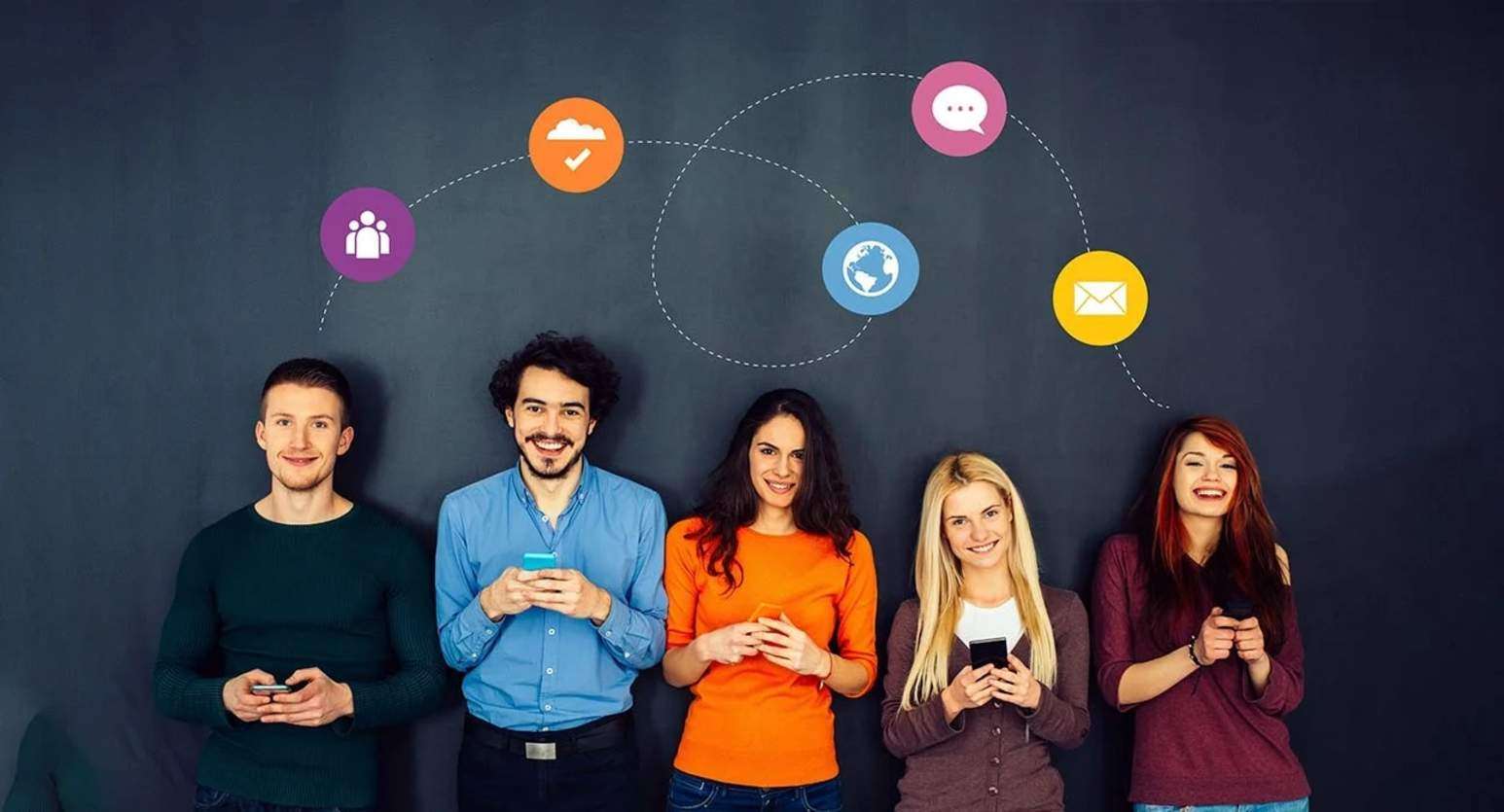


Social media was supposed to bring us together, but increasingly, it’s driving us apart—one annoying post, repetitive sound, and shameless self-promotion at a time.
As digital platforms have evolved from simple networking tools to attention-grabbing ecosystems, user behavior has shifted dramatically, often prioritising engagement over etiquette.
With social media users worldwide growing from 4.72 billion in January 2023 to 5.04 billion in January 2024, an 8% increase, the scope and impact of these behaviors has reached unprecedented levels.
Meanwhile, about two-thirds of Americans (64%) say social media have a mostly negative effect on the way things are going in the country today, according to Pew Research Center data.
The Rise Of The Attention Economy And Its Consequences
The fundamental shift toward algorithm-driven content has created a digital environment where being loud, repetitive, or controversial often trumps being thoughtful or considerate. Users have learned that extreme behaviors—whether positive or negative—generate more views, likes, and ultimately, revenue.
Digital marketing expert Tristan Harris from the Center for Humane Tech observed in 2025: “Disruption without empathy is just vandalism.” This sentiment captures the growing concern about how the pursuit of attention has eroded basic digital courtesy.
Research data supports these concerns. Gathering 32% of the vote from respondents, the pest people found most annoying were get rich quick schemes and multi-level marketing (MLM) businesses, according to a recent survey on social media behaviors.
The Influencer Epidemic: When Authenticity Becomes Performance
Perhaps no group embodies this shift more than social media influencers, whose pursuit of engagement has led to increasingly problematic behaviors.
Among teens, two-thirds report using TikTok, followed by roughly six-in-ten who say they use Instagram (62%) and Snapchat (59%), making them prime targets for influencer content.
The Constant Shill: Every post becomes a sales pitch, from morning coffee to bedtime routines. The statistics are telling: according to Google’s Ads & Commerce Blog, a whopping 70 percent of viewers have made purchases from brands they saw on YouTube, encouraging more aggressive promotional tactics.
The Humble Brag: “Just casually flying first class to Paris for the third time this month—so blessed!” These posts masquerade as gratitude while actually showcasing wealth and privilege, contributing to what mental health professionals call “compare and despair” syndrome.
The Crisis Capitaliser: Influencers who immediately pivot any trending topic, tragedy, or social movement into content opportunities, often with little understanding or genuine care for the issue at hand.
The Over-Sharer: Documenting every mundane detail of daily life, from bathroom visits to grocery shopping, treating followers as an audience for a reality show they never signed up to watch.
Marketing strategist observations reflect the industry’s awareness of these issues. As one expert noted: “Popularity has never equalled trust, and in fact, popularity on social media does not equal influence.”
The Audio Assault: When Sound Becomes Weaponized
One of the most universally despised trends involves repetitive, grating audio content that seems designed to burrow into listeners’ brains and never leave.
According to a report cited by Yale Medicine. the phenomenon has particularly serious implications for young users, as “frequent social media use may be associated with distinct changes in the developing brain,” potentially affecting such functions as emotional learning and behavior, impulse control, and emotional regulation,
TikTok Audio Loops: The same 15-second sound clip used in thousands of videos, creating an echo chamber of identical content that becomes inescapable as users scroll through their feeds.
Weird Video Sounds: Content creators who deliberately use annoying, high-pitched, or repetitive audio to grab attention, often targeting younger audiences who seem more tolerant of auditory assault.
The Volume Wars: Users who believe louder equals funnier, cranking up audio to uncomfortable levels or adding unnecessary sound effects to simple actions.
Parents across the country report their children playing these videos on repeat, creating household soundtracks of digital chaos. Dr. Jennifer Martinez, a child psychologist specializing in digital behavior, explains: “Children’s developing brains are particularly susceptible to repetitive stimuli.
When they watch the same annoying sound clip hundreds of times, it can create neural pathways that reinforce attention-seeking behaviors and reduce tolerance for quiet or contemplative activities.”
The Comment Section Catastrophe
The behavior isn’t limited to content creators—commenters have developed their own arsenal of annoying habits that contribute to the degradation of online discourse:
- The First Police: Users who rush to comment “First!” as if arriving early to a digital conversation grants them special status.
- The Obvious Observer: Comments that simply describe what’s happening in the video, adding no insight or value to the conversation.
- The Attention Hijacker: Commenters who use popular posts to promote their own content, dropping links and shameless self-promotion in completely unrelated discussions.
- The Emoji Overload: Comments consisting entirely of dozens of emojis, creating visual noise that drowns out meaningful conversation.
The Bullying and Harassment Dimension
The data reveals a darker side to these annoying behaviors. According to CDC’s Youth Risk Behavior Survey, 16% of high school students in the United States were bullied electronically in 2023. This includes via Instagram, Facebook, and other social media sites as well as through texting.
Dr. Sarah Chen, a digital behavior researcher at Stanford University, notes: “What many dismiss as merely ‘annoying’ behavior often crosses the line into harassment.
“The constant bombardment of unwanted content, repetitive sounds, and aggressive self-promotion creates a hostile digital environment that can have real psychological impacts.” said Chen
The Algorithm Amplification Effect
These behaviors persist because they work within the current social media ecosystem. Platforms’ algorithms reward engagement above all else, meaning annoying content often performs better than thoughtful content.
Former YouTube CEO Susan Wojcicki observed in 2024: “Innovation is a relay; pass the baton clean.” However, current platform designs seem to encourage dropping the baton entirely in favor of grabbing attention at any cost.
The result is a digital environment where users feel compelled to choose between being heard and being respectful. Many opt for the former, contributing to a cycle of increasingly disruptive behavior.
The Generational and Cultural Divide
Younger users, having grown up in this attention-economy environment, often view these behaviors as normal social interaction. They’ve developed different tolerance levels for repetitive content and aggressive self-promotion.
Social media plays a crucial role in Americans’ news consumption, with about one-third of adults saying they regularly get news on Facebook and YouTube, according to Pew Research, highlighting how these platforms have become essential communication infrastructure despite their flaws.
Meanwhile, older users—particularly those who remember pre-algorithm social media—find themselves increasingly frustrated by the shift in digital etiquette standards.
The Mental Health Connection
The impact extends beyond mere annoyance. Mental health professionals are increasingly concerned about the psychological effects of constant exposure to attention-grabbing content.
Dr. Lisa Thompson, a psychiatrist specialising in digital wellness, explains: “The brain’s reward system becomes hijacked by these constant micro-doses of stimulation.
“Users develop tolerance, requiring increasingly intense or frequent stimulation to achieve the same satisfaction.” said Thompson,
The digital marketing landscape in 2024 is marked by rapid innovation, consumer empowerment, and a shift towards more authentic, personalized engagements, suggesting industry awareness of the need for change.
The Economic Incentive Problem
Understanding why these behaviors persist requires examining the financial incentives. Social media platforms generate revenue through advertising, which depends on user engagement time. The longer users stay on platforms—even if they’re hate-watching content—the more valuable they become to advertisers.
Marketing expert observations reveal the industry’s internal contradictions: “Call it buying an audience before they buy your product, call it influencer marketing, call it what you like.
At the end of the day as marketers we’re all just trying to create conversations that will ultimately increase our popularity in the online world”, highlighting how commercial interests often override user experience considerations.
The Path Forward: Solutions and Recommendations
Digital wellness advocates and industry experts suggest several approaches to combat the most annoying social media behaviors:
- Platform Responsibility: Social media companies could adjust algorithms to reward quality engagement over pure volume, though this would likely impact their advertising revenue. Some platforms have begun experimenting with “time well spent” metrics rather than pure engagement.
- User Education: Teaching digital etiquette alongside digital literacy, helping users understand the impact of their online behavior on others. This includes recognising how repetitive, aggressive, or attention-seeking content affects community well-being.
- Individual Action: Users can curate their feeds more carefully, unfollowing accounts that consistently produce annoying content and supporting creators who prioritize quality over attention-grabbing tactics.
- Community Standards: Establishing and enforcing clearer community guidelines about respectful behavior, moving beyond just preventing harm to encouraging positive interaction.
- Regulatory Consideration: Some experts advocate for regulations that would require platforms to offer users more control over algorithmic feeds and content curation.
The Real Cost of Digital Chaos
The proliferation of annoying social media behaviors isn’t just a minor inconvenience—it’s contributing to digital fatigue, increased anxiety, and a general degradation of online discourse quality.
The statistics paint a concerning picture: with billions of users exposed to these behaviors daily, the cumulative impact on social interaction, mental health, and information quality is substantial.
Parents, educators, and mental health professionals report increasing concerns about attention spans, impulse control, and social skills among heavy social media users, particularly young people who have never known a different digital environment.
Why Children Need Immediate Social Media Intervention
A wake-up call for parents who have abdicated their responsibility to protect their children from digital harm. We are living through a catastrophic failure of parental responsibility.
While we wouldn’t dream of handing our children bottles of alcohol or packets of cigarettes, millions of parents are thoughtlessly placing infinitely more dangerous devices in their children’s hands—unrestricted access to social media platforms designed to exploit developing minds for profit.
The evidence is overwhelming, the damage is measurable, and yet we continue to watch helplessly as an entire generation succumbs to digital addiction while their parents scroll through their own feeds, oblivious to the psychological warfare being waged against their children.
Parents vs Social Media: Global Crisis Dashboard
Real-time statistics on parental concerns and social media restrictions worldwide
Top Parental Concerns About Social Media
Parental Action vs Inaction
Mental Health Concerns by Parent vs Teen
Teen Social Media Usage Patterns
Demographic Differences in Parental Monitoring
Monitoring by Race/Ethnicity
Concerns by Child Gender
The Reality Check: What Parents Actually Do
Parental Control Tool Usage
Teen Perception of Social Media Time
The Alarming Statistics: A Generation in Crisis
The numbers paint a devastating picture of what unrestricted social media access is doing to our children.
More than 1 in 10 adolescents (11%) showed signs of problematic social media behaviour, struggling to control their use and experiencing negative consequences, according to recent WHO research. Even more concerning, girls reported higher levels of problematic social media use than boys (13% vs 9%).
But the crisis runs deeper than addiction. Children and adolescents who spend more than 3 hours a day on social media face double the risk of mental health problems including experiencing symptoms of depression and anxiety.
This isn’t theoretical—a recent survey showed that teenagers spend an average of 3.5 hours a day on social media, meaning the average American teenager is already in the danger zone.
The American Academy of Pediatrics has issued stark warnings that “media use and screen time are associated with increased risks for children and adolescents, such as attention deficits, increased aggression, low self-esteem, and depression”.
Yet parents continue to ignore these medical warnings as if they were suggestions rather than urgent health advisories.
Perhaps most shocking of all: “nearly 40% of children ages 8–12 use social media”, despite the minimum age requirement of 13 on most platforms. This means parents are actively facilitating their elementary school children’s exposure to platforms designed for teens and adults.
Special Needs Children: The Most Vulnerable Victims
For children with special needs, social media represents a particularly insidious threat that most parents either don’t understand or choose to ignore. The research is unequivocal and terrifying.
Studies have found that the longer the period of screen exposure, the higher the risk that the child may develop ASD. Further, the earlier the child is exposed to screens, the higher the risk of developing ASD in children compared to children exposed later. This isn’t correlation—this is causation being documented in real-time.
For children already diagnosed with autism spectrum disorders, the risks multiply exponentially. Higher amounts of total screen time are associated with higher levels of psychiatric disturbances, including mood and anxiety disorders, ADHD, tics and psychosis.
Even more disturbing, young people with ASD who engage in daily screen time may experience hallucinations, paranoia.
Children with ADHD face their own unique vulnerabilities. About 25% of people with ADHD, and a little over 4.5% of adolescents, are addicted to the internet. Research has shown that increases in screen time in a given year were associated with an exacerbation of ADHD symptoms within that same year.
Preschoolers with autism and those with elevated ADHD symptoms experienced more screen exposure prior to age 2 than children without these developmental challenges, suggesting that vulnerable children are being disproportionately exposed to harmful content at the most critical developmental stages.
The Parental Abdication Crisis
Perhaps the most infuriating aspect of this crisis is how parents have simply given up. They’ve handed their most precious responsibility—protecting their children—to algorithm-driven corporations whose sole purpose is extracting maximum engagement time from developing minds.
The statistics on parental negligence are staggering. Only 25% of parents “strongly agree” with restricting screen time, while an Ipsos survey for data protection company Aura found that only 29% of parents use parental control tools on image and video apps like Instagram and TikTok.
This isn’t just neglect—it’s willful ignorance in the face of medical evidence. Parents who wouldn’t let their children eat candy for breakfast are allowing unlimited consumption of digital content that rewires neural pathways and creates genuine addiction.
The excuses are pathetic and predictable: “I need to keep them entertained,” “It’s educational,” “All the other kids are doing it,” “I can’t monitor them all the time.”
These are the words of parents who have fundamentally failed to understand their primary job: protecting their children from harm, even when that harm comes packaged as entertainment.
The Discipline Breakdown
The erosion of parental authority in the digital age represents one of the most concerning developments in modern family dynamics. Children who once respected parental boundaries now negotiate, manipulate, and outright defy parents when it comes to screen time limits.
If living with a parent who agrees or strongly agrees that he or she restricts screen time, the adolescent reports 1.7 fewer hours, on average, of social media use, compared to adolescents whose parent does not restrict screen time. This proves that parental boundaries work—when parents actually have the courage to set and enforce them.
But too many parents have become afraid of their own children’s reactions to digital limits. They’ve allowed tantrums, arguments, and emotional manipulation to override their parental instincts and medical advice.
Children have learned that persistent whining about screen time restrictions will eventually wear down weak-willed parents who prioritise peace over protection.
Children whose parents used screen devices as discipline tools had significantly more screen time compared to children whose parents did not. This creates a vicious cycle where screens become both the problem and the supposed solution, with parents using the very devices that are harming their children as rewards and punishments.
The Long-Term Consequences of Parental Failure
The children being raised with unlimited social media access aren’t just dealing with temporary inconvenience—they’re suffering permanent neurological changes that will affect them for the rest of their lives.
27% report that using the app has impacted their mental health negatively. This was the highest among millennials with 37.3% reporting that they’ve experienced such effects. We’re seeing the first generation of social media natives reach adulthood, and the mental health statistics are catastrophic.
These children are developing attention spans measured in seconds, not minutes. They’re losing the ability to engage in sustained thought, to sit with discomfort, to develop real-world problem-solving skills.
They’re also becoming dependent on external validation from strangers on the internet rather than developing internal confidence and self-worth.
For children with special needs, the consequences are even more severe. They’re being robbed of critical developmental opportunities during the most neuroplastic periods of their lives.
Instead of developing coping strategies, social skills, and emotional regulation, they’re learning to escape into digital stimulation whenever reality becomes challenging.
What Needs to Happen Immediately
The solution isn’t complicated, but it requires parents to remember that they are adults with authority and responsibility, not friends seeking their children’s approval.
Complete Social Media Prohibition for Children Under 16: No child under 16 should have access to social media platforms. Period. The developing brain cannot handle the dopamine manipulation, social comparison, and attention fragmentation that these platforms deliberately create.
Strict Screen Time Limits for All Children: Research shows that monitoring and limiting screen time parent media practices are associated with lower screen time and lower problematic screen use in early adolescents.
Special Protections for Vulnerable Children: Children with autism, ADHD, anxiety disorders, or other special needs require even stricter limitations. Their brains are more susceptible to digital manipulation and less capable of self-regulation.
Parental Education and Accountability: Parents need to understand that allowing unlimited social media access is a form of neglect. Creating clear boundaries on when electronic use is appropriate may be helpful to set limits, but only if parents have the courage to enforce them consistently.
Device-Free Zones and Times: Collect devices an hour before bedtime and before mealtimes to restore basic human interaction and healthy sleep patterns.
The Uncomfortable Truth
The uncomfortable truth is that most parents are more addicted to their devices than they’re willing to admit, which makes them reluctant to restrict their children’s access.
Parents with more social media experience were more likely to monitor their child’s social media use, but this creates a perverse incentive where the most digitally addicted parents become the gatekeepers for their children’s digital consumption.
Parents need to acknowledge that they’ve been manipulated by the same attention-hijacking mechanisms that are now being used against their children.
The difference is that adult brains are fully developed and theoretically capable of resistance. Children’s brains are still forming, making them exponentially more vulnerable to digital manipulation.
The Choice: Protection or Popularity
Every parent faces a choice: protect your child’s developing brain or avoid the temporary discomfort of setting boundaries. Too many are choosing the latter, prioritizing their own convenience and their child’s immediate happiness over long-term psychological health.
This isn’t about being old-fashioned or anti-technology. This is about recognizing that corporations have weaponized neuroscience against our children, and that parental authority is the only thing standing between vulnerable developing minds and sophisticated behavioral manipulation.
The share of those who say they spend about the right amount of time on it has dropped to 49% in 2024 from 64% in 2023 and 55% in 2022, proving that even children are beginning to recognise the problem. It’s time for parents to catch up to their children’s awareness and take action.
The children being raised with unlimited social media access today will be the adults of tomorrow. Their capacity for deep thinking, genuine relationships, and emotional resilience is being systematically destroyed while their parents scroll through their own feeds, too distracted to notice the psychological warfare being waged against the next generation.
The time for gentle suggestions and gradual changes has passed. This is a crisis requiring immediate, decisive parental intervention. Children don’t need more screen time—they need parents brave enough to say no and strong enough to enforce it, regardless of the tantrums, arguments, and social pressure that will inevitably follow.
The question isn’t whether children will be upset about losing their digital pacifiers. The question is whether parents love their children enough to endure that upset in service of protecting their developing minds from permanent harm.
Looking Ahead: The Future of Digital Interaction
As social media continues to evolve, the challenge lies in finding ways to maintain engagement and creativity while fostering environments that users actually want to spend time in.
Some emerging platforms are experimenting with different engagement models, including subscription-based services that don’t rely on advertising revenue and therefore may be less incentivized to promote addictive or annoying content.
The question isn’t whether these behaviors will continue—in an attention-driven economy, they almost certainly will.
The question is whether platforms, creators, and users will recognise the long-term cost of prioritizing annoyance over authentic connection, and whether the digital ecosystem can evolve to support more sustainable and pleasant forms of online interaction.
Until then, the mute button, unfriend function, and digital detox remain many users’ best friends—temporary solutions to a systemic problem that requires broader cultural and technological change.