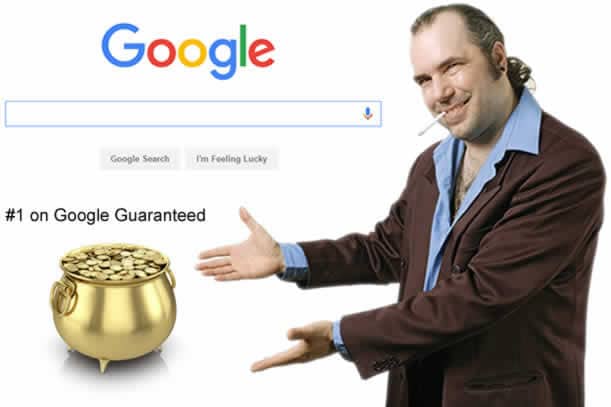


An investigation reveals the invisible architecture corrupting what billions believe to be true
Behind the algorithms that guide over 4 billion people’s searches, a hidden system of manipulation has been quietly taking a stronger foothold every single day.
Website owners and webmasters—whether through calculated manipulation or catastrophic negligence—are constructing highways of hyperlinks that funnel searchers directly into the waiting arms of misinformation, elevating falsehoods to positions of algorithmic authority.
The Numbers Don’t Lie: A Crisis Quantified
The revelation is staggering in its implications: when people search online using the exact headline or URL from a false or misleading article, 77% of those queries return at least one unreliable news source among the top ten results. This isn’t a marginal problem affecting fringe searches.
This is a systemic vulnerability in how search engines rank information, and it’s being exploited—sometimes deliberately, often unconsciously—by the very webmasters who should be guardians of digital integrity.
Even more disturbing, 51% of SEO professionals admit to using black hat tactics to some extent, creating an industry-wide acceptance of manipulative practices that directly undermine the quality of information reaching end users. These aren’t isolated actors. This is a normalised culture of gaming the system.
The Architecture of Algorithmic Deception
The mechanism is deceptively simple yet devastatingly effective. Black hat SEO strategies are used disproportionately to promote misinformation, with bad actors constructing elaborate networks of interconnected websites—link schemes that act as amplification chambers for false narratives.
Thirteen of fifteen top backlinking domains for pro-Kremlin propaganda sites were found to link disproportionately to unreliable domains, revealing coordinated infrastructure designed specifically to elevate politically motivated falsehoods.
Consider the mechanism of these link schemes: people are more likely to click on links shown higher in search results, creating a positive feedback loop where higher placement generates more clicks, which in turn maintains or improves that high placement.
When webmasters artificially inflate rankings through manipulated backlinks, they’re not just cheating the algorithm—they’re hijacking the trust signals that billions of people use to determine what’s credible.
When Verification Becomes Infection
In perhaps the most perverse twist, online searches to evaluate the truthfulness of false news articles actually increase the probability of believing them.
The very act of fact-checking—encouraged by social media platforms, civil society organizations, and government agencies—can backfire spectacularly when search results have been poisoned by networks of linking sites reinforcing the original misinformation.
This creates a nightmarish scenario: when participants included terms from misleading articles in their fact-checking searches, misinformation appeared in results more than half the time.
A reader attempting due diligence, seeking to verify a suspicious claim, instead finds themselves surrounded by confirmation of the falsehood—not because it’s true, but because webmasters have constructed an ecosystem of cross-referencing sites that make it appear legitimate to ranking systems.
The Consequences: From Elections to Epidemics
The real-world stakes cannot be overstated. Exposure to COVID-19 misinformation online has been strongly associated with lower vaccination rates, and exposure to even small amounts of climate change misinformation can lower acceptance of climate change.
When webmasters link to and legitimise unreliable health information, they’re not just affecting search rankings—they’re contributing to public health crises and undermining responses to existential threats.
Higher exposure to unreliable news has been linked to lower trust in media and higher distrust overall, eroding the foundational trust that functioning democracies require.
Every backlink to a conspiracy theory site, every outbound reference to an unreliable domain, contributes incrementally to this erosion.
The Webmaster’s Dilemma: Ignorance and Intent
The problem operates on two fronts. First, there’s the deliberate manipulation: bad actors artificially inflate website search result rankings by strategically understanding and exploiting what is known about search engine ranking algorithms.
These are the calculated architects of deception, building private blog networks, purchasing expired domains with strong backlink profiles, and constructing link farms for the explicit purpose of promoting false narratives.
But there’s a second, perhaps more insidious problem: well-intentioned webmasters operating without adequate understanding.
Many site owners reference sources without verifying their reliability, creating chains of citations that give algorithmic weight to misinformation.
When a seemingly legitimate blog links to an unreliable source, and another site links to that blog, and search engines interpret these connections as votes of confidence, the misinformation becomes embedded in the ranking infrastructure itself.
A System Under Siege
Search engines are judged using metrics including user engagement, and it’s in the search companies’ best interest to provide content that users want to click, even if that content is misleading.
This also creates a structural incentive problem where sensationalism and controversy—common features of misinformation—naturally rise in rankings, and webmasters seeking traffic have every incentive to link to it.
The challenge is compounded by the sheer scale of manipulation. One website was found to generate 2.9 million backlinks to a known misinformation outlet, creating an artificial authority structure that would take enormous algorithmic sophistication to detect and counteract.
The Path Forward: Accountability in the Age of Algorithms
The solution requires a fundamental shift in how we understand the responsibility of website ownership.
Every external link is a recommendation, every reference a signal to algorithms about what deserves visibility and credibility. Webmasters must become stewards of information integrity, not just traffic metrics.
This means:
- Rigorous source verification before linking to external content.
- Periodic backlink audits to identify if your site has become part of a link scheme.
- Understanding that algorithmic manipulation has real-world consequences beyond search rankings.
- Recognising that professional SEO ethics matter when half the industry admits to using manipulative tactics
The internet’s architecture was built on links—hypertext connections that were supposed to weave together humanity’s knowledge into an accessible tapestry.
Instead, those same links have become vectors for the systematic promotion of falsehoods, with webmasters serving as unwitting (or willing) accomplices in the degradation of shared truth.
As billions conduct their daily searches, they trust that the results they see reflect some measure of credibility and relevance.
That trust is being systematically betrayed by an infrastructure of links that elevate what’s sensational, controversial, and frequently false over what’s accurate, verified, and true.
The question isn’t whether search engines can fix this problem through better algorithms. The question is whether webmasters will recognise their role in creating it—and whether they’ll accept responsibility for the information ecosystem they’re helping to build, one link at a time.
This investigation draws on peer-reviewed research from Nature, Scientific American, Harvard’s Misinformation Review, and multiple academic studies published in 2024.
The crisis is documented, quantified, and worsening. The only question remaining is when the digital community will treat link integrity with the seriousness that public information infrastructure demands.