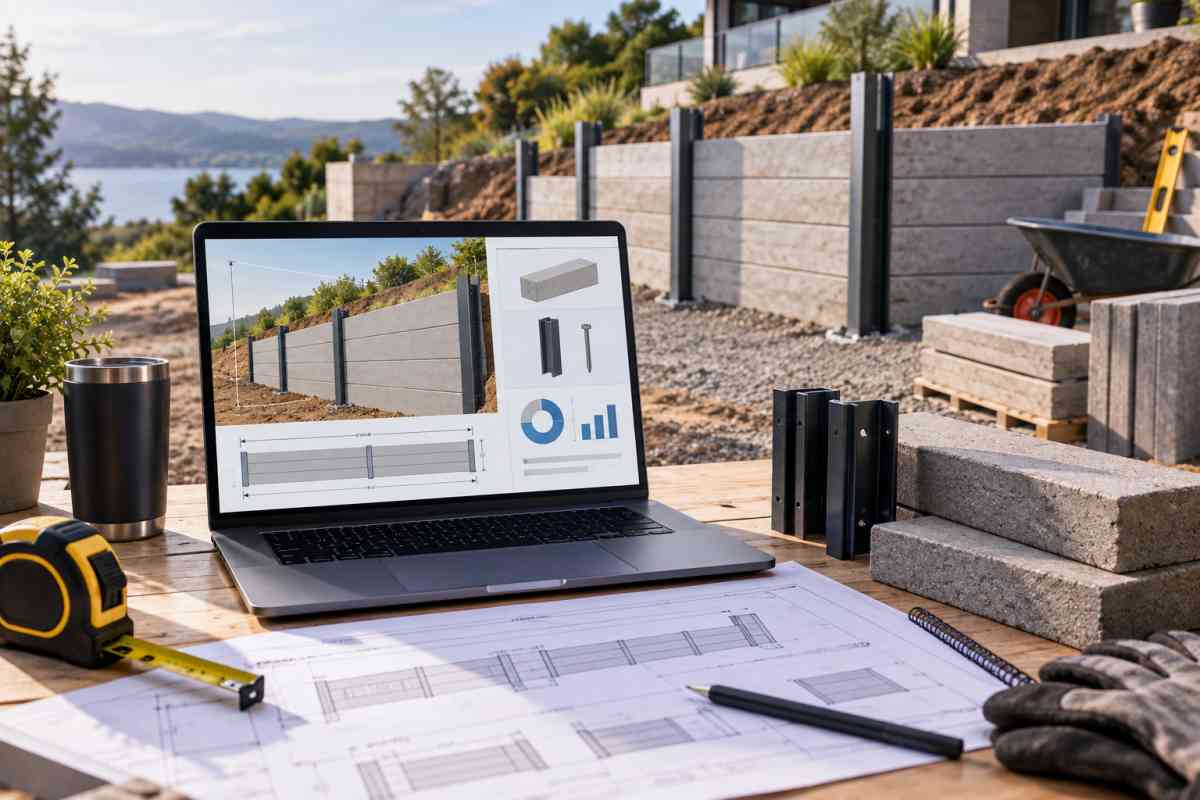
Australian Landscape Supplies is bringing more automation into the traditionally manual process of planning retaining walls after it built an interactive retaining wall calculator designed to generate material estimates from basic project measurements.
The web-based calculator allows homeowners, landscapers and contractors to enter measurements including wall length, wall height, sleeper length and the required depth of steel posts below ground. It then produces an estimated materials list covering concrete sleepers and supporting steel posts.
While material calculators are increasingly common across construction and home improvement websites, the Australian Landscape Supplies tool goes further than a simple length calculation by allowing users to model multiple sections of retaining wall within the same project.
Users can create additional walls for L-shaped and U-shaped installations, while sections with different heights can be entered separately before being combined into a total project summary.
Digital Tools Move Deeper Into Landscaping
The calculator reflects a broader shift across building supplies and landscaping, where digital tools are increasingly being used to remove some of the guesswork traditionally involved in estimating materials.
A retaining wall can require dozens of heavy concrete sleepers together with correctly sized H-posts and C-posts. Small calculation errors can therefore result in excess materials being ordered, additional deliveries being required or work being interrupted while missing components are sourced.
Australian Landscape Supplies says its calculator is intended to help users estimate material quantities more accurately and reduce waste before an order is placed.
The system also provides a visual project summary showing individual wall sections and combines their requirements into an overall materials estimate.
For example, calculations displayed by the tool can identify the number of wall sections, sleepers required per section, total sleepers, the number of steel posts required and the corresponding post height.
It means much of the arithmetic that would previously have been carried out manually, or worked out with a supplier, can now be completed online before the customer begins purchasing materials.
Fence Planning Included
The calculator also takes into account whether a fence will be installed above the retaining wall.
Users can indicate that a fence is being added and select between supported fencing configurations, with the calculator able to incorporate associated fence brackets into the project requirements.
That is particularly useful because retaining walls and boundary fencing are often planned together, despite requiring different structural considerations.
Once the calculation is completed, project information can also be submitted to Australian Landscape Supplies through an integrated enquiry and quotation form, effectively connecting the estimating stage with the company’s sales process.
From an e-commerce perspective, this type of integration is becoming increasingly important for suppliers selling products that cannot easily be purchased by quantity alone.
Rather than asking customers to determine how individual components fit together, digital calculators can effectively become an online configuration layer sitting between technical product information and the shopping cart.
Reducing Ordering Errors
The technology could also help address a common problem for DIY customers who may understand the dimensions of the wall they want to build but have less experience calculating how many sleepers and posts those dimensions translate into.
Australian Landscape Supplies sells concrete sleepers across several sizes, including products designed around 1600mm, 2000mm and 2400mm post centres, meaning the selected sleeper size can materially change the number of sections and supporting posts required for a project.
Some sleepers sold by the company also weigh more than 80 kilograms each, making over-ordering more significant than simply having a few unused building materials left over at the end of a project.
Automating the initial calculation can therefore provide customers with a more practical starting point when planning transport, labour, costs and material quantities.
However, the company makes clear that the calculator remains an estimating tool rather than an engineering system.
Australian Landscape Supplies advises users that actual requirements can change depending on site conditions and individual product specifications and recommends consulting an engineer or professional landscaper where precise structural advice is required.
The calculator also recommends that its results be verified where projects involve different wall configurations or engineering considerations.
Construction Retail Becomes More Software Driven
For landscape and construction suppliers, online tools such as retaining wall calculators illustrate how relatively simple software can improve the buying process for products that have traditionally required significant technical knowledge.
Instead of operating purely as online catalogues, suppliers can increasingly provide calculators, visualisers and configuration systems that help customers work out what they need before contacting a salesperson or visiting a trade counter.
Australian Landscape Supplies already links its retaining wall calculator across several sections of its online catalogue, including concrete and composite sleeper ranges, positioning the software as part of the purchasing process rather than a standalone informational tool.
For customers, the immediate benefit is convenience. Measurements can be entered and adjusted within minutes while different wall layouts can be modelled before materials are ordered.
For suppliers, the technology potentially delivers something equally valuable: customers arriving at the quotation or ordering stage with a clearer understanding of their project and a more complete idea of what they actually need.
As building-material retailers continue moving more of the purchasing journey online, calculators such as this show how even highly physical industries are becoming increasingly dependent on software to connect project planning with the materials that eventually arrive on site.