


Trango Tech (trangotech.com), which markets itself as a digital transformation and software development provider, has been observed sending cold outreach emails (Spam) to website operators worldwide, according to complaints shared with industry publishers and online forums.
Recipients allege the emails were unsolicited and, in some cases, sent to generic contact addresses scraped from publicly listed websites.
The messages, seen by this publication, promote web development, mobile app design and digital marketing services. Several recipients say they had no prior relationship with the company and did not opt in to receive promotional communication.
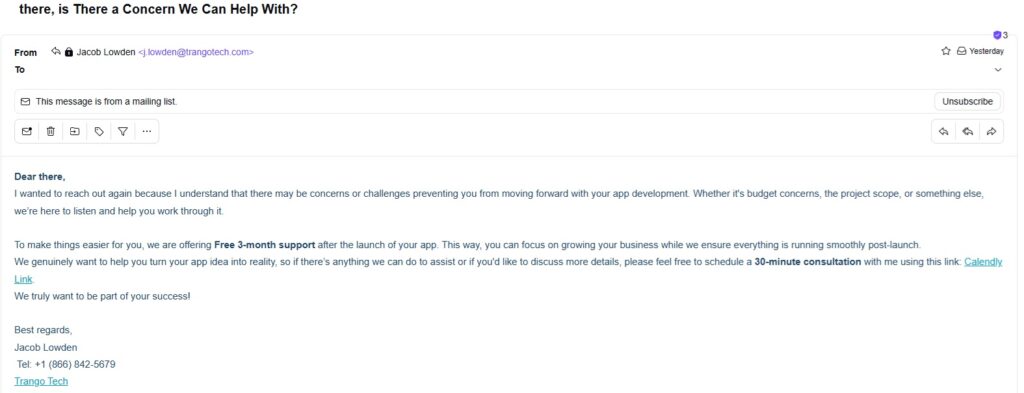
Under laws such as the CAN-SPAM Act and Australia’s Spam Act 2003, businesses are required to follow strict rules when sending commercial electronic messages, including clear identification, accurate sender information, and, in many jurisdictions, prior consent.
Legal experts note that cold marketing emails can breach spam laws in numerous countries where consent is mandatory before sending commercial electronic messages.
In most regulated markets, individuals and businesses must first opt in, request, or otherwise approve being placed on a mailing list before promotional emails can be lawfully sent.
Industry sources also warn that illegally scraped mailing lists are frequently traded through freelance marketplaces, particularly in parts of South Asia, where contact databases are compiled from publicly available websites and sold in bulk.
Companies that purchase such lists risk engaging in mass unsolicited marketing rather than acquiring subscribers through legitimate, approved opt-in processes.
Website owners say the volume and repetitive nature of the outreach has contributed to what many describe as a growing “web development spam plague” — a surge in mass marketing emails from offshore and international service providers targeting small and mid-sized businesses.
Trustpilot Reviews – Scam Warning
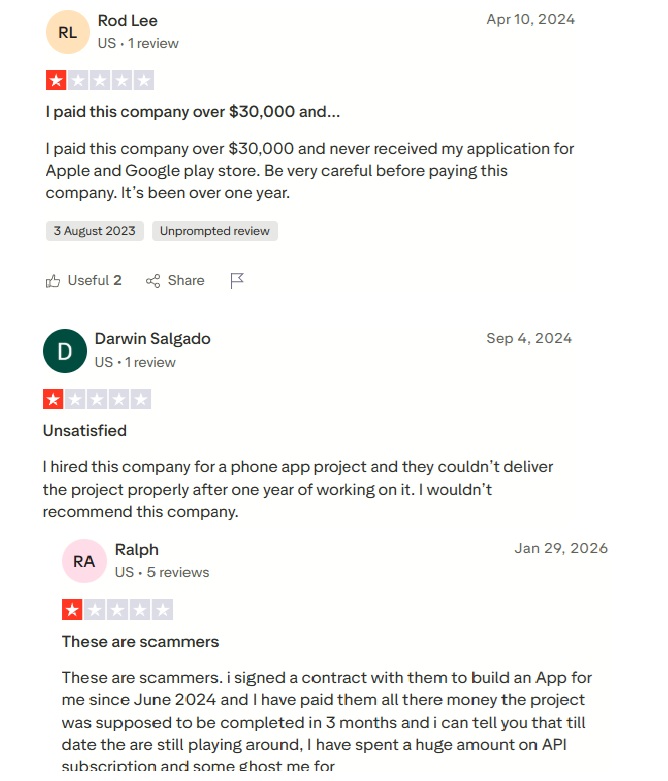
Adding to the controversy, several reviews posted on Trustpilot describe the company as a “scam,” with complainants alleging poor service delivery, aggressive sales tactics, and unmet contractual promises.
Some reviewers claim they experienced difficulty obtaining refunds or meaningful communication after payment.
Alongside the negative feedback, observers have pointed to what appear to be clusters of highly positive five-star reviews published within short timeframes.
Digital reputation analysts say such patterns can, in some cases, indicate coordinated review activity or the use of paid reputation management services — a practice that, while not uncommon in competitive online industries, raises ethical concerns if reviews are not genuine or transparently disclosed.
It is not uncommon for businesses facing criticism to engage third-party firms to manage or improve their online reputation. However, consumer protection experts warn that publishing fabricated or misleading reviews may breach consumer law in several jurisdictions and further erode trust.
Website owners say the volume and repetitive nature of the outreach has contributed to what many describe as a growing “web development spam plague” — a surge in mass marketing emails from offshore and international service providers targeting small and mid-sized businesses.
Cybersecurity analysts caution that while cold B2B outreach remains a common practice in parts of the technology sector, aggressive automation and bulk distribution tactics can quickly cross the line into spam.
Beyond regulatory exposure, experts say such strategies can erode trust, damage brand reputation, and undermine the credibility of legitimate digital service providers operating in an increasingly compliance-focused global marketplace.
Third-party reviews have raised concerns about the company’s legitimacy, so it’s worth doing additional due diligence if you’re considering engaging with them.