As the property management industry undergoes its most significant technological transformation in decades, professionals are grappling with unprecedented challenges that could determine the future of real estate operations
Property management is being reshaped by technology, offering new opportunities and challenges. Trends like AI, IoT, and blockchain are improving efficiency and tenant experience, but high upfront costs, data migration hurdles, and integration with legacy systems continue to pose obstacles.
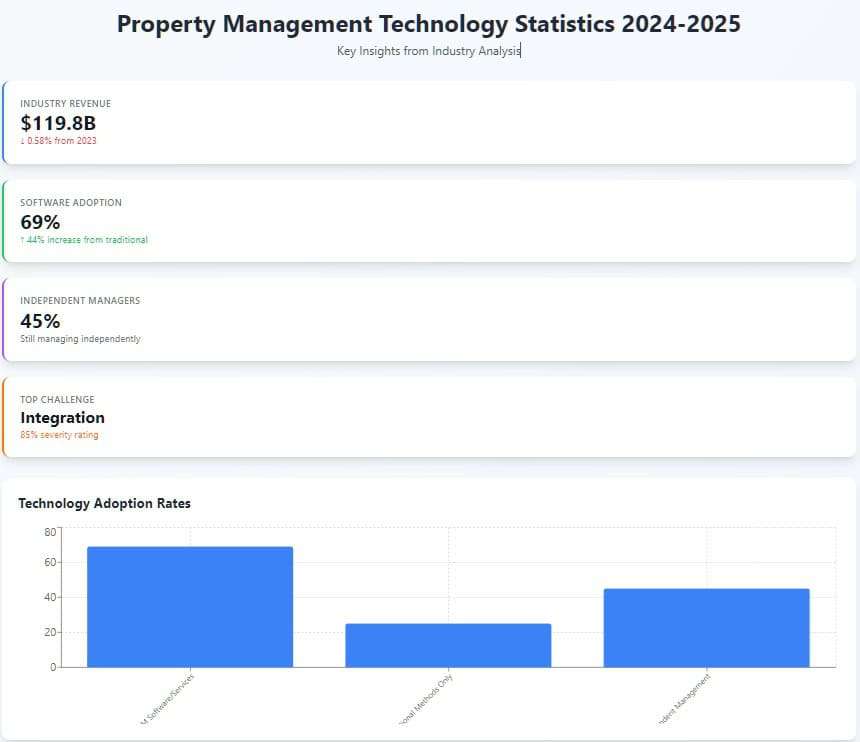
The industry is stands at a technological crossroads. With revenue reaching $119.8 billion in 2023 despite a slight 0.58% decline in 2024, according to industry data, property managers are navigating an increasingly complex landscape where technology promises solutions but often creates new complications.
As we move deeper into 2025, seven critical challenges have emerged as defining factors for success in this evolving sector.
7 Key Challenges: Property Management
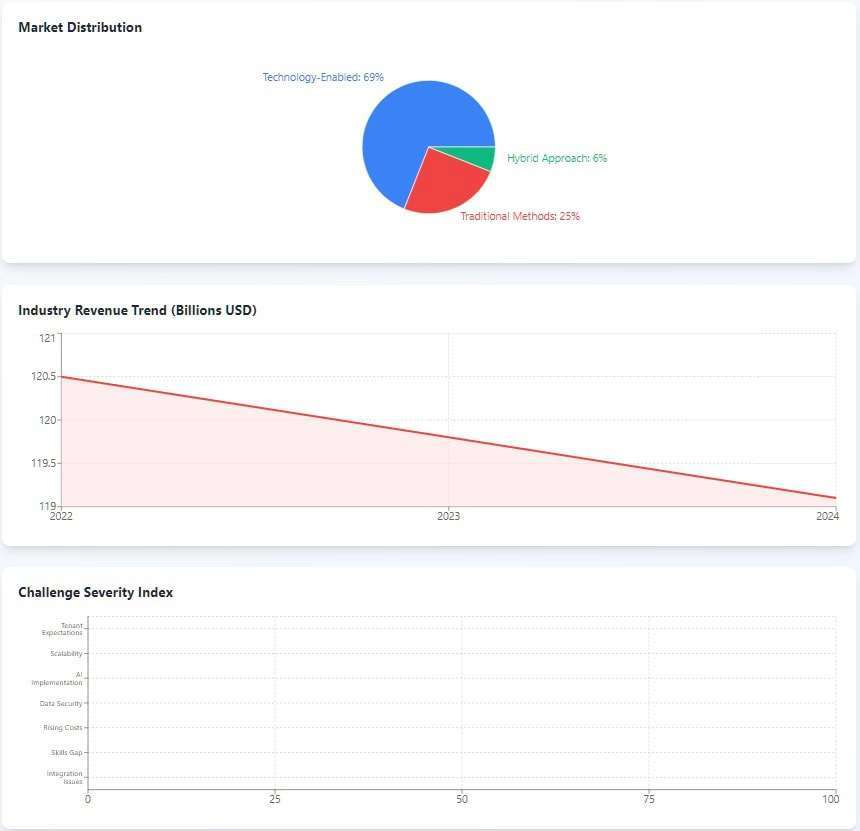
- Technology integration and fragmentation issues
- AI implementation gaps between promise and reality
- Rising operational costs amid technology investments
- Skills gap between traditional expertise and tech literacy
- Data security and privacy compliance concerns
- Scalability challenges without compromising quality
- Evolving tenant experience evolution
Each challenge is presented with both the problem and potential solutions, backed by current industry trends and expert insights. The article maintains a balanced perspective on technology adoption while highlighting the real-world implications for property management professionals.
1. The Integration Paradox: Too Many Tools, Too Little Cohesion
Property managers today face what industry experts call “technology fragmentation.” While 69% of investors now use property management software or services—a significant increase from just 25% using traditional methods—the proliferation of specialised tools has created a new problem: integration chaos.
- The Challenge: Multiple software platforms that don’t communicate effectively, leading to data silos and inefficient workflows.
- The Solution: Industry leaders are increasingly adopting unified property management platforms that consolidate multiple functions. Cloud-based systems with robust API integrations are becoming the gold standard, allowing property managers to streamline operations without sacrificing functionality.
2. The AI Implementation Gap: Promise vs. Reality
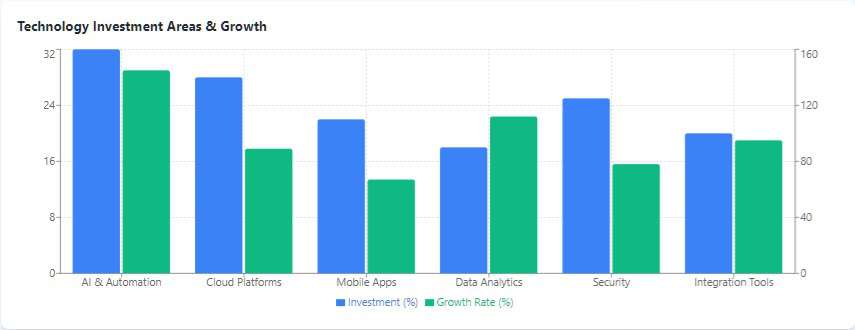
Artificial intelligence has dominated property management headlines throughout 2024 and into 2025, with AI-powered solutions representing one of the fastest-growing segments in proptech investment. However, the reality of AI implementation has proven more complex than the marketing promises suggest.
- The Challenge: While AI offers tremendous potential for automating routine tasks, predictive maintenance, and tenant communication, many property management firms struggle with implementation costs, staff training, and integration with existing systems.
- The Solution: Successful property managers are taking a phased approach to AI adoption, starting with specific use cases like automated lease renewals or maintenance scheduling before expanding to more complex applications.
3. Rising Operational Costs Amid Technology Investments
The property management industry faces mounting pressure from increasing expenses across all categories. Real estate taxes, insurance premiums, utilities, equipment costs, and labor expenses continue to rise, while technology investments add another layer of financial complexity.
- The Challenge: Balancing the immediate costs of technology adoption with long-term operational savings, particularly when ROI timelines extend beyond quarterly reporting periods.
- The Solution: Forward-thinking property managers are conducting comprehensive cost-benefit analyses that extend beyond simple automation savings. They’re factoring in improved tenant retention rates, reduced vacancy periods, and enhanced operational efficiency
4. The Talent Technology Divide: Skills Gap in a Digital World
Perhaps no challenge is more pressing than the growing skills gap between traditional property management expertise and technological proficiency. With 45% of landlords still managing properties independently, the industry faces a fundamental question about workforce development.
- The Challenge: Finding and retaining staff who possess both property management acumen and technological literacy, while simultaneously training existing employees on rapidly evolving systems.
- The Solution: Leading property management companies are investing heavily in continuous training programs and partnering with technology vendors to provide comprehensive staff development.
5. Data Security and Privacy Compliance
As property management becomes increasingly digital, the volume of sensitive data—from tenant personal information to financial records—has grown exponentially. This digital transformation has made property management companies attractive targets for cybercriminals.
- The Challenge: Implementing robust cybersecurity measures while maintaining user-friendly systems, all while navigating an increasingly complex regulatory environment regarding data privacy.
- The Solution: Industry best practices now include regular security audits, staff training on data protection protocols, and investment in enterprise-grade security infrastructure.
6. Scalability Without Quality Compromise
The technology sector’s influence on property management has created new opportunities for rapid portfolio expansion, but this growth potential comes with significant operational challenges.
- The Challenge: Maintaining high-quality service standards while scaling operations, particularly when technology systems must handle increasing volumes of properties, tenants, and transactions.
- The Solution: Successful property managers are implementing scalable technology architectures from the outset, rather than attempting to retrofit systems after growth occurs.
7. Tenant Experience Evolution: Meeting Rising Digital Expectations
Today’s tenants, particularly in technology-rich markets, expect digital-first experiences that mirror their interactions with other service providers. This expectation extends from initial property searches through lease signing, maintenance requests, and ongoing communication.
- The Challenge: Delivering seamless digital experiences while maintaining the personal touch that distinguishes premium property management services.
- The Solution: The most successful property management companies are adopting omnichannel communication strategies that offer tenants multiple interaction options—from AI-powered chatbots for simple inquiries to direct access to property managers for complex issues.
Other Challenges and Solutions of Property Management Technology
- High Initial Costs.
- Comprehensive Training Programs
- Learning Curve and Training.
- Cost-Effective Solutions.
- Data Migration Issues.
- Integration with Existing Systems.
- Resistance to Change.
- Security and Data Privacy Concerns.
Property Management Industry Faces $9.68 Billion Tech Challenge as Digital Adoption Accelerates
- High initial costs remain the most significant hurdle, with key focus shifting to handling operating costs and enhancing business efficiency amid a surge in investors and large real estate firms entering the market.
- Training and learning curves present ongoing difficulties as staff adapt to new systems. Industry analysts note that the human element remains the most unpredictable factor in technology rollouts, with some companies reporting productivity dips lasting several months during transition periods.
- Data migration issues have become increasingly problematic as companies attempt to transfer years of legacy information to modern platforms. Transitioning property management companies to new software providers requires ample planning to ensure smooth migration
- System integration challenges plague companies juggling multiple software solutions that don’t communicate effectively, leading to data silos and workflow inefficiencies.
- Resistance to change from longtime employees and established processes continues to slow adoption rates, particularly among smaller property management firms with entrenched operational methods.
- Security and data privacy concerns have intensified as companies digitize sensitive tenant and financial information, requiring additional cybersecurity investments and compliance measures.
Despite the obstacles, industry leaders are developing cost-effective solutions and comprehensive training programs to address implementation barriers.
Industry experts predict that companies successfully navigating these implementation challenges will gain significant competitive advantages, while those unable to adapt may struggle to retain tenants and maintain operational efficiency in an increasingly digital marketplace.
Looking Ahead: The Path Forward : Challenges Facing Property Managers
As the property management industry continues its technological evolution, success will increasingly depend on strategic technology adoption rather than wholesale digital transformation.
The companies thriving in 2025 are those that view technology as an enabler of better service rather than a replacement for human expertise.
“Cloud-based systems and AI-driven automation are at the forefront of these changes,” according to recent industry analysis. “There’s also a growing emphasis on sustainability and advanced analytics.”
The future of property management lies in blending technology with traditional practices. In 2025, those who master this balance will shape the industry’s next chapter.