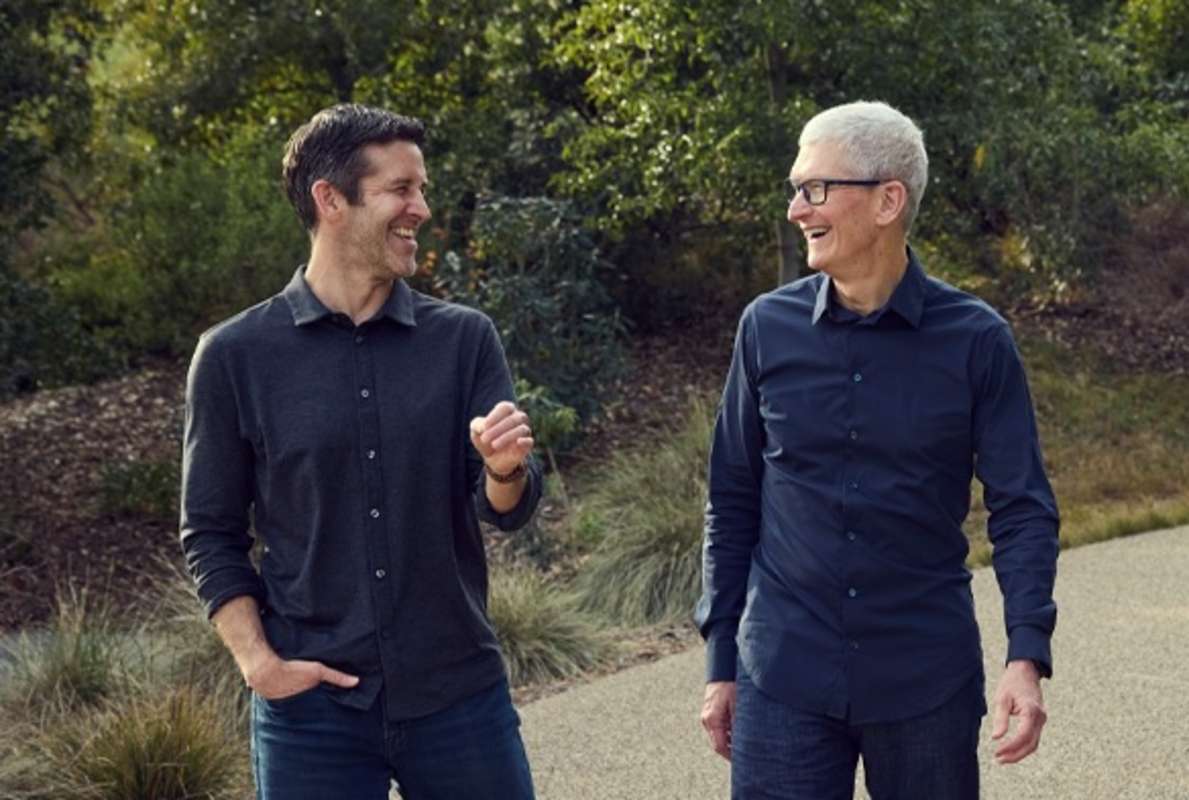


After 15 years steering the world’s most valuable company, Tim Cook is handing Apple to an engineer — and the choice says everything about where the company thinks its future lies.
Cook, 65, announced Monday he will step down as chief executive in September, transitioning to executive chairman. His chosen successor is John Ternus, Apple’s current head of hardware engineering, who will take over on September 1.
The move was unanimously approved by the board and, Apple says, follows a long-planned succession process — though the announcement came just weeks after Cook himself downplayed retirement rumours, saying he “can’t imagine life without Apple” after 28 years with the company.
The reaction from Silicon Valley was swift. OpenAI CEO Sam Altman posted on X: “Tim Cook is a legend. I am very thankful for everything he has done and I am very thankful for Apple.”
Not everyone was so reverent.
“Online, the takes were sharper. “Wow, maybe they will start innovating again rather than just changing the plug holes every three years,” one user snarked, while another said of Ternus: “Can’t wait for him to announce the same phone in a slightly different shade of titanium.”
On Wall Street, the mood was cautiously supportive but not without nerves. Wedbush Securities analyst Dan Ives said his firm supports Ternus as the next CEO amid Apple’s major push into artificial intelligence,
He added, “These will be big shoes to fill and the timing of Cook exiting stage left as CEO could make sense but also creates questions. Apple is making a major transition on its AI strategy and legendary Cook leaving now is a surprise.”
Cook’s own statement was characteristically understated.
“I love Apple with all of my being, and I am so grateful to have had the opportunity to work with a team of such ingenious, innovative, creative, and deeply caring people who have been unwavering in their dedication to enriching the lives of our customers and creating the best products and services in the world.”
The $5 trillion steward
The scale of what Cook built is difficult to overstate. He took the reins in 2011 at a moment of genuine uncertainty — Jobs died of pancreatic cancer just six weeks after formally handing off the job — and the company’s value has since ballooned by more than $5 trillion.
Under Cook, the iPhone evolved from a single annually refreshed model into a whole family of products and established itself as the world’s most popular phone brand. He also ushered in the Apple Watch, Apple Pencil, AirPods, HomePod, iPad Pro, Mac Studio, and AirTag.
Perhaps Cook’s most transformative legacy, though, was turning Apple into a software and services powerhouse.
Apple services annual revenue topped $US100 billion ($139 billion) for the first time this fiscal year, with the App Store, iCloud, and Apple TV+ now woven into the daily lives of over a billion users.
The builder takes over
Ternus, 51, is in many ways Cook’s opposite — where Cook was a supply chain mastermind, Ternus is an engineer through and through.
A California native, he studied mechanical engineering at the University of Pennsylvania and joined Apple’s product design team in 2001 after a brief stint in virtual-reality headset design.
By 2021, he was the youngest member of Apple’s executive team as senior vice president of hardware engineering.
He has spent half his life at the company he is now set to lead. “I am profoundly grateful for this opportunity to carry Apple’s mission forward,” Ternus said. “I have been lucky to have worked under Steve Jobs and to have had Tim Cook as my mentor.”
Cook’s endorsement was warm: “John Ternus has the mind of an engineer, the soul of an innovator, and the heart to lead with integrity and with honor. He is without question the right person to lead Apple into the future.”
Ternus has been instrumental in the Mac computer’s recent resurgence against a stagnating Windows ecosystem, as well as the diversification of Apple’s lineup to include both meaningful “Pro” features and more accessible models.
The AI question
Ternus inherits a company navigating an uncomfortable crossroads. Apple has stumbled in recent years as it made promises about Apple Intelligence and improvements to Siri that have yet to eventuate.
Earlier this year it struck a deal with Google to use the web giant’s underlying AI technology to boost its progress — a concession that would have seemed unthinkable in the Jobs era.
Ternus will be the one to introduce the first foldable iPhone, meaning the most consequential hardware moment in years belongs to a hardware engineer from day one.
Apple also faces an existential challenge if the smartphone and laptop come under threat from AI glasses, pins, or other new form factors — with Meta, Nvidia, Microsoft and Google all circling.
The expensive Vision Pro headset has largely failed to find traction with consumers, raising the stakes for whatever comes next.
That may be precisely why an engineer is getting the job. As Apple prepares to introduce its first folding phone and rumoured smart glasses, having a builder at the top — rather than a logistics genius — could be the right call for the hardware battles ahead.
Ternus must also balance that push with Apple’s longstanding connection to human creativity, even as AI reshapes the industry around it.
Rounding out the leadership reshuffle, Johny Srouji — the R&D specialist who led Apple’s chip design initiative — has been named chief hardware officer, stepping into the role Ternus vacates.