

Meta is considering leasing artificial intelligence computing power to Anthropic in a deal worth as much as $10 billion over two years, a move that could transform the Facebook owner into a major supplier of the infrastructure powering its AI rivals.
The early-stage talks also raise a much bigger question: whether Meta’s enormous network of data centres will become a new commercial cloud business—and what surrounding communities will be expected to surrender in water, electricity and land to support it.
Three people familiar with the confidential discussions said Anthropic approached Meta with the proposal in June.
Under the arrangement being considered, the company behind the Claude chatbot would make monthly payments for access to Meta’s computing infrastructure, while both companies would retain the right to terminate the agreement early.
The negotiations may not produce a final deal. Meta and Anthropic declined to comment.
Even so, the proposal offers a clear view of the pressure now gripping the AI industry. Advanced models require vast clusters of specialised processors, and the companies building them are racing to secure whatever computing capacity they can find.
Anthropic has already turned to an unlikely supplier.
In May, the company entered an agreement to lease computing infrastructure linked to Elon Musk’s SpaceX.
Regulatory disclosures indicated that the arrangement could be worth as much as $45 billion over three years, based on payments of $1.25 billion a month, although Musk later said the initial commitment covered a shorter 180-day period and included provisions allowing either side to withdraw.
The proposed Meta agreement would be about one-third of that headline value, but its importance extends far beyond Anthropic’s immediate need for more processors.
Meta Could Become an AI Infrastructure Supplier
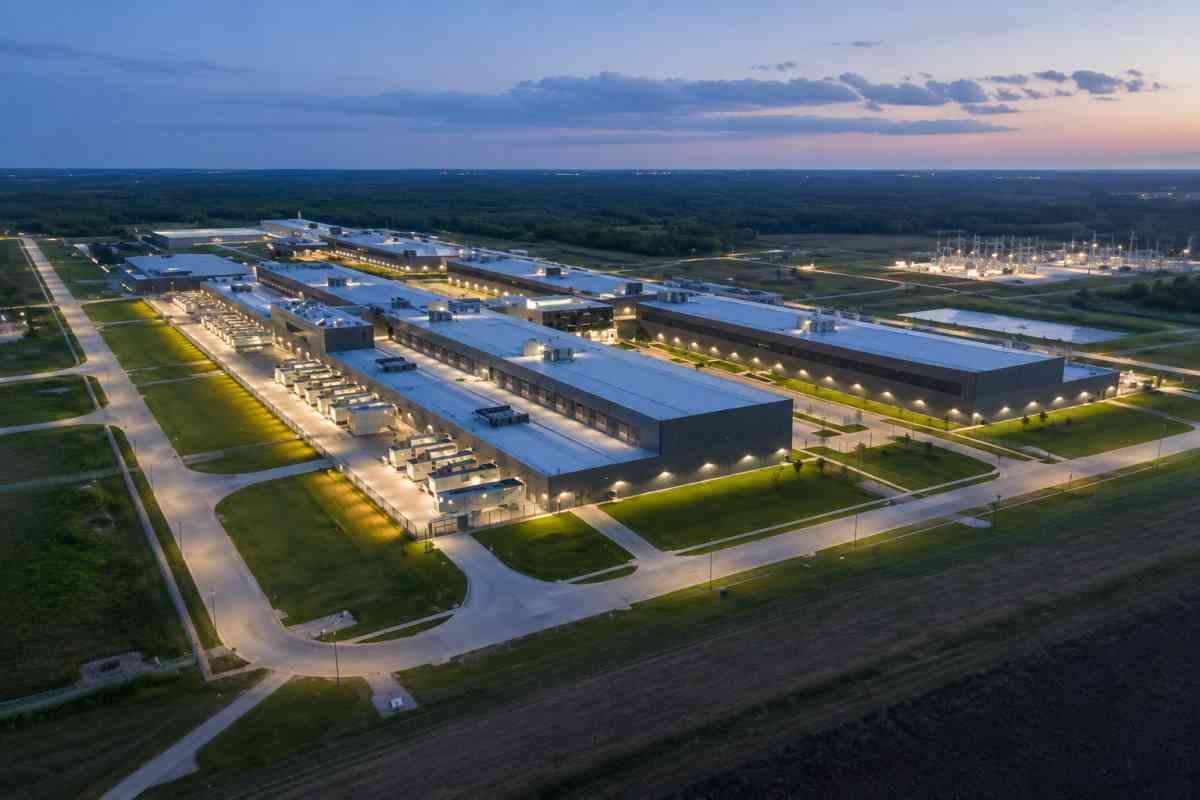
Meta has traditionally built data centres to support Facebook, Instagram, WhatsApp, advertising systems and its own AI models. Leasing that infrastructure to outside companies would move it closer to the cloud businesses operated by Amazon, Microsoft and Google.
It could also give Meta a way to recover some of its extraordinary AI spending.
Chief executive Mark Zuckerberg has said the company could spend as much as $145 billion this year, much of it on processors, servers, data centres, power connections and other infrastructure.
That would be more than double the $72 billion Meta spent last year.
Investors have repeatedly questioned whether the company’s AI ambitions will generate enough revenue to justify those costs, particularly as Meta’s models compete against systems developed by Anthropic, OpenAI and Google.
The company has also acknowledged the risk that its construction program could initially create more computing capacity than its own products require.
Leasing unused capacity would allow Meta to earn money from that infrastructure while demand for its internal services catches up.
Zuckerberg has already suggested that companies are prepared to pay a premium for access.
“Almost every week there are different companies that come to us from the outside asking us” about computing power “that they could buy from us at some premium to what we’ve bought it at,” Zuckerberg said on an investor call in May.
“We haven’t done that yet because we think we have a use for the compute.” he said
A deal with Anthropic would represent a significant change in that position. It would also mean that Meta’s data centres were no longer simply a cost of running its own products; they would become revenue-producing industrial assets serving outside customers.
Georgia Water Complaints Put Expansion Under Scrutiny
That potential business model is emerging as communities living near large data centres demand greater scrutiny of their effect on water supplies, electricity networks and local environments.
Meta’s Stanton Springs data centre campus, east of Atlanta in the US state of Georgia, has become a focal point in that debate.
Residents in nearby parts of Morgan and Newton counties have reported low water pressure, discoloured well water and sediment problems that they say began after construction started at the site. Some families said they had resorted to bringing in bottled water for cooking and bathing.
In May 2026, US Representative Alexandria Ocasio-Cortez displayed jars of murky water during a congressional hearing and questioned the Environmental Protection Agency about the complaints.
The EPA subsequently contacted Georgia regulators, health officials and local authorities to collect information. However, the agency stressed that the fact-gathering process did not amount to a formal federal investigation.
Meta denies that its operations caused the reported problems.
The tech gaint says an independent groundwater study found that the data centre’s construction and operations were unlikely to have affected nearby wells.
It also said water used at the campus came from the local utility rather than groundwater beneath neighbouring properties.
The dispute remains unresolved. There is no established finding that Meta contaminated local water, but the complaints have exposed gaps in oversight surrounding private wells and major industrial developments.
Reports have also estimated that the Stanton Springs campus uses about 10 per cent of Newton County’s daily water supply. Residents and water authorities face further pressure as other proposed data centres seek access to millions of gallons each day.
The environmental concerns extend beyond water. Large campuses require extensive lighting, cooling equipment, backup generators, substations and continuous power delivery.
Communities across the United States have increasingly raised concerns about noise, night-time light, land clearing, rising electricity costs and the disruption of wildlife habitats.
One AI Prompt Is Not the Same as an AI Data Centre
The public debate is often distorted by combining two separate questions: how much energy an individual AI request consumes and how much infrastructure is required to serve hundreds of millions of requests while training increasingly powerful models.
At the individual level, some text requests have a relatively small footprint.
A Google study of its production infrastructure estimated that a median Gemini text prompt consumed about 0.24 watt-hours of electricity and 0.26 millilitres of water—roughly five drops.
The researchers said efficiency improvements had sharply reduced the energy and emissions associated with serving each request.
That figure should not be treated as a universal measurement for every AI service. Image and video generation, lengthy reasoning tasks, model training and automated AI agents can require substantially more computing power.
Electricity and water use also vary according to the model, hardware, cooling system, power source, location and time of day.
It is therefore misleading to use a single prompt estimate to conclude that AI has almost no environmental effect. It is equally misleading to imply that every chatbot question consumes bottles of drinking water.
The greatest concern is scale.
The International Energy Agency said electricity consumption at AI-focused data centres rose by 50 per cent during 2025, while total data-centre electricity demand increased by 17%.
Global data-centre electricity consumption is expected to more than double by 2030, with AI identified as the most important driver of that growth.
Data centres still account for a relatively small share of total global electricity consumption, but their local effect can be severe because demand is concentrated in particular towns, counties and electricity markets.
A facility consuming hundreds of megawatts cannot be assessed in the same way as a person streaming a film, playing a game or submitting one chatbot prompt.
The individual activity may appear small, while the infrastructure collectively supporting it can place substantial pressure on a local grid or water system.
Focus Shifts Towards Self-Sufficient Data Centres
The practical policy question is no longer whether AI can be stopped. The technology is becoming embedded in business, government, healthcare, science, media and consumer products.
Attention is instead shifting towards how the infrastructure should be built—and who should pay for it.
Proposed safeguards include requiring data centres to secure their own additional electricity generation, preventing infrastructure costs from being transferred to households, using recycled or non-potable water for cooling, installing closed-loop cooling systems and publishing site-specific water and energy figures.
Facilities could also be required to reduce consumption during periods of grid stress and undergo more extensive community consultation before construction is approved.
Meta says it is working towards becoming water-positive by 2030 and reported that projects it supported restored more than 1.6 billion gallons of water in high- and medium-stress regions during 2024.
It also said its renewable energy agreements are adding almost 29 gigawatts of wind and solar capacity to electricity grids.
Those company-wide commitments do not necessarily resolve the effects experienced in each community. Water restored in one region does not immediately replace a reliable household supply lost or degraded somewhere else.
That distinction will become increasingly important if Meta begins selling computing power to other companies.
A $10 billion Anthropic agreement could help Meta answer investor questions about how it intends to profit from its enormous infrastructure program.
It would also strengthen demands for the company to disclose how much water and electricity its facilities consume, which customers benefit from them and whether surrounding residents are carrying any part of the cost.
AI may deliver major economic and social benefits, but those benefits will increasingly depend on physical infrastructure occupying real land, drawing real power and interacting with real communities.
The proposed Anthropic deal shows that computing capacity has become one of the world’s most valuable commodities. The next question is whether the companies selling it will also be required to account fully for what it takes to produce.