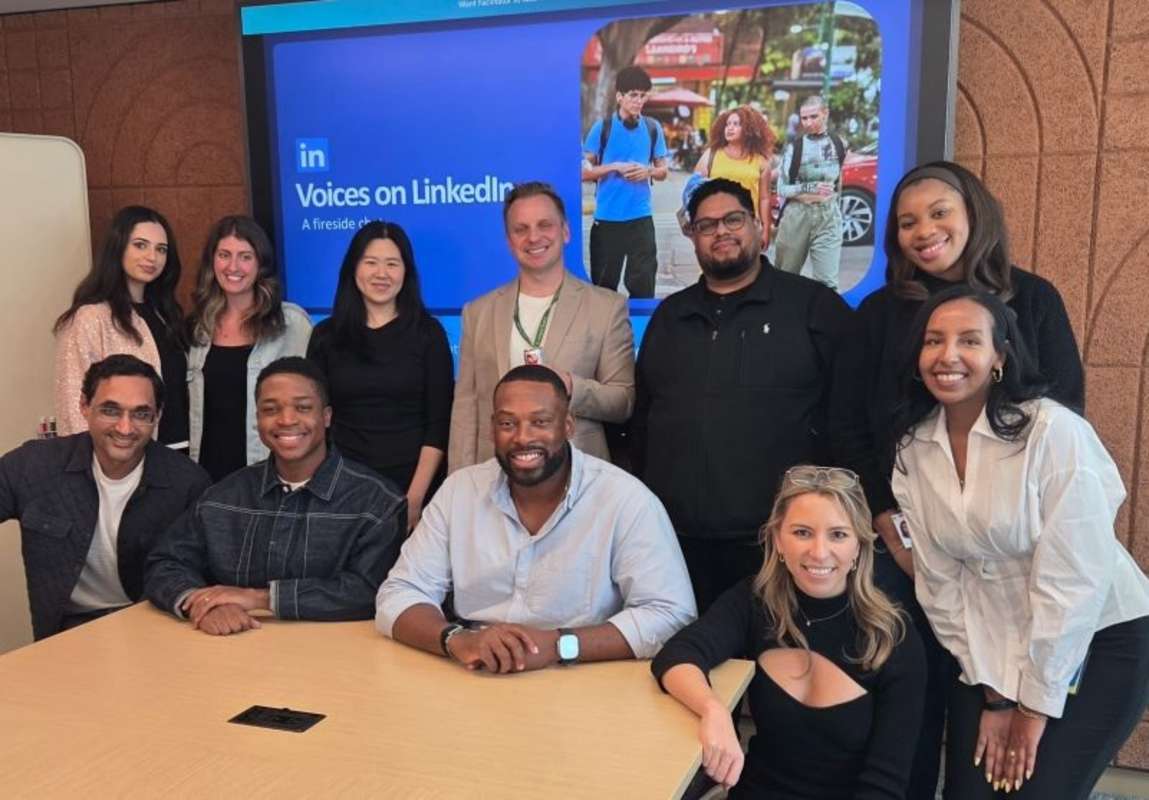


At a recent gathering hosted by LinkedIn and Samsung Electronics America at LinkedIn’s Empire State Building office in New York, marketers, creators and executives explored a growing tension shaping the future of online content.
The discussion centred on how brands and individuals can remain authentically human while also becoming discoverable to artificial intelligence systems.
The event focused on an increasingly important challenge for brands and creators alike — producing content that resonates emotionally with people while also appealing to large language models (LLMs), which are changing how users search for information.
According to new research from media intelligence company Meltwater, LinkedIn has emerged as the second most-cited source by LLMs globally, and ranks first across a range of professional and business-related categories.
Perhaps more significantly, the study found that 75% of cited LinkedIn posts come from individual profiles — including creators, executives and subject matter experts — rather than corporate brand pages.
The findings suggest people are increasingly trusting real personalities and relatable voices over generic expertise as AI changes how content is discovered online.
Video Builds Trust
A central theme throughout the event was the unique role video content plays on LinkedIn compared with other social platforms.
Speaking during a fireside chat hosted by Prasanjeet Dutta Baruah, creator and entrepreneur Colin Rocker argued that video content carries greater credibility because of the effort required to produce it.
“Video is harder,” Rocker said. “It’s a harder barrier to entry and that’s why quality video on LinkedIn is rare.”
That rarity, speakers suggested, contributes to stronger audience trust. Unlike anonymous or entertainment-focused platforms, LinkedIn’s ecosystem is built around real identities, professional expertise and more substantive discussion.
Brandon Smithwrick, former content lead at Kickstarter and Squarespace, described successful LinkedIn content as “polished in delivery, but raw in emotion”.
Smithwrick also highlighted the platform’s unusually thoughtful engagement culture.
“The comments aren’t just ‘That’s fire’ emojis,” he said. “It’s really deep dives, ‘I disagree with that.’ It creates actual conversation and dialogue.”
The Rise of AI-Readable Content
As AI systems increasingly summarise and recommend information, the panel explored how creators are adapting their content strategies for machine readability.
The emerging “playbook”, according to attendees, combines two priorities:
- Human authenticity that builds emotional trust and relatability
- Structured, scannable content that AI systems can easily interpret and cite
This includes longer-form writing, clearer formatting, descriptive captions and searchable, expertise-led posts.
Yet speakers noted that video may still offer something AI-generated summaries cannot fully replicate: human presence.
“Video does the human work in a way text can’t,” the event summary concluded. “It builds familiarity, earns trust and, for the most part, sidesteps the AI intervention layer entirely. You’re watching a real person.”
A Long-Term Strategy for Creators
For creators and brands hoping to establish authority in both human and AI ecosystems, consistency remains critical.
Patrick Zielinski emphasised that trust-building cannot be rushed.
“It’s a marathon, not a sprint,” Zielinski said. “To build that trust, it takes time.”
As AI-powered search and recommendation engines reshape the internet, industry leaders are increasingly warning that future digital influence will depend not just on visibility in algorithms, but on authentic human connection.
In other words, creators are no longer just writing for audiences — they are increasingly writing for both humans and machines.
While structured, AI-readable content is becoming increasingly important, speakers agreed that trust, personality and genuine human connection remain the most valuable currency in the digital landscape.
Zina Vitols, who leads Strategic Partnerships at LinkedIn and writes about workplace psychology and nervous systems, thanked attendees following the event, describing the afternoon as “an absolute joy”.
She acknowledged contributors including Isai Reynoso, Esther Rim, Lauren Kessler, Jasleen Singh, Salman Taufiq, Colin Rocker, Brandon Smithwrick, Patrick Zielinski, Prasanjeet Dutta Baruah, Chinedum N., Petra Hailu, Chas Stahl and Cat Digney.
Vitols said she was “obsessed with the tension” between needing to be “more human so humans can trust you” while also needing to “appeal to large language models so AI can cite you”.