Email marketing platforms including Brevo.com and similar services are drawing criticism from cybersecurity experts and digital rights advocates who argue these companies are failing to implement adequate safeguards against spam proliferation.
The core issue centers on what industry watchdogs describe as insufficient user verification processes.
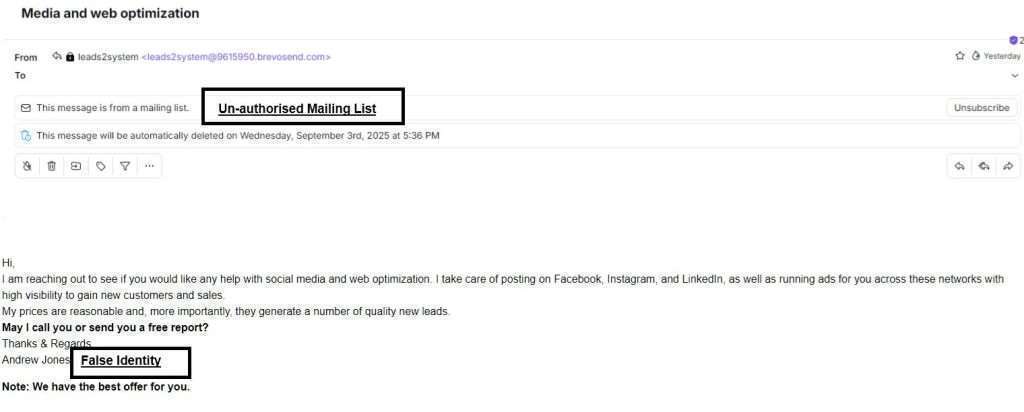
Unlike traditional communication channels that require identity verification, most email marketing platforms allow users to create accounts and begin sending mass communications with minimal oversight.
The verification gap has significant implications for global spam prevention efforts. Current industry practices typically require only basic email confirmation and payment processing, leaving substantial room for malicious actors to exploit these services for unsolicited communications.
Brevo, formerly known as Sendinblue, processes millions of emails daily for businesses worldwide. Like many competitors in the email service provider space, the platform offers immediate account activation with minimal identity verification requirements.
Industry standards vary significantly across providers, but most follow similar patterns: users provide basic contact information, verify an email address, and can begin sending campaigns within minutes of registration.
It’s streamlined onboarding process, while convenient for legitimate businesses, creates opportunities for spam operations to establish multiple accounts using false credentials.
The debate highlights tension between user convenience and security measures. Email marketing platforms argue that extensive verification procedures could create barriers for small businesses and legitimate users seeking quick deployment of marketing campaigns.
However, anti-spam advocates contend that more rigorous identity verification – including real name confirmation, phone number validation, and enhanced due diligence procedures – would significantly reduce spam without substantially impacting legitimate users.
Email Marketing Giant Brevo Processes Billions as Spam Crisis Deepens
Platform’s massive scale highlights industry-wide verification failures amid global unsolicited email epidemic
As email marketing platform Brevo reports analysing over 44 billion emails across countries and industries for their latest benchmark study, cybersecurity experts are raising urgent questions about the company’s role in the broader spam crisis engulfing digital communications worldwide.
The sheer volume of emails flowing through Brevo’s infrastructure underscores the scale of opportunity for malicious actors exploiting email marketing platforms.
While the company maintains strict anti-spam policies and operates abuse reporting systems, critics still argue that these reactive measures fall short of addressing the fundamental vulnerability: minimal user verification requirements.
The numbers paint a stark picture of the global challenge. Spam messages now account for nearly half of all email traffic, with over 160 billion unsolicited emails distributed daily across all platforms and providers.
Brevo, like most major email service providers, allows users to create accounts and begin mass communications with basic email confirmation and payment processing.
No identity verification, phone number validation, or enhanced due diligence procedures are required before users gain access to tools capable of reaching thousands of recipients simultaneously.
The issue extends beyond individual platforms to encompass broader questions about industry responsibility and regulatory oversight in digital communications infrastructure.
Other email marketing platforms been documented as being exploited for spam and malicious activities
Based on documented cases and security reports, here are email marketing platforms that have been exploited for spam and malicious activities:
Major Email Marketing Platforms Being Exploited:
1. Mailchimp Email marketing platforms like Mailchimp are being compromised through account takeover attacks, phishing, and social engineering tactics.
2. SendGrid Small and medium-sized businesses are being targeted in phishing campaigns that leverage SendGrid’s email service infrastructure. The platform delivers over 148 billion emails monthly, illustrating the massive scale that creates opportunities for abuse.
3. ConvertKit (now Kit) ConvertKit faces documented spam issues with multiple spam complaints registered against the platform. There are numerous resources and discussions dedicated to addressing ConvertKit spam rate problems, indicating ongoing challenges with unsolicited email distribution.
Available evidence suggests that while spam is a global problem across all many email platforms, Brevo appears to have implemented policies to combat it, though like all platforms, they may still face challenges with user verification (real name & identity details) processes.