

Australia’s household battery rebate officially underwent a fundamental shift on May 1. If you are currently shopping for a system and wondering why recent quotes look noticeably higher, it comes down to the newly implemented tiered subsidy structure—a change that has added thousands to out-of-pocket costs for certain configurations.
Previously, every usable kilowatt-hour attracted an STC (Small-scale Technology Certificate) factor of 8.4, translating to roughly $336 per kWh across the board.
Now, the baseline STC factor has dropped to 6.4. More importantly, the government has introduced a strict tiered system: the first 14 kWh retains 100% of the new baseline, any capacity above 14 kWh up to 28 kWh drops to 60%, and anything exceeding 28 kWh up to 50 kWh plummets to just 15%.
The days of “bigger is always better” are officially over. Under the current regime, precision is money. You want a battery capacity that covers your household needs while spilling as little as possible into the lower-subsidized tiers.
The Real-World Price Impact
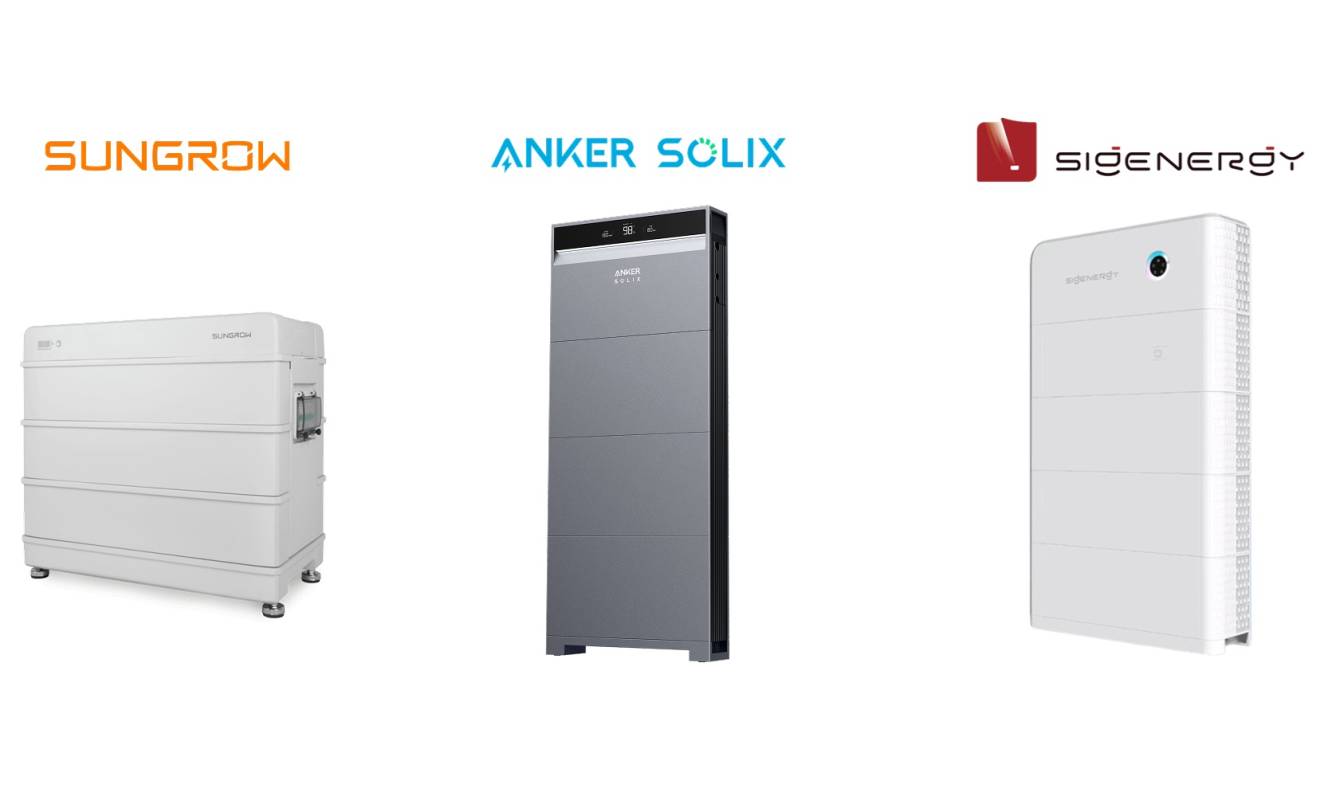
To illustrate the immediate market impact, we analysed how the baseline hardware prices of three leading modular systems have shifted under the new rules.
The price increases below are calculated precisely based on the new tiered STC subsidy logic, where every kWh lost to lower tiers translates to a specific dollar penalty.
Battery System Pricing Comparison
Estimated out-of-pocket pricing changes before and after subsidy loss across medium and upper-tier battery capacities.
| Brand | Modules | Pre-May 1 Price | Price Increase | Post-May 1 Price |
|---|---|---|---|---|
| Sungrow SBR (16 kWh) | 5 × 3.2 kWh | $7,000 | $1,485 | $8,485 |
| Anker SOLIX X1 (15 kWh) | 3 × 5.0 kWh | $7,100 | $1,302 | $8,402 |
| Sigenergy SigenStor (16 kWh) | 2 × 8.0 kWh | $6,800 | $1,485 | $8,285 |
| Brand | Modules | Pre-May 1 Price | Price Increase | Post-May 1 Price |
|---|---|---|---|---|
| Sungrow SBR (28.8 kWh) | 9 × 3.2 kWh | $13,400 | $3,912 | $17,312 |
| Anker SOLIX X1 (25 kWh) | 5 × 5.0 kWh | $10,766 | $3,126 | $13,892 |
| Sigenergy SigenStor (24 kWh) | 3 × 8.0 kWh | $10,800 | $2,944 | $13,744 |
*OOP = Estimated Out-of-Pocket Pricing
- *Note: Pre-May 1 Out-of-Pocket (OOP) prices reflect historical hardware-only estimates with the old 8.4 STC factor applied.
- *Note: Post-May 1 calculations assume a fixed STC clearing house price of $40 (GST exclusive). Installation costs are strictly excluded.
Brand Breakdown: Matching Specs to Tiers
Sungrow SBR— The Time-Tested Workhorse
Established in 1997, Sungrow remains the go-to choice for homeowners prioritising heavily proven reliability. As a true industry veteran, its systems are thoroughly market-tested.
Its 3.2 kWh block size offers the market’s finest granularity, allowing homeowners to build their systems in incremental steps. However, pushing near the upper threshold to a 28.8 kWh configuration means slightly bleeding (0.8 kWh) into the heavily penalised 15% tier.
Furthermore, while its traditional split-system design feels slightly dated compared to the sleek all-in-one aesthetics of newer rivals, its highly attractive baseline hardware cost-effectively absorbs these impacts, keeping it a financially solid workhorse for standard installations.
Anker SOLIX X1 — The Premium Sweet Spot & Coastal Contender
Backed by a global tech powerhouse founded in 2011, the Anker SOLIX X1 targets buyers seeking premium quality and peace of mind. Leveraging a strong local footprint since 2019—led by Australia’s #1 smart home security brand, eufy—Anker supports the X1 with a robust 10-year warranty.
Mathematically, its 5 kWh modules perfectly navigate the new subsidy tiers. Configurations of 15, 20, and 25 kWh maximise high rebates while avoiding the 15% dead zone.
Furthermore, the X1 delivers flagship hardware: a 15cm ultra-slim profile, C5-M coastal durability, built-in winter heating, and whole-home backup. The only technical consideration? Homes requiring a massive 10 kW single-phase output will need two parallel inverters.
Sigenergy SigenStor — The Tech-First Innovator
Ideal for early adopters eager to embrace the freshest technology and willing to invest in a younger brand (established in 2022), Sigenergy targets the premium, highly electrified home.
It stacks 8 kWh modules and brilliantly integrates the inverter, battery, EMS, and an optional 25 kW DC EV charger into a single, sleek tower.
The larger 8 kWh building blocks mean buyers typically top out at a 24 kWh setup. This is to avoid a significant subsidy penalty that applies when moving up to 32 kWh, which can leave some rebate capacity unused.
Despite that constraint, SigenStor is positioned around higher-end capability. It offers three-phase power, built-in battery heating for extreme cold conditions, and a single AI-driven application for managing both solar and EV charging.
Quick Guide: Making the Call Today
- Granular Expansion & Small Setups: Choose Sungrow SBR. It offers the lowest barrier to entry and the smallest building blocks if you want to scale up your storage gradually over time.
- Subsidy Efficiency & Coastal Installs: Choose Anker SOLIX X1. Its granular 15, 20, and 25 kWh capacity options strategically maximise the new tier thresholds to keep out-of-pocket costs low, while the C5-M rating and slim design handle challenging physical and environmental install locations.
- EV Owners & Three-Phase Homes: Choose Sigenergy SigenStor. The premium price tag is justified by an integrated DC charger and robust power handling, making it the ultimate all-in-one high-tech ecosystem.
References & Data Sources
- Department of Climate Change, Energy, the Environment and Water (DCCEEW): Cheaper Home Batteries Program — 1 May 2026: Changes to the program. Available at: https://www.dcceew.gov.au/energy/programs/cheaper-home-batteries
- Department of Climate Change, Energy, the Environment and Water (DCCEEW): Cheaper Home Batteries — Small-scale Technology Certificates Guidelines. Available at: https://www.dcceew.gov.au/energy/programs/cheaper-home-batteries/small-scale-technology-certificates
- SolarQuotes: Battery Price Comparison Data & Hardware-Only Baseline Estimates. Accessed April 2026. STC clearing house price is calculated at a fixed $40 (GST exclusive) under the Renewable Energy (Electricity) Regulations 2001.
Disclaimer: Base prices referenced are hardware-only estimates. Actual quotes will vary significantly based on installation labor, site complexity, necessary inverter additions, and local state rebates. Always consult a CEC-accredited installer for final pricing.