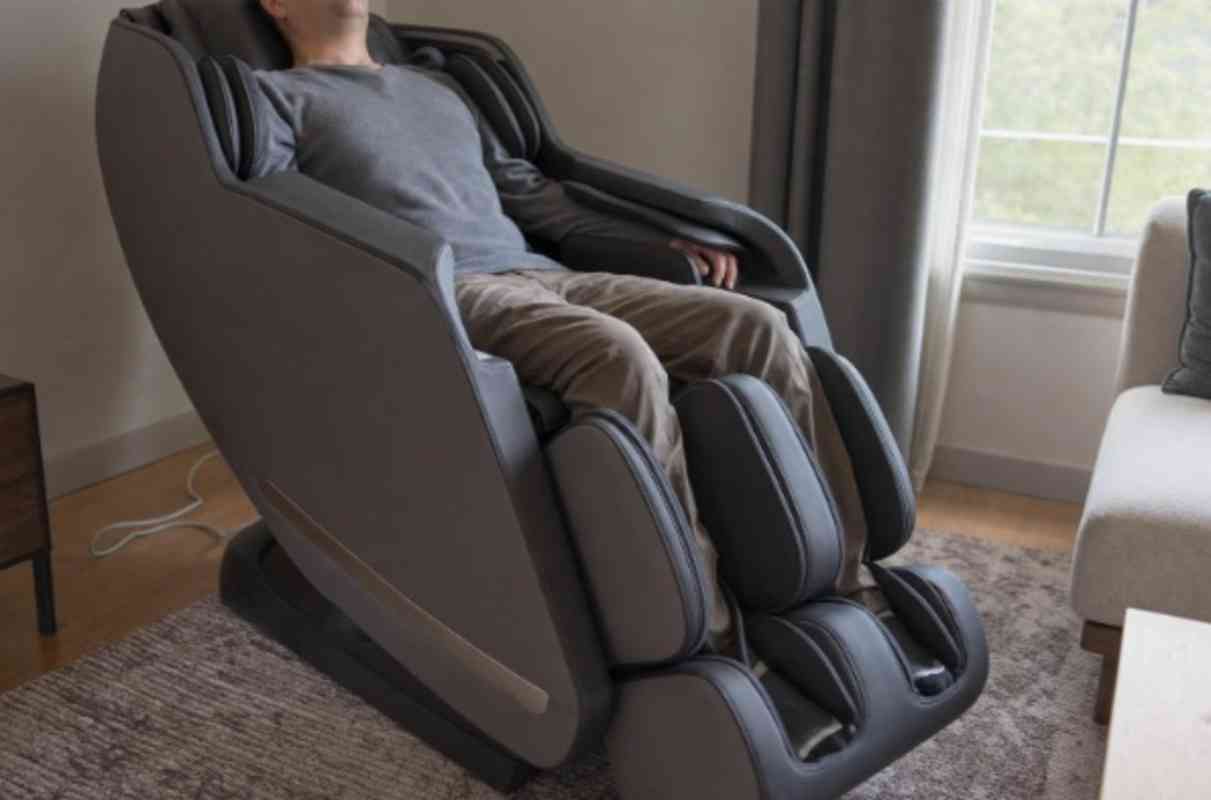


Australian massage chair specialist Relax for Life is advising buyers to treat app-enabled chairs as connected devices rather than appliances, following the commencement of mandatory security standards for consumer smart devices on 4 March 2026.
The retailer, which has operated for more than twenty years and runs showrooms in Sydney, Melbourne, Brisbane, the Gold Coast and Perth, says the category has changed faster than buyer expectations.
Chairs that once relied on a frame, motor and set of rollers now ship with body scanning, biometric sensing, downloadable programs and phone pairing.
“The questions people ask in a showroom are still about comfort and fit, which is right,” the company states in its buyer guidance,”
“What has changed is that a chair with an app is also a device with firmware, an account and a data policy. Those are worth asking about before delivery, not afterwards.”
What actually changed inside the chair
Three hardware decisions still determine how a chair feels, and none of them is new.
Track shape determines coverage. An S-Track follows the curve of the spine from neck to lower back. An L-Track extends beneath the seat to reach the glutes and upper hamstrings. Some manufacturers describe the combined design as an SL-Track.
Roller dimensions describe movement, not quality. A 2D system moves up, down and side to side. A 3D system adds adjustable depth. In most product manuals 4D means roller speed can vary during a 3D movement. Terms beyond 4D are usually manufacturer-specific.
Air compression is about placement, not count. Inflatable chambers squeeze the arms, legs or feet, with alternating inflation beneath the soles producing a kneading sensation. Airbag placement and adjustment options are more useful measures than a total airbag number.
The features that now carry a technology question
Body scanning estimates shoulder position and body shape, then adjusts the roller path. Relax for Life advises sitting fully back in the seat before the scan begins, since slouching produces poor alignment for the entire session.
Zero gravity is a reclined position rather than a treatment. The name derives from neutral body posture research associated with spaceflight, and many chairs position the trunk and thighs at roughly 128 degrees. That redistributes body weight and changes how roller pressure feels.
Where the category has moved is in sensing. Ogawa’s Chair Doctor feature, for instance, uses readings including heart rate, skin response and blood oxygen to personalise a session.
The company cautions that such readings are inputs for comfort settings rather than diagnostic information, and are not a substitute for medical care.
There is a data question attached. A chair reading heart rate and blood oxygen is collecting health-adjacent information inside the home, and Australian scrutiny of biometric privacy in consumer settings has sharpened considerably over the past year.
Relax for Life advises asking where those readings are stored and whether they leave the device.
The connected device question
Control is no longer limited to a wired handset. App pairing, downloadable programs and voice commands are available across much of the market, though the retailer notes that a clear physical remote still matters for starting a session without finding a phone.
That connectivity brings a chair inside Australia’s mandatory security standards for consumer smart devices, which took effect on 4 March 2026 and cover default passwords, vulnerability reporting and disclosure of the support period.
Relax for Life recommends buyers ask three questions of any retailer before committing: how firmware updates are delivered, what information the app collects, and whether an account is required to access core functions.
Buyer guidance issued with the advisory
The company has published a checklist covering the points it says are most often missed in a showroom.
- Fit and space. Check recommended user height, seat width and wall clearance at full recline rather than the upright footprint.
- Track type. S-Track for spine-focused coverage, L-Track for coverage extending beneath the seat.
- Roller movement. 3D if adjustable depth matters. 4D also varies speed and rhythm. Try both where possible.
- Programs and controls. How quickly a session starts, and whether the app works with your phone.
- Warranty and service. What is covered, who handles delivery and whether in-home repairs are available in your area.
- Claims and documentation. Clear instructions and realistic descriptions rather than promises of specific health outcomes.
Company position on health claims
Relax for Life states that most massage chairs sold in Australia are positioned as comfort and wellness products, and that whether a particular chair is considered a medical device depends on its intended purpose and the claims made about it.
Therapeutic advertising claims must be accurate and supported under Australian rules. The company recommends that anyone with ongoing pain, injury or a specific condition speak with a qualified health professional about whether massage is suitable.
About Relax for Life
Relax for Life is a 100 percent Australian family-owned massage chair specialist operating for more than twenty years.
The company supplies a range of premium massage chair models from global brands including Fujiiryoki, OHCO, Synca Wellness, Positive Posture, Inada and DCore, with brand histories extending back to 1954.
Showrooms operate in Sydney, including a new Chatswood location, alongside Melbourne, Brisbane, the Gold Coast and Perth.
Services include white glove delivery with complete in-home setup and testing, on-the-ground technicians for support and repairs, and warranties extending up to ten years depending on brand. Interest-free finance options are available.
The company’s chairs are endorsed by Jimmy Barnes, who has owned Relax for Life chairs for over a decade, and it publishes case studies covering chiropractic practice, first responders and shift-working professionals.