Tech News

Tech Business News

  • Home
  • Technology
  • Business
  • News
    • Technology News
    • Local Tech News
    • World Tech News
    • General News
    • News Stories
  • Media Releases
    • Tech Media Releases
    • General Media Releases
  • Advertisers
    • Advertiser Content
    • Promoted Content
    • Sponsored Whitepapers
    • Advertising Options
  • Cyber
  • Reports
  • People
  • Science
  • Articles
    • Opinion
    • Digital Marketing
    • Gaming
    • Guest Publishers
  • About
    • Tech Business News
    • News Contributions -Submit
    • Journalist Application
    • Contact Us
Reading: YouTube Is Charging Companies To Show You Ads — And Charging You to Stop Them
Share
Font ResizerAa
Tech Business NewsTech Business News
  • Home
  • Technology News
  • Business News
  • News Stories
  • General News
  • World News
  • Media Releases
Search
  • News
    • Technology News
    • Business News
    • Local News
    • News Stories
    • General News
    • World News
    • Global News
  • Media Releases
    • Tech Media Releases
    • General Press
  • Categories
    • Crypto News
    • Cyber
    • Digital Marketing
    • Education
    • Gadgets
    • Technology
    • Guest Publishers
    • IT Security
    • People In Technology
    • Reports
    • Science
    • Software
    • Stock Market
  • Promoted Content
    • Advertisers
    • Promoted
    • Sponsored Whitepapers
  • Contact & About
    • Contact Information
    • About Tech Business News
    • News Contributions & Submissions
Follow US
© 2022 Tech Business News- Australian Technology News. All Rights Reserved.
Tech Business News > Opinion > YouTube Is Charging Companies To Show You Ads — And Charging You to Stop Them
Opinion

YouTube Is Charging Companies To Show You Ads — And Charging You to Stop Them

Companies pay YouTube billions to force ads in front of viewers, while viewers pay YouTube monthly fees to avoid seeing those same ads. At what point does that business model become concerning? Congratulations, you’re funding both sides of a war

Matthew Giannelis
Last updated: May 24, 2026 5:16 pm
Matthew Giannelis
Share
SHARE

Pull up YouTube right now and there’s a decent chance the first thing you’ll see isn’t a video, it’s an ad. Maybe two.

Contents
How it works“The free tier is the pitch”“We’ve always been the product”What comes next

And if you’re anything like the millions of people who have quietly opened their wallets to make it stop, you already know what comes next:

A prompt, cheerfully worded, inviting you to pay $13.99 a month for the privilege of watching the internet without being sold things every four minutes.

Here’s what that prompt doesn’t say: the company selling you the silence is the same company that sold the noise.

YouTube, owned by Google parent Alphabet, takes money from advertisers to put ads in front of you. It then takes money from you to take those ads away. Both cheques clear. Both groups think they’re the customer. In a sense, they’re both right.


How it works

The mechanics aren’t complicated. Advertisers — car companies, fast food chains, software firms, whoever — pay YouTube to show their ads to specific users.

The targeting is precise: your age, your viewing history, your location, what you searched for last Tuesday at 11pm. They’re not buying airtime. They’re buying you, specifically.

You, meanwhile, experience the output of that transaction every time you sit down to watch something. A six-second bumper before a cooking video.

Two unskippable ads before a documentary. A mid-roll interruption timed, it sometimes seems, for maximum narrative damage.

And if that becomes intolerable enough — which, for a growing number of users, it has — YouTube offers a way out. YouTube Premium.

No ads. Background play. Downloads. Thirteen dollars and ninety-nine cents a month.

The company collected more than $60 billion in annual revenue, including roughly $40 billion from advertising and another $20 billion from subscriptions such as YouTube Premium, YouTube TV and NFL Sunday Ticket.

In the first quarter of 2026 alone, YouTube’s advertising revenue reached $9.9 billion.

Premium subscriber numbers are not publicly broken out, but analysts estimate the paid tier has accumulated between 80 and 100 million subscribers globally. Both numbers are going up.


“The free tier is the pitch”

Current and former employees of digital advertising platforms — none of whom would speak on the record — describe the relationship between ad load and subscription conversion as something the industry understands well, even when it isn’t discussed openly.

Nobody writes a memo that says ‘make the ads worse so people pay to remove them. But everyone in the room knows that’s how it works. The free tier is the pitch for the paid tier.

The question is just how hard you push before people leave.

YouTube has pushed harder in recent years. The platform introduced a second consecutive unskippable ad slot in 2022. It extended the reach of mid-roll ads to shorter videos.

Earlier this year, it began testing ad experiences that run before a user has fully navigated to their chosen content — meaning, in some cases, you watch an ad for a video you haven’t decided to watch yet.

Each change prompted outcry on social media and in tech publications. Each change appears to have stuck.


“We’ve always been the product”

Not everyone thinks the model is sinister. Media economists point out that ad-supported content is as old as commercial radio, and that the choice between a free, ad-supported experience and a paid, ad-free one is a straightforward consumer option.


What comes next

Regulators in Europe have begun asking harder questions about digital advertising markets, though nothing targeting YouTube’s tiered model specifically is on the immediate horizon.

In the United States, antitrust scrutiny of Google’s broader advertising business has intensified, but YouTube’s subscription practices have not been a primary focus.

Consumer groups in the UK and Germany have called for clearer disclosure requirements when platform design choices — ad load, ad placement, the structure of the skip button — are commercially motivated. So far, those calls have produced little concrete policy response.

In the meantime, the machine keeps running. Advertisers keep paying. Subscribers keep paying. Free users keep watching, and skipping, and occasionally doing the arithmetic.

The arithmetic isn’t complicated. One platform. Two sets of customers. One of them is paying to reach you, the other one is you.


ByMatthew Giannelis
Follow:
Secondary editor and executive officer at Tech Business News. An IT support engineer for 20 years he's also an advocate for cyber security and anti-spam laws.
Previous Article CypherLoc is a sophisticated browser-locking scareware kit - 2.8 million scam victims CypherLoc: The Browser-Locking Scareware Kit That Has Targeted 2.8 Million People in 2026
Next Article Tech Stack News 2026 The Invisible Tech Stack Running Your Life in 2026
Leave a Comment

Leave a Reply Cancel reply

You must be logged in to post a comment.

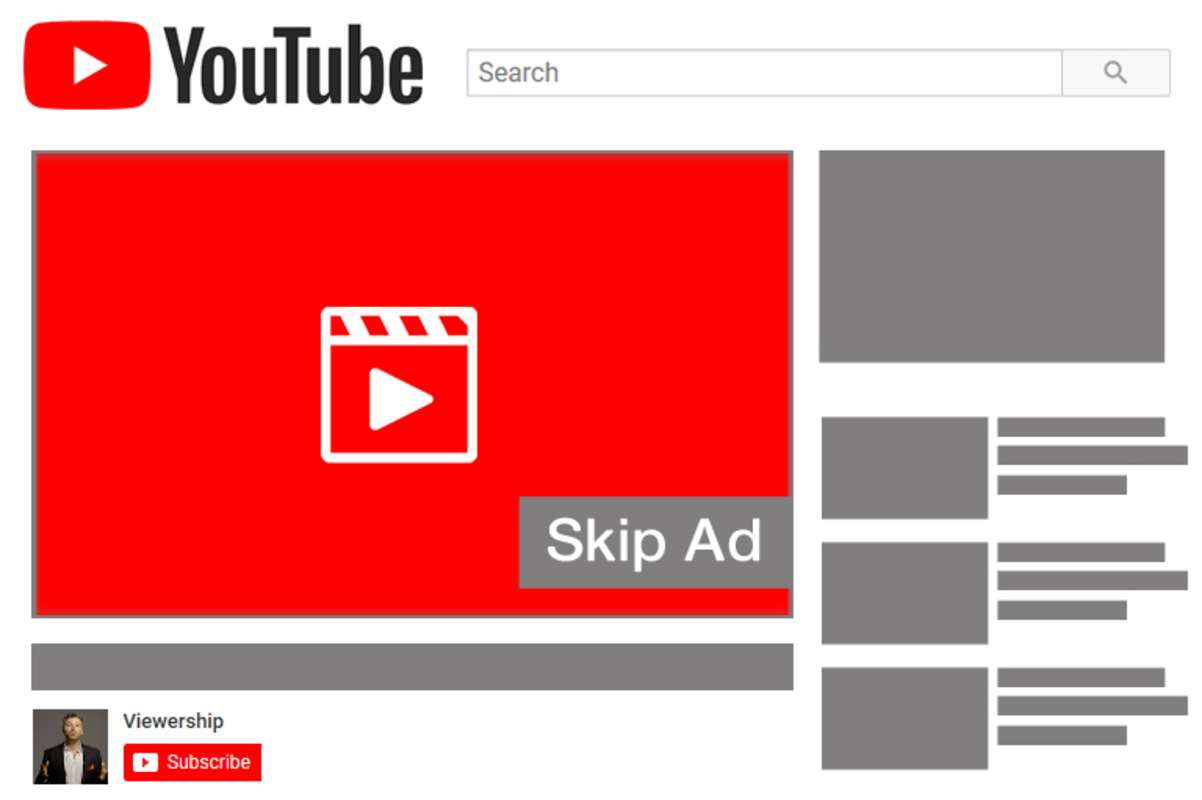
companies pay YouTube to show thier ads and users pay YouTube to not show thier ads

Tech Articles

Why is APAC losing the war on digital fraud

Why APAC is Losing Ground In The Fight Against Digital Fraud

Why APAC is losing the war on digital fraud is…

May 6, 2026
The Decay of guest blogging posts

The Decay of Guest Blogging. It Got Cheap, Automated, and Spammy.

Guest blogging once helped publishers showcase real expertise and build…

June 9, 2026
The Internet’s Best Blogs Didn’t Vanish — They Were Stripped for Parts by SEO Parasites

The Internet’s Best Blogs Didn’t Vanish — They Were Stripped for Parts by SEO Parasites

How some of the internet’s best independent blogs were quietly…

June 3, 2026

Recent News

India's Deepfake Regulation Talk Is Cheap
Opinion

India’s Deepfake Regulation Talk Is Cheap — Enforcement Is What Matters

4 Min Read
USAWIRE pay to write
Opinion

USAWire’s Controversial Model: Authors Pay To Contribute & Write?

5 Min Read
Australian business leaders talk accountability in ESG.
Opinion

Australian Business Leaders Need To Prove Their Impact, Not Just Talk About It

6 Min Read
Karen's job in customer service ChatGPT
Opinion

Why Karen’s job in customer service will survive ChatGPT – but creatives won’t

8 Min Read
Tech News - Technology Business

Tech Business News

In 2026, technology news is shaping business outcomes faster than ever—driven by AI adoption, rising cyber risk, cloud modernisation, data regulation, and constant platform change.
 
Tech News keeps Australian organisations and industry professionals informed with timely reporting and practical coverage across AI, cybersecurity, cloud, enterprise IT, startups, science, people and business, plus major world and local news impacting the tech sector.
 
Tech Business News publishes news and analysis designed to be clear, relevant, and easy to act on. It supports the industry with technology news reports, whitepaper publishing services, and a range of media, advertising and publishing options 

About

About Us 
Contact Us 
Privacy Policy
Copyright Policy
Terms & Conditions

July, 08, 2026

Contact

Tech Business News
Melbourne, Australia
Werribee 3030
Phone: +61 431401041

Hours : Monday to Friday, 9am 530-pm.

Tech News

© Copyright Tech Business News 

Latest Australian Tech News – 2026

Welcome Back!

Sign in to your account

Username or Email Address
Password

Lost your password?