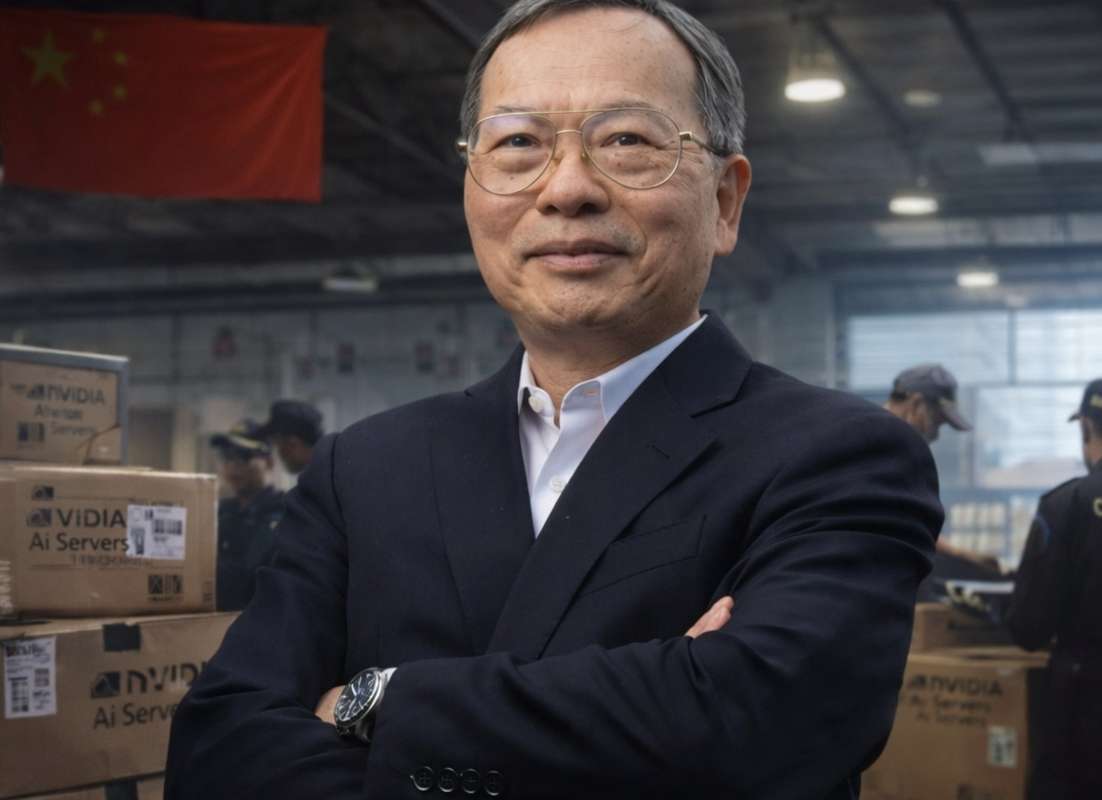
A sprawling, globe-spanning supply chain—allegedly engineered to disguise its true destination—has landed a Supermicro co-founder and two associates in the crosshairs of U.S. prosecutors, accused of funnelling $2.5 billion worth of AI-optimised servers into China.
According to an indictment unsealed Thursday by the U.S. Department of Justice, the trio orchestrated a sophisticated transshipment network that routed American-built servers loaded with high-performance Nvidia GPUs through Taiwan and Southeast Asia.
The servers were then quietly repackaged before being shipped onward to their final destinations in China, allegedly concealing their true end users.
Authorities claim the operation was designed not just to move hardware, but to obscure it—layering paperwork, shell transactions, and logistical sleight of hand to evade export controls increasingly central to Washington’s tech containment strategy.
Despite the gravity of the allegations, San Jose-based Supermicro itself has not been charged.
The company—described by the DOJ as a publicly traded manufacturer capable of integrating Nvidia’s cutting-edge GPUs into large-scale AI infrastructure—has nonetheless found itself pulled into the market fallout.
Shares plunged sharply following news of the indictment, reflecting investor unease over the proximity of senior figures to the alleged scheme.
At the centre of the case is Yih-Shyan “Wally” Liaw, a U.S. citizen, Supermicro co-founder, board member, and senior vice president of business development.
He is joined by Ruei-Tsang “Steven” Chang, who managed the company’s Taiwan operations, and Ting-Wei “Willy” Sun, described as a third-party broker. Liaw and Sun were arrested Thursday, while Chang remains at large.
Liaw resigned from Supermicro’s board effective immediately on Friday, as the company moved swiftly to contain reputational damage. Chang was placed on administrative leave, and ties with Sun were severed.
“The conduct by these individuals alleged in the indictment is a contravention of the Company’s policies and compliance controls, including efforts to circumvent applicable export control laws and regulations,”
“Supermicro maintains a robust compliance program and is committed to full adherence to all applicable U.S. export and re-export control laws and regulations,” Supermicro said in the statement.
Behind the formal charges lies what prosecutors describe as a carefully choreographed deception. The indictment alleges the defendants used a Southeast Asia-based intermediary—dubbed “Company-1”—to place large purchase orders, creating the appearance of legitimate end-use.
In reality, authorities say, the servers were destined for China, with documentation falsified to mislead internal compliance teams.
To maintain the illusion, the group allegedly staged elaborate audits using “dummy” servers—non-functional replicas presented to inspectors while the real machines had already been shipped offshore.
When scrutiny intensified, prosecutors claim the defendants turned to encrypted messaging platforms, crafting coordinated false explanations while pressuring compliance staff to approve further shipments.
The technology at the heart of the case is no ordinary hardware. The servers in question reportedly incorporated advanced Nvidia chips—including models subject to strict export restrictions—considered critical to powering next-generation artificial intelligence systems.
U.S. officials have increasingly tightened controls over such components, viewing them as strategic assets in a widening technological rivalry with China.
Nvidia, while not implicated, underscored the stakes in a statement: compliance with export laws is paramount, and systems diverted unlawfully receive no support—rendering such efforts ultimately self-defeating.
The DOJ framed the case as a clear warning shot.
“These chips are the product of American ingenuity,” said Assistant Attorney General John A. Eisenberg, pointing to what he described as a deliberate effort to bypass national safeguards through “false documents, staged inspections, and convoluted transhipment schemes.”
Liaw, Chang and Sun are charged with conspiring to violate the US Export Control Reform Act, which carries a maximum prison term of 20 years, and also with smuggling goods from the US and defrauding the government.
Super Micro has responded to the charges and arrest of the three, saying the server maker has been cooperating fully with the US government and is not named as a defendant.
By late 2024, the intermediary company at the centre of the alleged operation had quietly become one of the manufacturer’s most lucrative customers, generating nearly $100 million in a single quarter.