

The research, in collaboration with Imperial College London, recreated the conditions needed for early tooth development, allowing cells to communicate and form teeth, offering a longer-lasting, biologically compatible solution.
Researchers are now testing two methods: implanting early-stage tooth cells directly into the jaw or growing full teeth in the lab before transplantation, which could potentially change future dental care.
“This idea of replacing the tooth in a biological way by regrowing it, drew me to London and to King’s,” explained the director of regenerative dentistry, Dr Ana Angelova-Volponi.
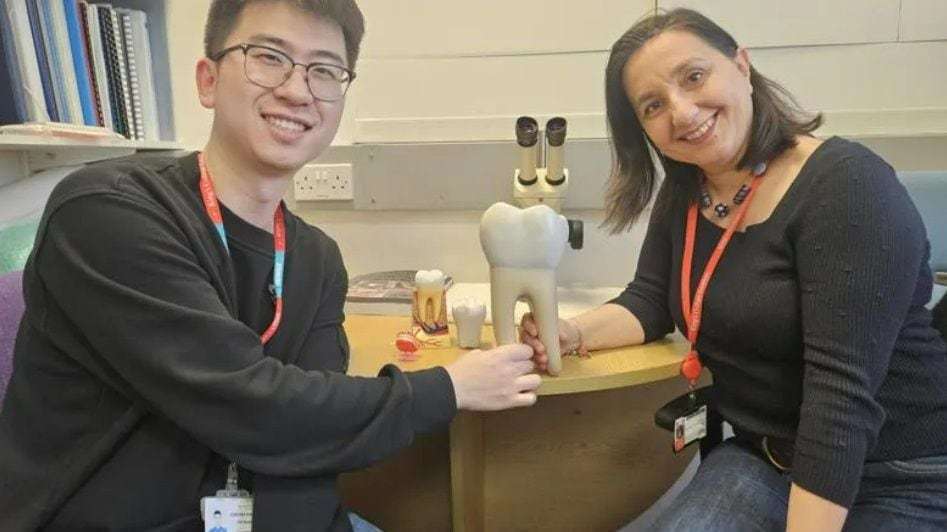
Xuechen Zhang, a final year PhD student at the Faculty of Dentistry, Oral and Craniofacial Sciences said the lab-grown teeth would naturally regenerate and integrate into the jaw as real teeth.
“The new teeth would be stronger, long-lasting and free from rejection risk, “offering a more durable and biologically compatible solution than fillings or implants.” said Zhang
While scientists have created the environment required to grow teeth, the next challenge is to figure out a way to place them into a patient’s mouth from the lab.
“We have different ideas to put the teeth inside the mouth. We could transplant the young tooth cells at the location of the missing tooth and let them grow inside mouth,” said Mr Zhang.
Whatever the process scientists choose, it could still take years. However, the breakthrough may kickstarted a new era in dental care. Previous efforts to recreate teeth in a lab had failed, as the cells were unable to communicate effectively.
Globally the demand for dental implants is increasing, driven by greater awareness of their advantages, a rising number of people with tooth loss, and a growing interest in cost-effective solutions.
A market research report estimates the dental implants market was valued at US$4.43 billion in 2023 and is expected to grow to US$5.89 billion by 2029, with a compound annual growth rate (CAGR) of 4.86%.