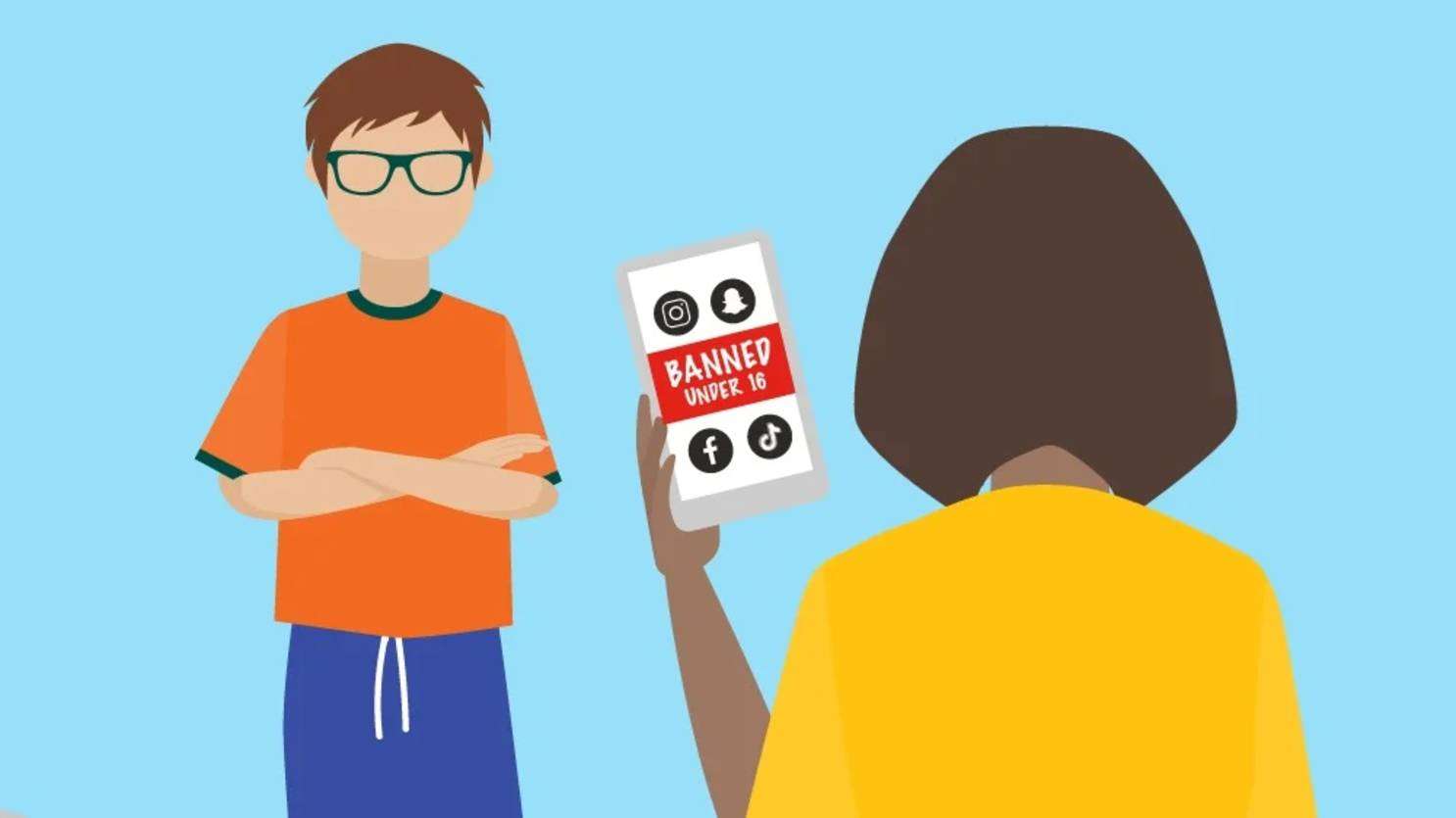


Australia’s new social media ban for children under 16 represents one of the most ambitious attempts at digital age verification in the world.
From December 10, 2025, Australian social media platforms are required to prevent users under 16 from creating or keeping accounts, placing the responsibility on the platforms, not parents
Yet speaking with parents and observing their responses firsthand reveals a uncomfortable truth: the new law may be virtually unenforceable, and the very people it’s designed to protect are already being equipped to circumvent it.
The legislation, which passed through Parliament with bipartisan support, places the onus on social media platforms to verify users’ ages and faces companies with fines up to $50 million for systemic failures.
It’s a bold statement about protecting children from the documented harms of social media, but bold statements don’t always translate into practical reality.
How will social media age verification work?
That is ultimately up to the platform to decide. The one requirement from the government is that requesting ID cannot be the only form of age check.
Meta, the parent company of Facebook and Instagram, would not disclose how it plans to determine which users it “understands” to be under 16, arguing it would potentially alert teens on how to avoid the ban.
Snapchat will use account behavioural signals and the birth date people list on the account to determine those who are believed to be under 16.
TikTok said in a statement it would have a “multi-layered approach to age assurance” relying on “various technologies and signals” to confirm someone’s age. It said it would be sharing information on this before 10 December.
The other platforms have yet to announce what their plans are for implementing these checks.
In conversations I have had with parents about the upcoming ban, a troubling pattern has emerged. Rather than welcoming the restrictions, several have expressed frustration and defiance.
More concerning still, they’ve demonstrated exactly how they plan to help their children evade the rules—creating alias accounts with false birthdates and using their own credentials.
“They’re going to use it anyway,” one parent told me with a shrug. “I’d rather they do it with an account I can monitor than have them sneaking around behind my back.”
This sentiment encapsulates the core problem with the legislation: it fundamentally misunderstands how families actually navigate technology.
Parents aren’t universally aligned with lawmakers’ protective instincts. Many see social media as essential for their children’s social lives, for staying connected with friends, or for accessing communities around their interests.
A mother from Melbourne said, “The law doesn’t just restrict children—it overrides parental judgment entirely,”
Another parent argued, “Well, how am I meant to stay in contact with my children?” The answer is simple: social media platforms are not required,”
There are hundreds of alternative apps—many created specifically for secure parent–child communication—and there’s always traditional text messaging. In short, social media is not necessary to stay connected with your kids.
The technical challenges are equally daunting. Age verification on the internet has never been successfully implemented at scale.
Platforms will likely rely on self-reporting during sign-up, the same system that currently exists and that countless under-13s already bypass to access platforms with existing age restrictions.
More sophisticated verification methods—scanning government IDs, using facial recognition, or third-party age estimation technology—raise serious privacy concerns and create honeypots of personal data vulnerable to breaches.
Even if platforms invest billions in verification systems, determined users will find workarounds. VPNs can mask Australian IP addresses and accounts can be created using international phone numbers.
Older siblings or friends can also “lend” their credentials. And as I’ve witnessed firsthand, parents themselves will actively participate in the deception.
The comparison to other age-restricted goods is instructive but ultimately unconvincing. Yes, we ban alcohol sales to minors, but a teenager can’t brew beer on their laptop.
Perhaps most troubling is what happens when the law inevitably fails to achieve its goals. Will we see calls for increasingly invasive surveillance and verification measures?
Will the government mandate digital IDs for all internet users, children and adults alike? The privacy implications of making this law actually work are staggering, and may represent a cure worse than the disease.
None of this is to dismiss the genuine concerns about social media’s impact on young people’s mental health, self-esteem, and development.
The research showing correlations between heavy social media use and anxiety, depression, and body image issues among adolescents is worth taking seriously. But a law that can’t be enforced doesn’t protect anyone—it just creates a false sense of security while driving behavior underground.
What’s needed instead is a more nuanced approach: better digital literacy education, tools that genuinely empower parental oversight, platform design changes that reduce addictive features, and honest conversations between parents and children about healthy technology use.
These solutions are harder and less politically satisfying than a blanket ban, but they have a chance of actually working.
Australia’s social media age ban challenged in the High Court
Australia’s proposed social-media age ban is facing a High Court challenge, with critics arguing it infringes on young teens’ implied right to political communication.
The Digital Freedom Project revealed on Wednesday that it has lodged proceedings contesting the upcoming ban, which would block Australians under 16 from using platforms like Instagram, TikTok, Snapchat and YouTube.
The group claims the new laws, which are due to take effect on December 10, are “grossly excessive” and trespass on the “constitutional right of freedom of political communication”.
Digital Freedom Project president John Ruddick, a Libertarian Party member of the New South Wales upper house, says the ban was “disproportionate” and outsourced parental responsibility to the government and “unelected bureaucrats”.
“This ban is a direct assault on young people’s right to freedom of political communication,” he said in a statement.
A challenge to Australia’s social media age laws on the basis that they restricted political communication was one of three legal options initially floated by lawyers acting for Google.
Google’s lawyers claimed the age limit would prevent young adults under the age of 16 from having an account and being able to “contribute to political communication by posting videos on YouTube and by making comments on those videos”.
As I watched parents demonstrate their workarounds with a mixture of defiance and pragmatism, one thing became clear: you cannot legislate away a technology that’s already woven into the fabric of young people’s lives.
I support the new laws — at the end of the day, they’re designed to protect children. We grew up without social media and we didn’t need it.
I’ve personally seen young minds damaged by these apps: children’s personalities shifting, even their voices and accents changing, and countless reports of online abuse amplified by these platforms.
Children simply aren’t equipped to understand the difference between real life and the often absurd content they see on social media — especially from influencers. Their developing minds make it hard to separate reality from exaggerated or harmful online behaviour.
While the government may impose fines on social-media platforms, I believe we should also consider penalties for parents who knowingly enable their children to access these platforms. Accountability needs to exist on both sides if we want the rules to truly work.
The law may make politicians feel like they’ve “done something” about a complex problem. But doing something that doesn’t work may be worse than doing nothing at all.