As NASA prepares to launch its first crewed lunar mission in over half a century, a bold $30 billion plan to build a permanent Moon base by 2036 reframes this not as a return trip, but as the opening move in humanity’s permanent residency beyond Earth.
The countdown is underway at Kennedy Space Center, as NASA prepares to launch Artemis II on 1 April (local time) from Cape Canaveral—marking the first crewed mission to the Moon’s vicinity since the end of the Apollo program
Weather permitting, NASA’s most powerful operational rocket will split the Florida sky and carry four astronauts higher, farther, and faster than any human crew has travelled since the final days of Apollo.
The year was 1972 the last time a human being looked down at Earth and saw the Moon filling the other window. Tonight, that changes.
Artemis II — the mission that a generation of space scientists has spent careers working toward — is targeting a launch no earlier than 6:24 pm Eastern time, with an 80% chance of acceptable weather and backup opportunities running through 6 April.

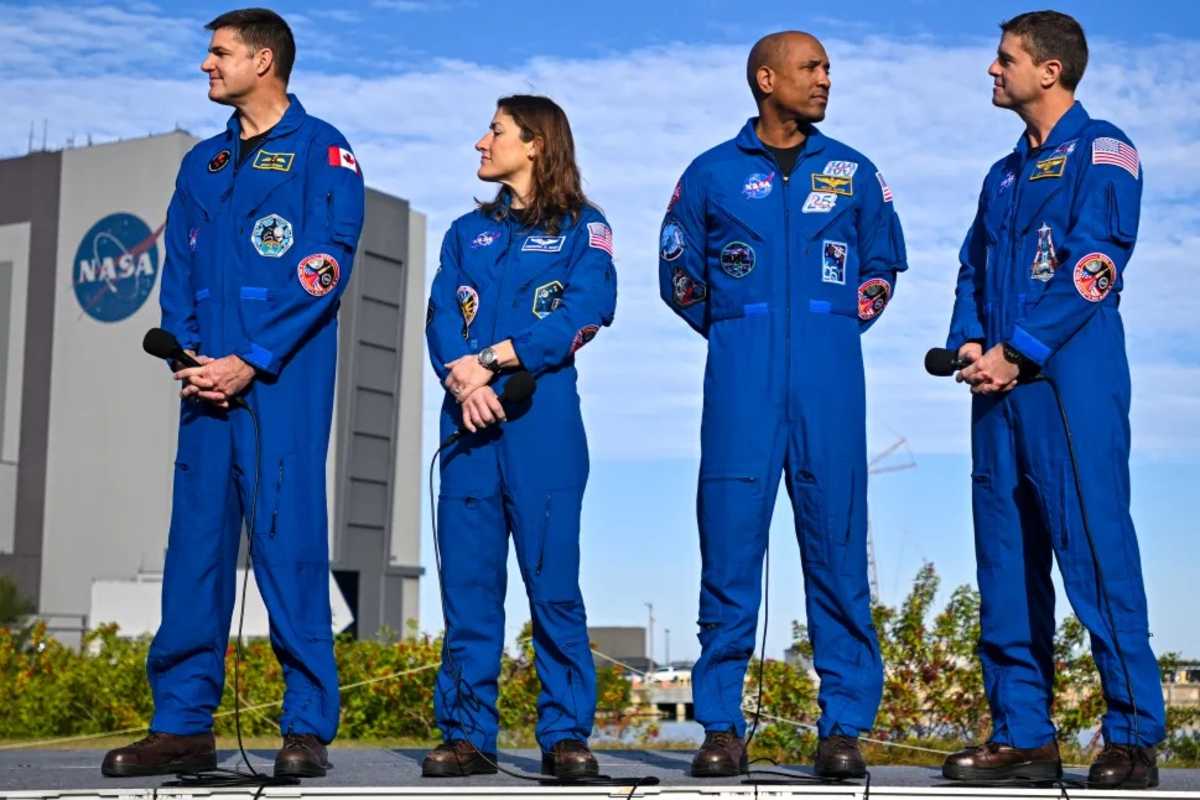
Four astronauts will ride NASA’s Space Launch System rocket aboard the Orion spacecraft on a roughly ten-day free-return arc around the Moon, testing the deep-space navigation, life support, and automated systems that will underpin everything that follows.
The mission, part of NASA’s broader Artemis program, will send four astronauts on a roughly 10-day journey around the Moon and back to Earth.
It is designed to test critical deep-space systems, including navigation, life support, and spacecraft performance, ahead of future missions that aim to land humans on the lunar surface.
According to NASA, Artemis II represents a pivotal step toward establishing a sustained human presence beyond Earth orbit.
The agency has also outlined long-term ambitions, including a plan estimated at around US$20 billion to support the development of a permanent lunar base by 2036.
Dr Jianglin Qiao, a Postdoctoral Research Fellow in Planetary Robotics at the University of Sydney says the mission marks a significant turning point in space exploration.
“Artemis II is a monumental milestone in human space exploration. For the first time in over half a century, since the end of the Apollo program, humanity is returning to the lunar vicinity,” Dr Qiao said.
“This is not just a repetition of history; it represents a massive technological leap forward.”
“I am excited about this mission because it allows a new generation of astronauts to observe the lunar environment up close,”
“More importantly, the data gathered during this 10-day flyby, testing complex deep-space navigation, life support, and automated systems, will serve as crucial preparation.”
“It lays the vital groundwork for the advanced robotic operations and AI planning systems we will need for subsequent, sustained lunar surface landings,” he said.
NASA’s long-term vision extends beyond short-duration missions, with a focus on building infrastructure to support continuous operations on the Moon. This includes integrating robotics, autonomous systems, and international collaboration.
On the prospect of a lunar base, Dr Qiao emphasised the critical role of automation and robotics in making such ambitions viable.
“Building a sustainable lunar base cannot rely solely on human astronauts. It will require a massive deployment of autonomous robots and heavy engineering vehicles working together,” said Dr Qiao
“I am currently contributing to the development of Australia’s first lunar rover, helping to advance the nation’s growing space sector.”
“My ultimate goal is to translate this research into practical, deployable technologies. The lunar surface is an environment characterised by extreme unknowns and uncertainty.”
“Equipping multiple rovers with the AI to autonomously plan, adapt, and collaborate under such unpredictable conditions is key to making the Moon base a reality.” he said.
The mission’s technical objectives are equally groundbreaking. For the first time, the Orion spacecraft’s life support systems will be stress-tested with actual human occupants aboard — a critical data-gathering exercise before NASA commits to landing crews on the surface.
At approximately 1:45 pm EDT on 2 April, assuming an on-time launch, the crew is expected to surpass the farthest distance from Earth ever achieved by a crewed mission — the record set, grimly, by the stricken Apollo 13.
At mission’s end, Orion will re-enter the atmosphere at some 25,000 miles per hour, its heat shield facing temperatures approaching 5,000 degrees Fahrenheit, before splashing down in the Pacific Ocean on around 10 April.
If successful, Artemis II will pave the way for subsequent missions, including crewed lunar landings and the gradual build-out of infrastructure needed to support long-term human and robotic operations on the Moon