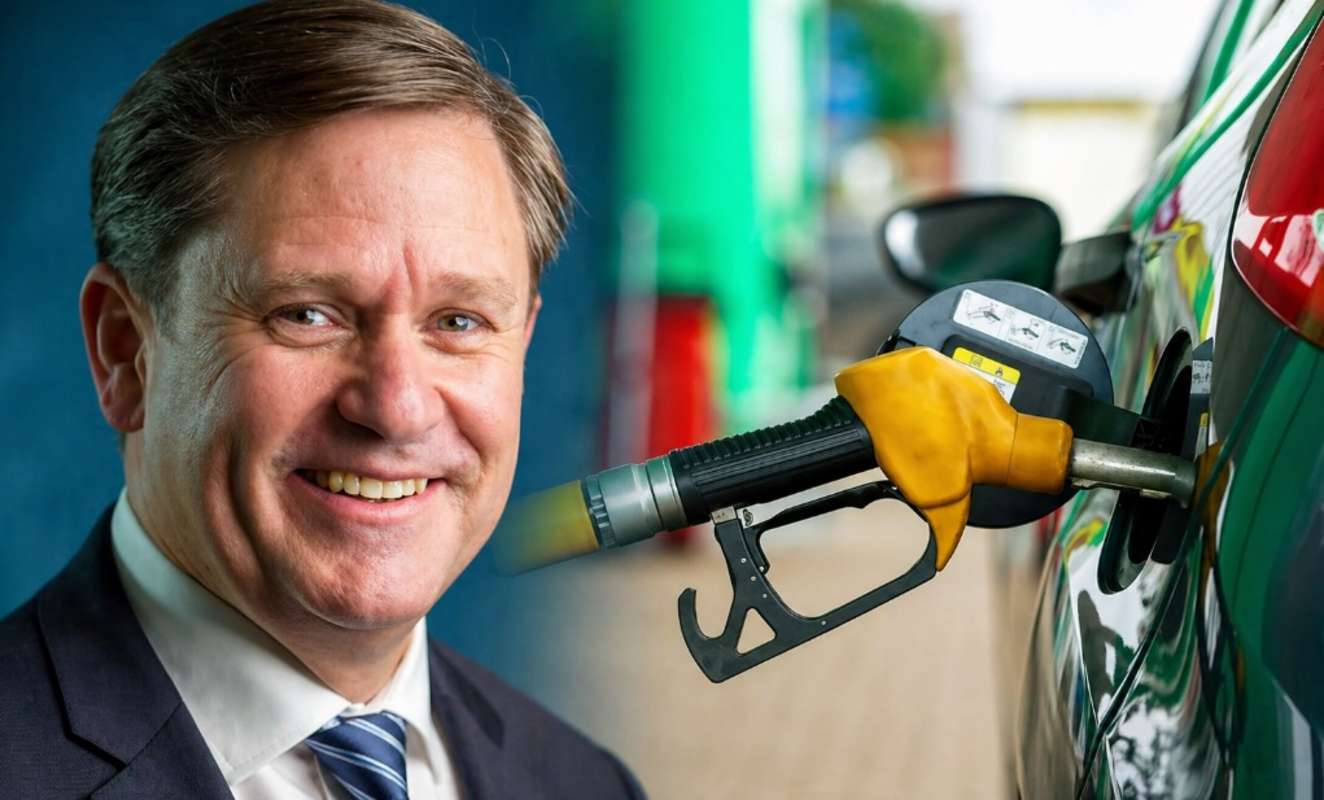
Fuel has become one of the most volatile and closely watched cost pressures in Australia’s supply chains. In recent weeks, prices have surged to record highs, with diesel exceeding $3 per litre in many capital cities and petrol climbing well beyond previous peaks.
The impact is already being felt across the economy. Delivery fees are rising, transport and logistics (T&L) providers are adjusting surcharges and small businesses are being forced to pass on costs just to stay viable.
For transport and last mile operators, the challenge is immediate and unavoidable. Fuel has become a defining factor in their profitability.
The Hidden Cost of Disruption
Every delivery depends on a chain of digital interactions. Drivers rely on mobile devices for navigation, proof of delivery, customer communication and task management.
When those systems work, routes run as planned. When they don’t, even minor interruptions can ripple across an entire route.
A device that crashes mid-route can force a driver to stop, restart applications or revert to manual processes. Even minor lags in performance can result in hesitation at each stop, stretching out routes over the course of a day.
SOTI research showed that Australian T&L workers estimate a loss of 16 hours per person each month due to downtime. At scale, this translates directly into longer routes, extended engine run times and higher fuel consumption.
There is rarely a convenient moment for device failure. If an issue cannot be resolved remotely, the fallback is often a return to depot or replacement hardware, introducing unplanned kilometres and delays across multiple deliveries. What starts as a single point of failure can quickly affect an entire schedule.
This is where mobility shifts from an IT concern to an operational one. The ability to diagnose and resolve issues without taking drivers off the road is directly tied to efficiency in the field.
Why Optimisation Breaks Down In The Field
Route optimisation tools are designed to create the most efficient path from depot to doorstep. But those plans rely on consistent execution in the field.
If a device loses connectivity, routes may not update in real time. If an application freezes, drivers can fall out of sequence. If proof of delivery systems fail, repeat visits may be required. What begins as a minor disruption can quickly lead to delays, detours and unnecessary fuel use.
In Australia, these risks are amplified by the operating environment. Long distances between delivery points, regional routes and inconsistent infrastructure mean reliable mobile coverage cannot always be assumed. Blackspots remain common, particularly outside metro areas and along key freight corridors.
In these conditions, systems that rely on constant connectivity are exposed. Even brief signal loss can interrupt navigation or force manual workarounds, undermining the efficiency that optimisation tools are designed to deliver.
To operate effectively, mobile systems must be built for interruption. Applications need to continue functioning offline, with data captured locally and synchronised once connectivity is restored. Without this capability, every coverage gap becomes a point of friction in the delivery process.
This is where mobility management becomes critical. Solutions such as SOTI MobiControl are designed to maintain continuity in the field, even in low or no connectivity environments.
By enabling offline functionality, queuing updates and automatically synchronising data once a connection returns, organisations can ensure that routes continue to run as planned and critical information is not lost.
Ultimately, optimisation does not fail because the plan is wrong. It fails when the technology supporting execution cannot keep up with real-world conditions.
The Mobile Fleet as a Driver of Cost Control
The mobile fleet is an operational layer that supports the smooth execution of every delivery. It determines whether routes are followed accurately, if drivers can complete tasks efficiently, and that disruptions can be resolved in real time. Improving the performance and reliability of that layer has a direct impact on fuel usage.
Solutions like SOTI MobiControl play a broader role here. Beyond maintaining continuity, they enable organisations to actively manage and optimise device performance in the field.
Devices can be monitored in real time, issues can be diagnosed and resolved remotely, and access can be restricted to essential applications to reduce misuse and inefficiency.
The result is a more predictable delivery operation, where fewer delays translate into fewer unnecessary kilometres and lower fuel consumption.
Rethinking Fuel Efficiency
While the link between mobility and fuel costs is not always immediately visible, it’s becoming increasingly critical. Fuel efficiency is often framed in terms of vehicles, routes and energy sources. These remain important, but they are only part of the equation.
In last mile delivery, efficiency is ultimately determined by how effectively plans are carried out in real-world conditions, which depends heavily on the reliability of the mobile systems that guide drivers, capture data and connect operations in real time.
As the current fuel crisis reshapes cost structures across Australia, organisations that prioritise operational reliability at every level, including the mobile layer, will be better positioned to control costs and maintain consistent service.
For more information on how SOTI can help your organisation improve mobile fleet performance and keep last mile delivery running efficiently, visit https://soti.net/products/soti-mobicontrol/