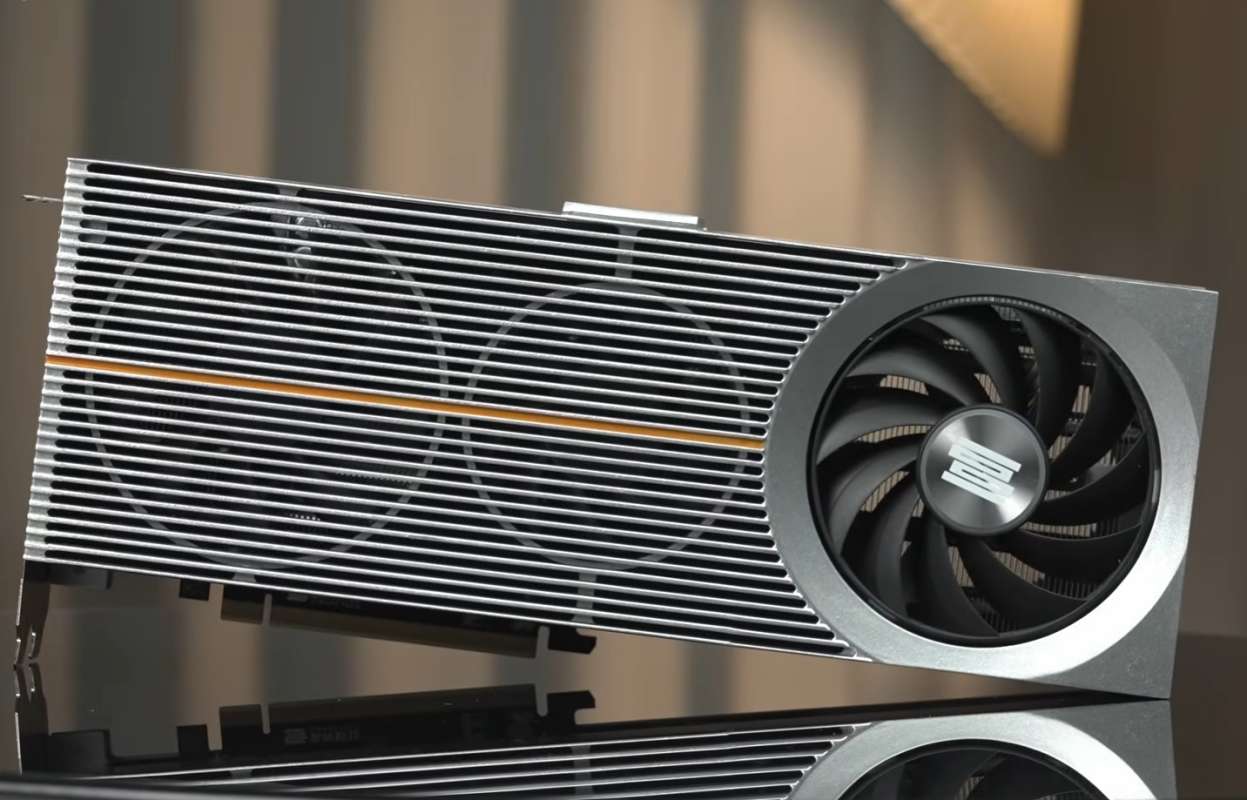
China has officially entered the consumer GPU market with startup Lisuan unveiling the LX 7G100, the country’s first serious gaming graphics card aimed at competing with NVIDIA’s RTX 4060.
Priced at around $480, the launch is generating major attention across the semiconductor industry as a milestone for China’s domestic chip ambitions.
The LX 7G100 arrives with a bold pitch: near-RTX 4060 performance at a competitive price point. It has received official Windows certification and runs modern AAA titles — achievements that, in China’s fledgling GPU ecosystem, are genuinely noteworthy.
But independent benchmarkers have been quick to stress-test those claims, and the results paint a more nuanced picture.
In Cyberpunk 2077 at 1080p, the LX 7G100 managed just 88 FPS — less than half the 220 FPS delivered by AMD’s RX 6600 XT under identical conditions.
In open-world titles like Forza Horizon 5 and Red Dead Redemption 2, performance lagged the RTX 4060 by around 30%.
At a price point of $480, that gap is hard to ignore when the AMD and NVIDIA alternatives it targets can be had for similar or less.
“The problem isn’t just raw silicon — it’s the years of driver and software optimisation that rivals have built up.”
Industry observers are careful to note that raw frame counts only tell part of the story. The deeper challenge, many argue, is software. Lisuan faces the same uphill battle that Intel struggled with for years after launching its Arc GPU lineup: driver maturity.
Game compatibility, performance stability, and smooth rendering in edge cases are the product of thousands of engineering hours and feedback loops with developers — not something a first-generation card can simply ship with.
And yet, the significance of the launch isn’t lost on anyone watching the geopolitics of chip manufacturing.
For a country facing strict semiconductor restrictions, building a GPU that runs Windows, plays Cyberpunk, and earns official certification is still a significant engineering milestone for China’s growing domestic chip industry.
The question now is pace. NVIDIA and AMD have decades of architecture refinement, driver ecosystems, and developer relationships embedded into their products.
Closing that gap in a handful of product generations would be unprecedented. But then again, so was the idea of a Chinese startup releasing a gaming GPU at all.