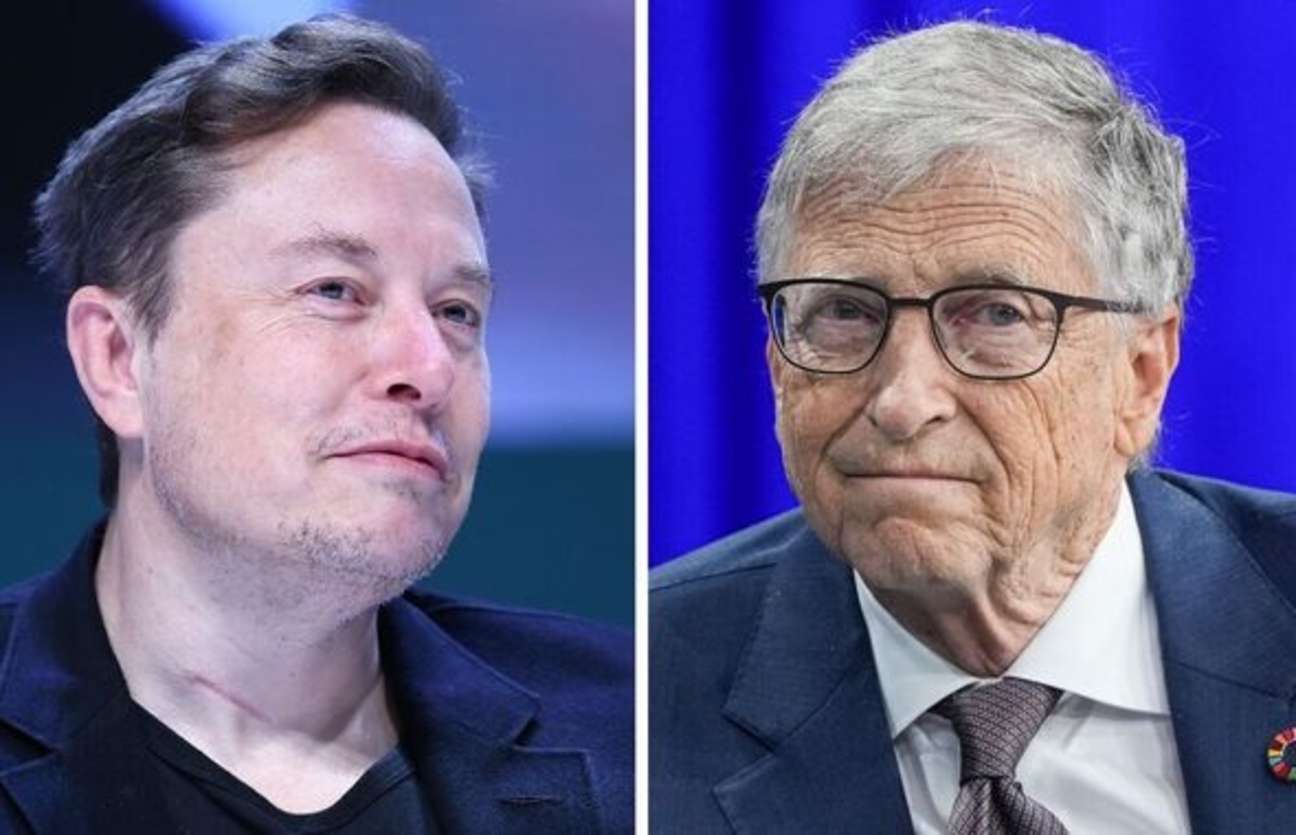


In an explosive interview with The New York Times, Bill Gates didn’t hold back—directly targeting Elon Musk for his role in what Gates warns could be an increase in childhood deaths around the world.
The controversial statement comes amidst a broader discussion on the devastating consequences of funding cuts to USAID, with Gates implying that Musk’s involvement in such global affairs may have deadly repercussions.
Gates, a vocal advocate for international health and development, laid the blame squarely at Musk’s door, particularly citing the billionaire’s ties to Donald Trump’s controversial Doge initiative.
Gates believes that the funding cuts Musk has supported could stifle critical humanitarian efforts, setting back years of progress in child survival.
Musk, meanwhile, has not shied away from the fallout of his actions. Admitting to the “blowback” from his involvement with Doge, he acknowledged the financial struggles it has caused, including the sharp decline in Tesla’s sales across Europe and other international markets.
Despite the mounting criticism, Musk remains unrepentant, insisting that he plans to scale back his direct role with Doge—but offers no apology for his past actions.
As the stakes grow higher, it’s clear that this battle between two of the world’s most powerful men is more than just a clash of egos—it’s a war of ideologies with real-world consequences.
The question now is, who will bear the cost of their feud? The world’s most vulnerable children, it seems, may be the ones to suffer most.
Musk, never one to shy away from controversy, went so far as to call USAID—a key player in global humanitarian efforts—a “criminal organisation,” boldly declaring it was “time for it to die.”
Gates, of course, had no intention of staying quiet in the face of such inflammatory remarks. His response was equally direct and filled with pointed concern over the real-world consequences of such reckless statements.
Over the years, Bill Gates has built an unrivaled legacy—one rooted in compassion, expertise, and an unwavering commitment to saving lives.
Renowned not only as the co-founder of Microsoft, Gates has earned global respect for his philanthropic efforts to combat childhood deaths, promote vaccines, and tackle some of the planet’s most pressing environmental issues.
The Gates Foundation, which has become synonymous with global health and development, is a powerful force in the fight to eradicate polio worldwide. It has also played a pivotal role in funding research for malaria vaccines, saving countless lives in the process.
In 2015, Gates unveiled a groundbreaking machine that converts human waste into clean drinking water and free electricity—an innovation designed to help developing countries overcome basic infrastructure challenges.
Environmental sustainability has also been a major focus for Gates. He’s invested in ventures aimed at combating climate change, most notably a CO2 project that removes carbon dioxide from the atmosphere—a single carbon capture plant in Canada, funded by Gates, works as efficiently as 40 million trees in mitigating carbon emissions.
However, Gates’ recent words have shifted from admiration to sharp critique. His extraordinary attack on Elon Musk comes at a time when Gates is also making monumental decisions about his own philanthropic future.
In a remarkable move, the former Microsoft CEO announced plans to wind down the Gates Foundation over the next two decades. His goal? To give away roughly $200 billion to causes that aim to “save and improve lives around the world.”
The Gates Foundation has already given away over $100 billion in the past 25 years, but Gates intends to accelerate this giving.
“That is why I have decided to give my money back to society much faster than I had originally planned,” Gates explained. “I will give away virtually all my wealth through the Gates Foundation over the next 20 years.”
By December 31, 2045, when the foundation will officially close, Gates expects his net worth to have dropped by a staggering 99%.