The rise of price optimization software has given businesses unprecedented control over their pricing strategies, wielding the power to sway the delicate equilibrium of supply and demand.
As the influence of this cutting-edge technology grows, questions emerge regarding its impact on the fundamental economic concept of price elasticity of demand.
Price elasticity of demand, a key indicator of how consumer behavior responds to price fluctuations, has long been a cornerstone of economic analysis.
However, the advent of sophisticated algorithms and machine learning algorithms has ushered in a new era, one where businesses can fine-tune their pricing strategies with remarkable precision.
In 2022 the global Price Optimization Software market size was valued at USD 792.36 million and is expected to expand at a CAGR of 21.64% during the forecast period, reaching USD 2567.16 million by 2028.
Price Elasticity of Demand (PED) – Formular
The concept of price elasticity of demand (PED) gauges how much the quantity demanded by consumers changes in response to a proportional change in price. It’s determined by dividing the percentage change in quantity demanded by the percentage change in price, expressed as the PED ratio.
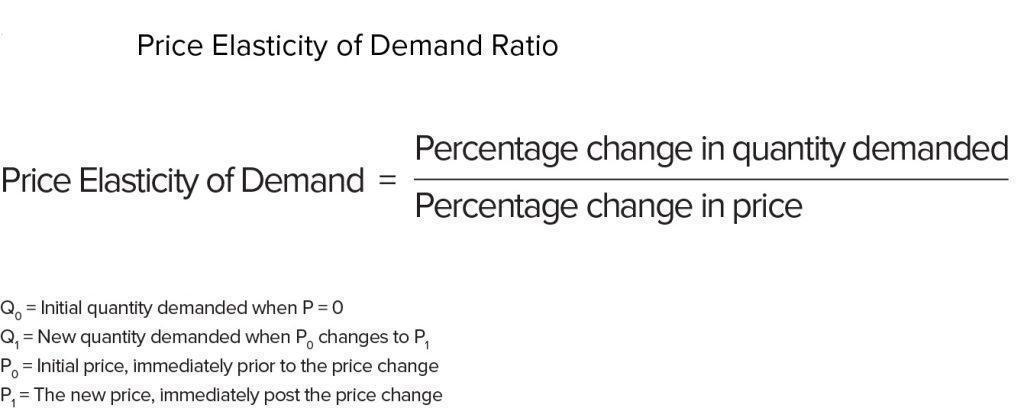
At its core, price elasticity of demand is the measure of the relationship between the variation in the high-demand volume of a specific product and the corresponding change in its price.
In this context, if the demanded volume remains consistent despite price changes, the product is said to be inelastic. Conversely, if the price changes, the product is considered elastic.
The underlying rationale of price elasticity of demand revolves around the belief that consumers buy fewer items when the price escalates. In simple terms, in most situations, the phenomenon is negative.
In contrast, a positive inclination toward price elasticity implies that a higher price point leads to augmented demand. While this situation is infrequent, it predominantly occurs in markets for luxury goods.
Given this, the formula for price elasticity is as follows: price elasticity equals the quantity demanded divided by the change in price.
In this scenario, the demand is termed elastic if price elasticity exceeds one. If it is less than one, the demand is inelastic. It’s crucial to remember that with high demand elasticity, the price can shift drastically
A new shift in power has sparked both awe and concern among industry experts, who observe a delicate dance between technology and consumer response.
Traditionally, price elasticity of demand relied on the principle that lowering prices would result in increased demand, and vice versa.
Crucial Variables of Price Elasticity of Demand
After understanding the formula and types of price elasticity of demand, it’s time to consider the crucial variables influencing the phenomenon. Four factors have a significant effect on the concept:
- Product substitutes availability. When there are several alternatives for a given product, the demand will be more elastic.
- Necessities sustenance. Depending on the degree of a product’s necessity, one can determine whether the product is elastic or inelastic.
- Product lifecycles. For new market entrants, the price elasticity tends to be low. However, for products that have existed in the market for a significant period, the elasticity is likely to be high.
- Purchasing patterns. There are groups of consumers who are willing to purchase products at almost any price point, thereby impacting the price elasticity.
Price Optimization Software
With the integration of price optimization software, businesses now possess the ability to identify optimal price points that yield the maximum revenue, even if it means deviating from the conventional pricing norms.
The software enables businesses to gain valuable insights into consumer behavior and their responses to pricing, empowering them to make informed pricing decisions.
These decisions may include adjusting price strategies, tailoring prices for specific customer segments, modifying contract terms, and offering seasonal products
Moreover, leveraging such software provides businesses with an advantage in adapting prices according to shifts in consumer demand and changes in the perceived value of particular products or services.

In a blog post, Polina Oleksiuk, product manager of tech company Competera says when using price optimization, businesses can operate with short-term sales forecasts of 90+% accuracy.
“It means you can predict the impact of your decisions and determine their effectiveness risk-free,”
“Thanks to high accuracy, you can forget about unjustified pricing actions, incorrect promo ROI estimations, or margin-draining stock clearance,” said Oleksiuk
This newfound power has given rise to a paradigm shift in the marketplace, where the pursuit of profit often takes precedence over the traditional relationship between price and demand.
Critics argue that this giant technological leap can lead to a potential distortion of market dynamics, as businesses prioritize maximizing their profit margins rather than ensuring equitable pricing.
The fear of price discrimination looms large, as companies leverage data analytics to identify different customer segments and tailor pricing strategies accordingly.
Pricing Optimization Software Features
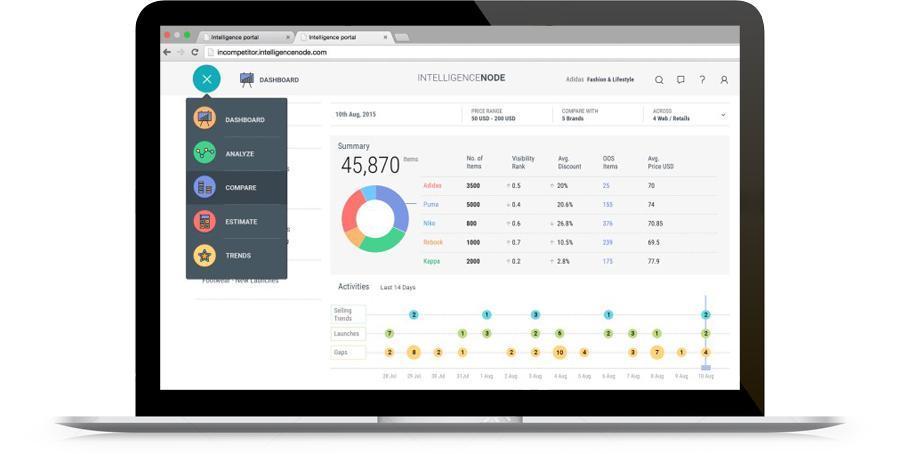
Most Pricing Optimization Software will contain the following features:
- Alerts/Notifications
- Benchmarking
- Competitive Analysis
- Competitor Price Tracking
- Custom Pricing Rules
- Dashboard
- Dynamic Pricing
- Market Data Analysis
- Repricing Engine
- Trend Analysis/Indicators
- Website Monitoring
B2B (Business-To-Business) Transactions
The influence of price optimization software on price elasticity of demand is not limited to individual consumers. B2B (business-to-business) transactions also bear witness to this phenomenon, as companies employ similar strategies to negotiate deals and contracts.
The once-cherished concept of a level playing field now finds itself threatened by the algorithmic prowess of price optimization software, leaving some players at an advantage while others are left behind and struggling to adapt.
The delicate equilibrium between pricing strategies and consumer behavior hangs in the balance, as technology reshapes the fundamental principles of economics.
With the stakes higher than ever, the quest for equilibrium between profit and fairness becomes a crucial challenge for both businesses and society at large.
Only time will reveal the true extent of the influence of price optimization software on price elasticity of demand, as the digital age continues to shape the very foundations of our economic landscape beyond 2023